Indoor Air Cartoon Journal, May 2024, Volume 7, #154
[Cite as: Fadeyi MO (2024). Clarify whose and what problem before continuing the indoor air problem-solving journey for effective solutions. Indoor Air Cartoon Journal, May 2024, Volume 7, #154.]

Fictional Case Story (Audio – available online) – Part 1
Fictional Case Story (Audio – available online) – Part 2
.……………………………
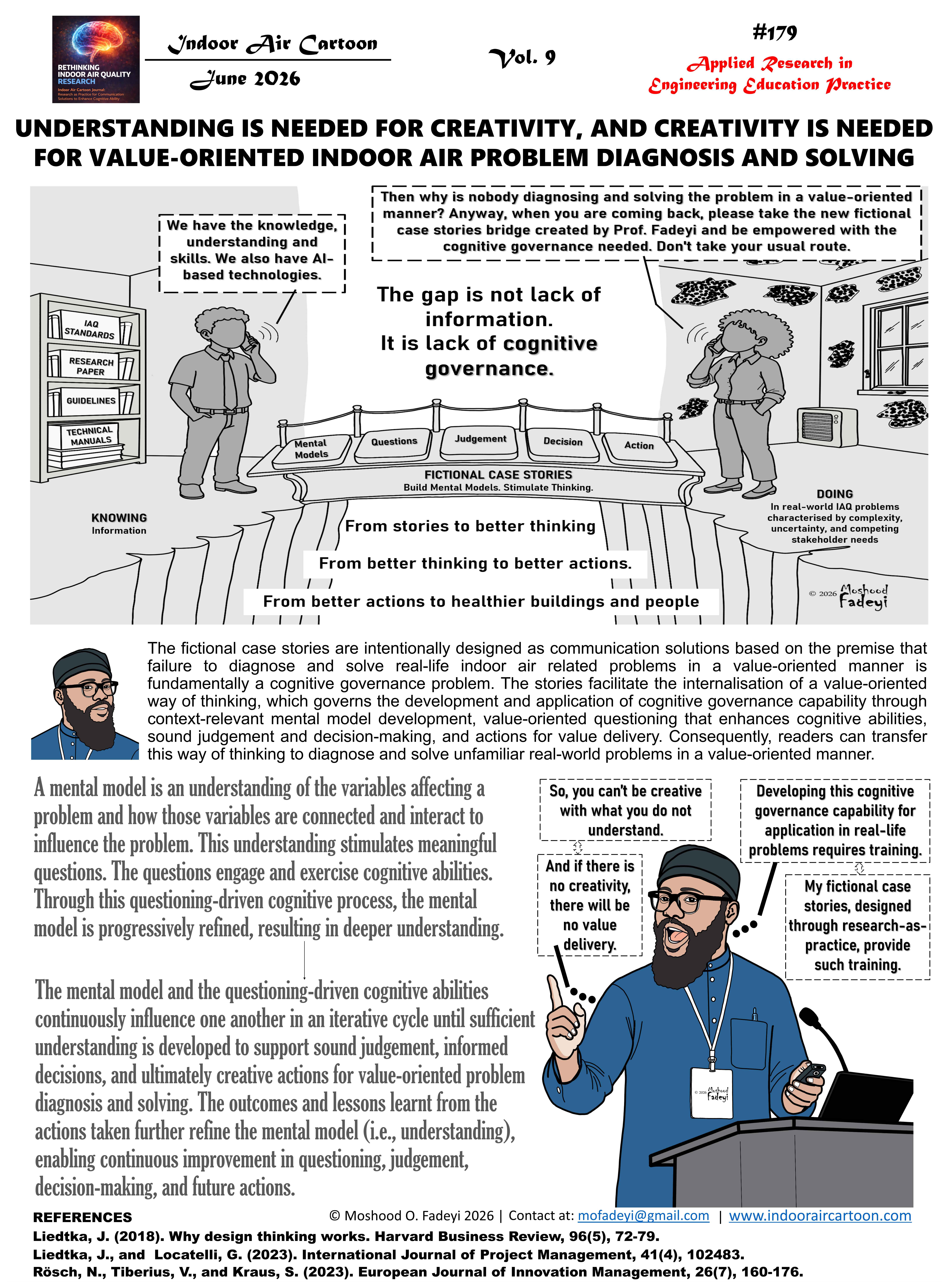
Low value delivery was prevalent in the indoor air quality industry of a country. For example, a situation where building occupants’ health and comfort were compromised even after investing a lot of resources, or where they had to unnecessarily invest a lot of resources just to get decent indoor air quality, was prevalent. This low value delivery situation was not limited to the indoor air quality industry. Many times, problem solvers did not clarify the whose and what problem before continuing the indoor air problem-solving journey. The poor practice of problem-solving was made worse with the emergence of artificial intelligence (AI). Problem solvers were using AI to streamline processes in a problem-solving journey that did not lead to a destination where the problem will be solved. AI was used to create pleasing systems tagged as solutions, but which did not effectively solve the underlying problems (root causes) of the overarching issues experienced by the stakeholders. Thus, the reliability of balanced, holistic, and appropriate satisfaction (comfort, convenience, and awareness enhancement) of all the stakeholders was significantly compromised. A practice where one stakeholder benefitted while other stakeholders, who also used the created system for solving everyone’s problems, suffered or did not get the required satisfaction, thus compromising the purpose of the created system, was prevalent. The underlying problem of this unwanted situation was the prevalence of poor abstract reasoning skill development and application in the country’s education system, industry, and community. Getting it right at the education system level can lead to a better situation in the industry and community. It was this understanding that led a woman, an indoor air quality professional who once struggled with appreciating the importance of abstract reasoning, to decide to improve learning process in the education system, with goal of contributing to the enhancement of value delivery in the indoor air quality and other aspects of life in general. The journey of this woman is the subject of this short fiction story.
1.……………………………
Fatima Nwosu was the name given to me by my parents. I was born into an academic life as my parents’ only child. My dad and mum were professors of pure mathematics, but they worked at different universities in the state. My father was Professor Obinna Nwosu, and my mother was Professor Hadiza Garba-Nwosu, both of blessed memories.
Their scholarly reputations extended far beyond our state and country, with their research papers being cited and discussed by mathematicians around the globe. My father was a recipient of the Fields Medal and several other prizes in Mathematics while my mother was a recipient of the Christopher Zeeman Medal and Breakthrough Prize in Mathematics.
You can imagine the kind of home I lived in, having parents as professors and world-renowned mathematicians. Our home was a sanctuary of intellectualism. Bookshelves lined every wall, filled with tomes on advanced mathematics, logic, and philosophy. Leather-bound volumes of Euclid’s “Elements” and Newton’s “Principia” shared space with modern works on algebraic topology and number theory.
In the study, the heart of our home, large chalkboards were covered with intricate equations and proofs. The air was often filled with the sound of chalk scratching as my parents worked through problems, occasionally punctuated by animated discussions about the latest developments in their field. The dining table was as likely to host impromptu seminars as family dinners, with my parents’ colleagues often joining to discuss theorems over a meal.
My parents, who met overseas during their PhD studies and developed a love for one another because of their shared interest in and passion for pure mathematics, found joy in the elegance of a well-constructed proof or the beauty of a mathematical abstraction. However, I saw only complexity and detachment from reality.
For those of you who may not know, abstract reasoning involves mentally interacting with concepts that cannot be physically touched. Human success in this area depends on the ability to perceive connections between these concepts.
From an early age, I gravitated towards activities that engaged my senses and allowed for tangible creation. I loved the vibrant colours of painting, the physical exertion and serenity of hiking, and the immediate satisfaction of creating a delicious meal or artwork. These activities provided me with a sense of accomplishment and joy that abstract reasoning did not.
My lack of interest in mathematics puzzled my parents. During my senior high school days, my parents were surprised that I did not choose additional mathematics as part of my subjects. I was an A student, the best in my class throughout my schooling days, and I always scored an A in all my subjects, including mathematics.
Considering their profession and my excellent performance in all subjects, you can imagine how my parents had hoped I would share their passion for advanced mathematics, especially pure mathematics, where abstract reasoning is a key component.
I was the kind of student who scored an A in whatever subject I took, even if the subject was not of interest. This was because I saw it as a duty to excel in any subject I enrolled in, even if I did not like it. Moreover, I did not take additional mathematics because I saw no point in studying it at school when I lived with it every day.
I thought it would be double torture for me. The abstract nature of my parents’ specialisation made it boring to me. I did not want to develop an interest in something that could lead me on the same path as my parents. I was a rebel! Hehehehe.
At home, my parents often tried to involve me in their discussions or show me interesting, according to them, problems and solutions because they knew I had the inherent capability for it. However, I did not show interest in participating because their endeavours seemed like abstract puzzles without practical application.
Conversations around the dinner table with my parents frequently turned into debates about the importance of pure versus applied knowledge. My parents would wax lyrical about the foundational nature of pure mathematics, arguing that it underpinned all technological and scientific advancements. I, on the other hand, would counter with the immediate and tangible benefits of applied skills and creative pursuits that create concrete, not abstract, things.
Despite our frequent debates, my parents never gave up on me. They continued to hope that I would one day appreciate the beauty of pure mathematics, but I remained steadfast in my belief that abstract reasoning was too disconnected from real life to be of any use.
After my A levels, I seized the opportunity to explore my own interests. I enrolled in the famous Legalon School of Architecture (LeSA) at the National University of Taurisia (NUT). For those of you who may not know, NUT was the flagship university of my country, Taurisia.
Right in the heart of the city, I was surrounded by creativity and innovation. The bustling streets, the blend of historical and modern buildings, and the sense of independence invigorated me. I had travelled about 350 km from my state, Bintaya, to the capital city, Legalon, where NUT is situated. I threw myself into my studies, focusing on design, structural principles, and urban planning.
At LeSA, I found a new family among my peers–people who shared my passion for tangible creation. We spent countless hours discussing design principles, experimenting with different architectural styles, and critiquing each other’s work. My world was filled with blueprints, models, and construction materials. I felt more at home intellectually here than I ever had at home with my parents.
The studio became my second home, a space where ideas came to life through sketches, blueprints, and scale models. Our desks were perpetually cluttered with drawing tools, samples of building materials, and unfinished models. The air buzzed with energy and the sound of creativity–a sharp contrast to the quiet, contemplative atmosphere of my parents’ study room back at home in Bintaya.
Group projects were a cornerstone of our learning experience at LeSA. We would form teams to tackle complex design challenges, each bringing our unique skills and perspectives to the table. These collaborations were intense but rewarding, as we learned to balance aesthetics with functionality, creativity with practicality. We would debate the merits of different architectural styles, from modern minimalism to intricate Gothic Revival, and find ways to incorporate sustainable practices into our designs.
Our curriculum emphasised hands-on experience, with frequent site visits and internships that allowed us to see our theoretical knowledge applied in real-world settings. We visited construction sites to understand the practical aspects of building, from the laying of foundations to the installation of green roofs.
These experiences reinforced my belief in the value of tangible, concrete results. The feeling of dreaming that one day I would be watching a building rise from the ground up, knowing that I had contributed to its design, was incredibly fulfilling.
My peers and professors shared my enthusiasm for creating physical, impactful structures. Our discussions were rooted in the practicalities of design and construction, always aiming to solve real-world problems through innovative architecture. This environment nurtured my love for concrete creation, providing a stark contrast to the abstract world of pure mathematics that my parents cherished.
2.……………………………
Despite my initial resistance to abstract reasoning, I began to see its value in my architectural work. Abstract reasoning allowed me to visualise complex structures and foresee potential issues before they arose. It helped me understand the underlying principles that could make or break a design. It was one of my professors, Dr. Amelia Harris, that made me realised the importance of abstract reasoning to design.
Interesting this professor had two bachelor degrees plus other advanced degrees in architecture. Her first bachelor degree was in mathematics and her second bachelor degree was in architecture. She effectively articulated and demonstrated how the abstract reasoning she gained from her mathematics education was the foundation for her exceptional performance in architectural design and practices.
This newfound appreciation for abstract reasoning did not detract from my passion for tangible results, something I had always been afraid of. Instead, it enhanced my ability to create functional, aesthetically pleasing buildings. By blending abstract thinking with practical application, I found a balance that supported my interests and improved my designs.
One particular project stands out in my memory–a design competition to create a sustainable community centre. At that time, I was in the third year of my six-year dual BSc and M.Arch degree programme in architecture. This project was unlike any I had encountered before. It required us to integrate complex environmental principles with innovative design solutions.
Our team’s concept involved the use of natural light, renewable energy sources, and recycled materials. The challenge was not just in creating a visually appealing building but also in ensuring its sustainability and functionality over the long term.
At first, I approached the project with the same practical mindset that had served me well in the past. I sketched out initial designs focusing on aesthetic appeal and basic functionality. However, as we delved deeper into the project, it became clear that my approach was insufficient. The complexity of integrating sustainable practices into our design required a level of abstract reasoning and foresight that I had long resisted.
One evening, as we were reviewing our progress, our professor, Dr Harris, pointed out several fundamental flaws in our design. “You are not thinking deeply enough about the interactions between the building and its environment,” she said. “Sustainability is not just about adding solar panels or using recycled materials. You need to consider the building’s entire lifecycle, its energy flow, and its impact on the community. This requires abstract thinking.”
Her words struck a chord. I realised that to succeed, I had to embrace the very skill I had been avoiding. My practical, hands-on approach was not enough. I needed to think abstractly to foresee potential problems and innovate solutions that were not immediately obvious.
Reluctantly, I began to adopt abstract reasoning techniques. I broke down the project into smaller components, analysing each part separately and then considering how they interacted. I used abstract models to simulate the flow of natural light and heat through the building, predicting how it would perform in different seasons and weather conditions. I mapped out the energy consumption patterns and explored how we could optimise the use of renewable energy sources.
Our team sessions evolved. Instead of focusing solely on tangible aspects, we started engaging in deeper, more theoretical discussions. We debated the merits of various sustainable technologies, considering not just their immediate benefits but their long-term impact. We questioned each other’s assumptions and pushed the boundaries of our thinking. This collaborative, abstract reasoning process allowed us to develop innovative solutions we had not initially considered.
The turning point came when we tackled the issue of natural light. Initially, I had designed large windows to maximise sunlight. But through abstract reasoning, we realised that without proper shading and positioning, these windows would cause overheating in the summer and significant heat loss in the winter. By simulating different scenarios, we designed a dynamic shading system that adjusted based on the time of day and season, optimising light and temperature control.
By the end of the project, our design had transformed. It was no longer just a building with sustainable features but a harmonious, living structure that interacted seamlessly with its environment. We incorporated green roofs, rainwater harvesting systems, and locally sourced materials, all integrated into a cohesive and innovative design. The abstract reasoning I had once resisted became a crucial tool in our success.
When we presented our design, it stood out for its depth of thought and innovation. The judges were impressed by how we had addressed not only the aesthetic and functional aspects but also the complex environmental and social impacts. We won the competition, earning recognition from industry professionals and proving the value of abstract reasoning in architectural design.
Looking back, I realised that the skills I had long resisted were the very ones that enabled our success. Abstract reasoning allowed me to see connections and patterns that were not immediately apparent, to anticipate and solve problems before they arose. It did not detract from my love for concrete creation. Instead, it enhanced it, allowing me to create more meaningful and impactful designs.
When I returned to Bintaya during one of my breaks, I could not wait to share my journey with my parents. Over dinner, I recounted my experiences and how my time at LeSA had transformed my perspective.
“I still love creating tangible things,” I explained, “but I have learnt that abstract reasoning can make my designs even better. It is like having another tool in my toolbox.” My parents listened with a mix of pride and understanding. My father, usually reserved, spoke first.
“Fatima, we always knew you had the capability for abstract reasoning. We just wanted you to see that it’s not confined to mathematics. It’s a way of thinking that can be applied to any field, including your architecture.” My mother nodded. “Abstract reasoning allows us to see connections and patterns, to solve problems in innovative ways. We are so proud of you for discovering this on your own terms.”
My parents were correct. Even though I did not want to follow their abstract mathematics path, it was something I could easily understand whenever I happened to pick up and read a book on it or look at what my parents and their colleagues had written on the chalkboards in our house. Thus, there was no way I could escape from reading abstract mathematics. I was surrounded by it every day.
Thinking of it I was very good in advanced mathematics, even without taking related topics in advanced mathematics at senior high school and A-levels and university days because I was as an architecture student. Architecture students only take elementary mathematics subjects if at all they were required to take mathematics at university level.
Winning the design competition was a pivotal moment in my life. It was not just about the accolades; it was about the profound realisation that abstract reasoning had become an indispensable tool in my problem-solving arsenal. This newfound appreciation for the importance of abstract reasoning led me to consider how I could further integrate these skills into my work, particularly in areas that had a direct impact on people’s lives.
With a growing interest in the broader implications of architectural design on human health and well-being, I decided to pursue an MSc degree in Health, Wellbeing, and Sustainable Buildings at Taurisia University College (TUC) after completing my graduation from LeSA with both BSc and M.Arch degrees. This MSc programme at TUC was a perfect fit, allowing me to further explore the intersections of architecture, sustainability, and health.
At TUC, I delved into the science of how buildings affect their occupants’ health and well-being. Courses on environmental psychology, sustainable building technologies, and indoor environmental quality opened my eyes to the complex relationships between built environments and human health. I learnt about the importance of factors such as indoor air quality, lighting, acoustics, thermal, and spatial conditions.
My MSc dissertation focused on designing healthy indoor environments. I applied abstract reasoning to analyse vast amounts of data, identify patterns, and develop innovative solutions for enhancing indoor air quality.
This work laid the foundation for my next academic pursuit and deepened my commitment to creating spaces that support human health. Driven by my desire to make a significant impact on public health through architecture, I decided to pursue a PhD degree in indoor air quality and health at the Camford Institute of Environmental Health, University of Camford, Taurisia.
My PhD research aimed to enhance the prediction, assessment, and mitigation of indoor air pollution through the development and evaluation of advanced modelling techniques that integrate environmental variables, occupant behaviour, and health impact data.
The overarching research questions for the PhD were: (i) Which advanced modelling techniques are most effective in predicting the dispersion and concentration of indoor pollutants in various environments, and how can these models be used to develop effective mitigation strategies? (ii) How can occupant behaviour and environmental variables be integrated into predictive models to improve accuracy, and what mitigation measures can be recommended based on these integrated models? (iii) What are the primary health impacts of common indoor pollutants, and how can predictive models incorporate these impacts to both assess and mitigate health risks in indoor environments?
These research questions informed the objectives for the PhD. The objectives were: (i) To identify and evaluate advanced modelling techniques for predicting the dispersion and concentration of indoor pollutants in different types of environments, and to develop effective mitigation strategies based on these models. (ii) To integrate occupant behaviour and environmental variables into predictive models to improve accuracy, and to recommend mitigation measures based on these enhanced models. (iii) To determine the primary health impacts of common indoor pollutants and to incorporate these impacts into predictive models to both assess and mitigate health risks in indoor environments.
I chose these areas for my PhD because they offer opportunities to further enhance the abstract reasoning skills I have come to appreciate and view as vital in problem-solving. Additionally, at that time, there was a knowledge gap in the areas I identified in my PhD research objectives.
For Objective 1 to be effectively addressed, abstract reasoning is needed to understand the intricate systems and variables that influence indoor air pollutant dispersion, such as airflow patterns, temperature gradients, and indoor air pollutant interactions. This understanding is essential for selecting and evaluating appropriate modelling techniques.
Creating models that accurately predict indoor air pollutant behaviour requires the ability to visualise and manipulate abstract constructs and relationships that are not directly observable. Abstract reasoning is needed to simulate various scenarios and predict outcomes, facilitating the development of effective and innovative mitigation strategies.
For Objective 2 to be effectively addressed, abstract reasoning is needed to understand and predict human behaviour, as behaviours are influenced by myriad factors that are not always directly measurable. Abstract reasoning enables the integration of diverse environmental variables and their interactions with occupant behaviour into predictive models, thereby improving model accuracy and reliability.
Developing mitigation measures based on enhanced models requires synthesising complex data and understanding the broader implications of behaviour-environment interactions, which is facilitated by abstract reasoning.
For Objective 3 to be effectively addressed, abstract reasoning is needed to link indoor air pollutant exposure to health outcomes, which often involves complex biochemical and physiological processes that are not straightforward. Integrating medical and environmental data into cohesive risk assessments is necessary to incorporate health impacts into predictive models.
Understanding abstract concepts such as dose-response relationships and long-term health effects is also essential to incorporate health impacts into predictive models. Developing strategies to mitigate health risks based on predictive models involves abstract thinking to balance various factors, such as indoor air pollutant concentrations, exposure duration, and individual susceptibility to ensure comprehensive and effective solutions.
Summaries of my PhD research methods and results are provided below.
3……………………………
Research Methods:
The first research objective seeks to identify the most effective advanced modelling techniques for predicting the dispersion and concentration of indoor air pollutants. Indoor air pollution poses significant health risks, and accurate prediction models are essential for understanding indoor air pollutant behaviour and implementing effective mitigation strategies. By determining which modelling techniques are most suitable for different types of environments, insights into how indoor air quality can be managed and improved can be provided.
The second research objective focuses on integrating occupant behaviour and environmental variables into the developed predictive models to further enhance their accuracy and robustness. The link between occupant activities and environmental conditions significantly impacts indoor air quality, yet they are often overlooked in traditional modelling approaches.
Before modelling was done, field measurements were conducted in selected residential and commercial buildings. The measured data was used to inform the modelling. A total of 20 residential buildings and 20 commercial buildings were selected from urban and suburban areas.
The selection criteria include factors such as building age, construction materials, occupancy patterns, air cleaning or filtration systems, and ventilation systems. Residential buildings comprised single-family homes, townhouses, and apartments, while commercial buildings included office spaces, retail stores, and restaurants.
Data collection was carried out through a comprehensive process involving multiple steps. Surveys were conducted to gather information on building characteristics, occupancy patterns, and ventilation systems. This helped in understanding the diversity of indoor environments and selecting representative buildings for the study.
Indoor air quality sensors were strategically installed in each selected building to collect real-time data on indoor pollutant concentrations. Sensors monitored pollutants such as carbon dioxide (CO2), volatile organic compounds (VOCs), and particulate matter (PM0.1 and PM2.5). Additionally, environmental variables like temperature, humidity, air flow, and air pressure were measured.
The measurement period for collecting real-time data on indoor air pollutant concentrations was extended to capture variations in indoor air quality. Specifically, data collection spanned different seasons and occupancy scenarios to ensure a comprehensive understanding of indoor air quality dynamics.
The first phase of data collection focused on understanding the indoor air pollutants, occupant activities, exposure, and human health risk. The second phase focused on understanding the effects of adopted mitigation strategies on indoor air pollutants, occupant activities, exposure, and human health risk. Each phase spanned 12 months, totalling 24 months of data collection. The development and refinement of the models were done concurrently.
Continuous monitoring in each indoor environment, encompassing both peak and off-peak seasons, and included periods of varying occupancy levels, such as weekdays, weekends, and holidays. This extended duration ensured that the data reflected a wide range of environmental conditions and occupant behaviours, providing a robust dataset for subsequent modelling and analysis.
Data on occupant activities, including cooking, cleaning, the use of household products, etc., from a diverse range of selected residential and commercial buildings were collected through direct observation and activity logs. By incorporating occupant behaviour variable into the developed predictive models, a more comprehensive understanding of indoor air quality dynamics was expected to be achieved, and effective mitigation measures tailored to specific contexts were expected to be identified.
Three modelling techniques were selected for this study. The modelling approaches are computational fluid dynamics (CFD), machine learning (ML) algorithms, and multi-zone modelling. These techniques were chosen based on their established performance in environmental modelling, their capacity to manage complex data, and their potential for integration with real-world sensor data.
CFD was used to develop a predictive model by simulating the physical processes of fluid flow and pollutant dispersion over time. That is, CFD simulation served as predictive model. CFD solved the Navier-Stokes equations to predict how pollutants move and concentrate within indoor environments. CFD provided detailed spatial resolution, capturing how pollutants disperse within a room and identifying hotspots.
A predictive model, developed with CFD, for each studied indoor environment was developed using software called ANSYS Fluent. This model incorporated building geometries, material properties, and HVAC system characteristics specific to each building. Indoor air pollutant sources were defined based on sensor data from the studied indoor environments, and boundary conditions were set according to measured environmental variables.
Machine learning (ML) algorithms, i.e., neural networks, random forest, and support vector machines, were employed to create a predictive model by learning patterns from indoor air quality data collected from the studied buildings. The data was pre-processed to handle noise and missing values. The collected data was split into training and validation datasets.
The process of splitting collected data into training and validation datasets is indispensable in the creation of the predictive model with ML algorithms. The splitting was done to ensure that the developed model was not only trained effectively but also validated rigorously, enhancing its generalisation and practical applicability.
A random splitting method was adopted. The assumption underlying this method was that the data points were independently and identically distributed. The random splitting method chosen helped create training and validation sets that were statistically similar, thereby providing a good representation of the overall data distribution. This method minimised biases and ensured that the model was exposed to a diverse range of scenarios during training and validation.
The training dataset formed the cornerstone of the modelling process. 80% of the collected data in this study were used to train the predictive model developed with ML algorithms. The training phase involved feeding the collected data into the ML algorithms adopted. The ML algorithms adopted are neural networks, random forest, and support vector machines.
Through iterative processes, the predictive model learnt the underlying patterns, relationships, and dynamics within the data. The intention was to adjust the predictive model parameters to minimise prediction errors, enabling the model to accurately capture the complexities of indoor pollutant behaviour.
Using 80% of the data for training ensured that the predictive model developed had enough information to learn from. The larger training data set (80%) provided helped the model to better understand the underlying patterns and relationships within the data.
Additionally, the complex nature of indoor air problems to be addressed necessitated the need for more data that can significantly improve the accuracy and robustness of the predictive model that can effectively address the complexity involved.
After the predictive model had been trained on the training dataset, it was tested on the validation dataset to assess how well it could predict new, unseen data. This crucial step was taken to ensure that the model did not overfit, a scenario where the model performs exceptionally well on the training data but fails to generalise to new data. Overfitting indicates that the model has learnt the noise and specific details of the training data rather than the actual underlying patterns.
20% of the data not used during the training phase were set aside for validation of the predictive model. Allocating 20% of the data for validation provides a reasonable size for evaluating the predictive model’s performance. This validation set is a proxy for how well the developed predictive model performs on unseen data.
A validation set that is too small might not give a reliable estimate of the model’s performance. At the same time, one that is too large might reduce the data available for training, weakening the model. The developed predictive model performance was evaluated using mean absolute error (MAE), root mean squared error (RMSE), and R-squared.
Multi-zone modelling was utilised to develop a predictive model by predicting the transfer and concentration of indoor air pollutants between zones. In this modelling techniques, a building is divided into zones, each representing a room or area, and used mass balance equations to do the prediction. CONTAM software was used to input building layouts, define zones, and simulate indoor air pollutant transport.
CONTAM is a multi-zone indoor air quality and ventilation analysis programme. Layouts of the studied buildings were input into the software, and zones were defined based on rooms and ventilation paths. Indoor air pollutant generation rates and air exchange rates were set according to collected data.
The three modelling techniques, i.e., CFD, ML algorithms, and multi-zone modelling, were evaluated based on their predictive accuracy and computational efficiency. This evaluation involved using a combination of statistical metrics, visual inspection of indoor air pollutant concentration maps, and resources used to achieve the modelling computation.
Furthermore, insights into how indoor air quality can be managed and improved were determined after reviewing the predictive models developed by the three modelling techniques. High-risk areas and times with elevated indoor air pollutant concentrations were identified. Mitigation strategies tailored to each environment were developed and tested. The predictive models were iteratively refined based on the observed outcomes.
The third research objective addressed the primary health impacts of common indoor air pollutants and how the developed predictive models by the three modelling techniques can incorporate these impacts to assess and mitigate health risks. Measured indoor air pollutants have been linked to various adverse health effects, including respiratory problems, allergies, and cardiovascular diseases.
By understanding the health impacts of indoor air pollutants and integrating this knowledge into predictive models, proactive strategies for mitigating health risks and promoting healthier indoor environments were expected to be developed.
Health data were collected from building occupants through surveys and medical records. Surveys gathered information on respiratory symptoms, allergic reactions, and general health status, while medical records provided data on diagnosed conditions such as asthma, chronic obstructive pulmonary disease (COPD), and cardiovascular diseases.
The collected indoor air pollutant data were analysed to quantify individual exposure levels. Time-activity patterns of occupants, derived from surveys and observations, were used to estimate exposure duration and intensity for each indoor air pollutant. Ethical approval was obtained from the institutional review board, and informed consent was acquired from all participants. Confidentiality and anonymity of health data were maintained throughout the study.
Logistic regression and Cox proportional hazards models were used initially to identify and quantify the associations between indoor air pollutant concentrations and health outcomes. The findings from this exercise provided the necessary dose-response relationships for the predictive models. Confounding factors such as age, gender, smoking status, and pre-existing health conditions were controlled for in the analysis.
Dose-response relationships for each indoor air pollutant were established by correlating exposure levels with the incidence and severity of health outcomes. These relationships were critical for understanding the impact of different indoor air pollutant concentrations on health.
The established dose-response relationships were integrated into the modelling techniques to predict pollutant concentrations and associated health risks. The performance of these predictive models was evaluated using AUC-ROC to ensure their effectiveness in predicting health risks based on indoor air pollutant exposure levels.
Using Sobol sensitivity analysis with SALib (sensitivity analysis library in python), key variables influencing health risk predictions were identified. This analysis was conducted to refine the developed model by highlighting critical factors that need to be accurately captured. The three predictive models were then used to identify areas within buildings where indoor air pollutant concentrations and associated health risks were highest.
Based on the information generated from the three predictive models, tailored mitigation strategies were developed to reduce indoor air pollutant exposure and health risks. The effects of the mitigation strategies to reduce indoor air pollutant exposure on health risk were verified in each of the 20 residential and 20 commercial buildings used for the study. Predictive models were iteratively refined based on observed outcomes to enhance their predictive accuracy and robustness, and the efficacy of the mitigation strategies.
4………………………….
Findings for Research Objectives 1 and 2:
The developed CFD simulation serving as the predictive model accurately predicted indoor air pollutant dispersion patterns and conditions, which were validated by field measurements and observations. This agreement between simulation results and real-world data demonstrates the reliability and validity of the developed predictive model in representing indoor air quality dynamics in the studied buildings.
The capability of the developed predictive model, represented as CFD simulation, proved useful for capturing the intricate details of how indoor air pollutants dispersed, settled, or accumulated in specific areas, known as indoor air pollutant hotspots. The high spatial resolution provided by the CFD simulation allowed for the identification of these hotspots, which was critical for effective indoor air quality management decision-making.
The CFD simulation excelled in incorporating the physical characteristics of a building, such as its geometry and the layout of HVAC systems. The CFD simulation revealed how indoor air pollutants emitted from sources like office equipment or cleaning products dispersed throughout the space.
The CFD simulation showed how walls, partitions, and furniture influenced airflow and indoor air pollutant spread, providing detailed insights into the impact of structural and environmental factors. Similarly, the operation of HVAC systems, which played a crucial role in ventilating indoor spaces, was accurately represented in the developed CFD simulation.
The CFD simulation demonstrated how adjusting the location and operation of vents could significantly influence airflow patterns and indoor air pollutant dispersion. For example, placing vents in areas prone to indoor air pollutant accumulation or increasing the flow rate in certain sections of a building reduced concentrations of indoor air pollutants. These insights led to practical recommendations for modifying HVAC systems to enhance their efficiency in controlling indoor air quality.
The CFD simulation also suggested structural modifications to improve natural ventilation. For instance, in some of the residential buildings, the simulation done showed that adding skylights or optimising window placement enhanced the natural flow of outdoor to indoor air, thereby reducing indoor air pollutant concentrations.
Such modifications created more effective pathways for air to enter and exit the building, leveraging natural forces to improve ventilation without relying solely on mechanical systems. This approach not only enhanced indoor air quality but also led to energy savings by reducing the load on HVAC systems.
Effective source control strategies were derived from the CFD simulation. These included identifying and managing indoor air pollutant sources within a building. This was done through limiting emissions from office equipment, using low VOC emission building materials, limiting emission due to occupants’ activities.
Additional source control strategies include the reduction at the source the spread of indoor air pollutants generated due to occupant activities or entering the indoor space through the window or outdoor air intake. By controlling indoor sources of indoor air pollutants as much as realistically possible, overall indoor air pollutant concentrations were significantly reduced.
The CFD simulation also evaluated the effectiveness of different air cleaning technologies and filter types. The simulation demonstrated how increasing the efficiency of various air purifiers and HVAC filters impacted indoor air pollutant dispersion and improved indoor air quality through enhanced indoor air pollutant removal rates.
The CFD simulation identified how occupant behaviour influenced indoor air quality. Ways in which occupants’ activities can be modified to reduce indoor air pollutant concentrations were observed. Occupants performing high-emission activities, like cooking or using certain cleaning products, during times of optimal ventilation reduced overall indoor air pollutant exposure.
Among the ML algorithms evaluated, a neural networks-based predictive model was found to significantly outperform random forest and support vector machines-based predictive models in terms of predictive accuracy of data collected during the field measurements in the studied residential and commercial buildings.
Neural networks, with their ability to model complex, non-linear relationships within the data, achieved a root mean squared error (RMSE) of 0.85 and an R-squared value of 0.92. This high level of accuracy indicated that neural networks could effectively capture the intricate patterns and temporal dynamics of indoor air pollutant concentrations, providing reliable predictions.
Neural networks-based predictive model demonstrated robust performance across various building types and occupancy patterns. Whether applied to residential homes, office spaces, or commercial establishments, it was observed that the neural networks serving as the predictive model maintained high predictive accuracy.
Neural networks-based predictive model’s versatility was crucial for developing generalised predictive model that could be deployed in different environments without significant loss of performance, making it highly suitable for widespread application in real-time indoor air quality monitoring systems.
In addition to their accuracy, it was observed that neural networks-based predictive model offered a good balance of computational efficiency. While training the predictive model on collected indoor air quality data required substantial initial computational resources, its operation in real-time scenarios was relatively efficient.
This efficiency also made neural networks-based predictive model practical for continuous monitoring and dynamic response systems, where quick updates and predictions were necessary to manage indoor air quality proactively before indoor air pollutant concentrations reached harmful levels. The predictive model, in the form of neural networks, was also used to provide data-driven recommendations for modifying occupant behaviours to minimise indoor air pollution exposure.
By analysing patterns and peak times, the predictive model effectively recommended scheduling activities during periods when natural or mechanical ventilation was most effective, thereby reducing overall exposure to harmful pollutants. It was observed that such proactive measures significantly enhanced indoor air quality and reduce health risks for occupants.
In essence, neural networks-based predictive model offered robust predictive accuracy and computational efficiency, making them ideal for ongoing monitoring and dynamic response. The integration of neural networks-based predictive model with the multi-zone model further enhanced the benefits provided by the multi-zone model in indoor air quality management.
The multi-zone-based predictive model proved particularly effective in large, multi-room buildings where the transport of indoor air pollutants between different zones was significant. By dividing a building into interconnected zones, the model effectively used mass balance equations to predict how indoor air pollutants moved and accumulated in various parts of a building.
This approach provided accurate predictions of indoor air pollutant concentrations across different zones, with an R-squared value of 0.88, indicating a strong correlation between predicted and observed data from the field study.
Compared to the developed CFD simulation-based predictive model, the developed multi-zone-based predictive model required less computational demand (such as processing power, memory, or energy), making it more suitable for ongoing monitoring and adjustments in large or complex buildings.
In situations where indoor air pollutant concentrations change rapidly or unpredictably, the ability to analyse data and make decisions quickly is crucial. Thus, a multi-zone-based predictive model is seen as a practical choice for continuous indoor air quality management in large or complex buildings.
The multi-zone-based predictive model’s lower computational demand allowed for more frequent updates and real-time analysis, which was essential for dynamic environments where conditions could change rapidly.
The insights from multi-zone-predictive based model enabled the development of tailored mitigation strategies for different zones within a building. By focusing on areas with higher occupancy or greater pollutant sources, specific interventions were designed to address localised indoor air quality issues. For instance, in a multi-storey office building, the model suggested increasing ventilation in conference rooms during meetings or installing additional air purifiers in high-traffic areas.
The optimised control of ventilation systems based on zone-specific indoor air pollutant concentrations led to significant improvements in overall indoor air quality. By dynamically adjusting ventilation rates and airflow patterns in response to real-time data, the studied buildings maintained optimal indoor air quality while minimising energy consumption.
The findings from this study also highlight the complementary strengths of the developed predictive models based on CFD and ML models, particularly neural networks, in predicting and managing indoor air quality.
It is important to note that the integration of CFD, ML algorithms (particularly Neural Networks), and multi-zone-based predictive models provided the most comprehensive and effective indoor air quality management approach. Integrating occupant behaviour and environmental variables into the developed predictive models proved to be a critical step in enhancing the accuracy and realistic nature of the indoor air quality assessments.
Findings for Research Objective 3:
The study found significant associations between indoor air pollutant concentrations and various adverse health outcomes among building occupants. Specifically, high concentrations of fine particles (PM2.5) were strongly linked to increased incidence and severity of asthma attacks and other respiratory conditions. Additionally, ultrafine particles (PM0.1) were associated with more severe cardiovascular impacts, including increased rates of hypertension and heart disease.
Elevated levels of VOCs were associated with higher reports of allergic reactions, headaches, and eye irritation. Carbon dioxide (CO2) levels, indicative of poor ventilation, correlated with complaints of fatigue, headaches, and impaired cognitive performance.
The analysis of time-activity patterns revealed that individuals spending prolonged periods in poorly ventilated areas with high indoor air pollutant sources (e.g., kitchens during cooking or areas with heavy cleaning product use) experienced the highest exposure levels. These findings underscore the importance of both the duration and intensity of exposure in determining health impacts.
The research established clear dose-response relationships for various indoor pollutants. For instance, an increase in PM2.5 concentration was directly proportional to the severity of respiratory symptoms, with a notable threshold effect observed at higher concentrations. This relationship was quantified, showing that each 10 µg/m³ increase in PM2.5 resulted in a 15% increase in asthma symptom severity.
Similarly, for PM0.1, the study identified a strong correlation between exposure levels and cardiovascular health outcomes. Each 1 µg/m³ increase in PM0.1 was associated with a 10% increase in the risk of developing hypertension and a 12% increase in heart disease incidence.
The integration of dose-response relationships into the three developed predictive models significantly enhanced their accuracy. The neural network-based models demonstrated the highest predictive accuracy, with an R-squared value of 0.91 for indoor air pollutant concentration predictions and an AUC-ROC score of 0.88 for health risk predictions. This indicates strong model performance in predicting both indoor air quality and associated health outcomes.
Sensitivity analysis identified critical variables influencing health risk predictions, including indoor air pollutant concentrations, duration of exposure, time of day, and specific occupant activities. For example, cooking was a major source of PM2.5, while cleaning activities significantly contributed to VOC levels. PM0.1 levels were notably influenced by traffic-related pollution infiltrating indoor spaces and by the use of certain office equipment.
The study developed targeted mitigation strategies based on the developed predictive models. Enhanced ventilation rate was shown to be highly effective, particularly in reducing CO2 levels and associated health complaints. Source control measures, such as using low-emission cleaning products and enforcing smoke-free policies, led to significant reductions in VOC levels.
Occupant behaviour modifications, such as educating residents on proper ventilation during high-emission activities, resulted in lower exposure and improved health outcomes. The installation of air purifiers with HEPA filters effectively reduced particulate matter concentrations, including PM2.5 and PM0.1, leading to a noticeable decrease in respiratory and cardiovascular symptoms among occupants.
Implementing these tailored mitigation measures resulted in a marked improvement in indoor air quality and a corresponding reduction in health risks. There was a significant decrease in reported respiratory and allergic symptoms, with asthma attacks reduced by 20% and allergy incidents by 15%. Cardiovascular health outcomes also improved, with incidents of hypertension and heart disease reduced by 10%.
The findings demonstrate the critical importance of integrating health impact data into predictive models for indoor air quality management. By identifying and quantifying the health impacts of indoor air pollutants, including PM2.5 and PM0.1, and developing targeted mitigation strategies, the study provides a robust framework for improving indoor environments and protecting occupant health.
The research highlights the potential of advanced modelling techniques to not only predict indoor air pollutant concentrations but also to proactively manage and mitigate associated health risks.
5.……………………………
My PhD studies enhanced my abstract reasoning skills a lot. After completing my PhD, I transitioned to working in industry, leveraging my advanced abstract reasoning skills to tackle complex indoor air problems. I began my career at a leading environmental consultancy firm, where my expertise in modelling and problem-solving made me a valuable asset.
My ability to visualise and manipulate abstract constructs and relationships allowed me to collaborate effectively with engineers, architects, and public health experts to improve indoor air quality in various settings, from residential buildings to large commercial complexes.
In my professional role, I excelled in identifying and clarifying the core problems and stakeholders involved in each project. This clarity was essential before proceeding with solutions, ensuring that all interventions were targeted and effective.
My abstract reasoning skills enabled me to understand both the bigger picture and the intricate details simultaneously, a balance that was crucial in delivering successful projects. This ability to dissect complex problems and foresee potential outcomes helped me develop strategies that were innovative and practical.
Some years after I started working in industry, there was a rapid increase in the adoption of artificial intelligence (AI) to address complex air problems in the indoor air quality industry. While AI had tremendous potential, its implementation was sometimes counterproductive.
This was not due to any inherent flaw in AI technologies but rather the way it was used by people in the industry. Many relied too heavily on AI without fully understanding the underlying problems or the specific needs of various stakeholders involved.
AI algorithms, when used improperly, often produced solutions that were either overly generic or failed to consider the nuanced needs of building owners, designers, indoor air quality solution providers, facility managers, and building occupants.
This lack of specificity and understanding led to suboptimal outcomes, such as deploying air quality solutions that did not address the root causes of indoor air pollution or neglected the practical aspects of building operations. Thus, low value delivery was prevalent despite high invested resources, including the cost of AI technologies adopted in solving indoor air problems.
My abstract reasoning skills played a crucial role in advising the industry on effective problem-solving and value delivery to all stakeholders. I understood that while AI could provide valuable insights, it was essential to first clarify whose problem was being addressed and what specific problems needed solving.
My approach began with a thorough assessment to identify the core problems and the stakeholders involved. I meticulously analysed the concerns of business entities, including building owners, designers, contractors, and indoor air quality solution providers, who sought to make profits. I did the same for facility managers, whose first priority was operational efficiency, and building occupants, whose health and comfort were the ultimate priorities.
My abstract reasoning skills enabled me to synthesise this diverse range of requirements and perspectives, ensuring that any proposed solution was holistic and effective. This initial clarity helped prevent the misapplication of AI and ensured that technology was used as a tool to enhance, rather than obscure, the problem-solving process.
In my consulting role, I applied this rigorous approach across various projects. One notable example involved retrofitting an office building to enhance indoor air quality. The project team initially relied heavily on AI-generated data, which suggested a series of standard interventions. However, these solutions did not account for the unique airflow patterns, occupant behaviours, and the specific priorities of the stakeholders involved.
Realising the shortcomings of the AI-generated solutions, I decided to reassess the situation using my abstract reasoning skills. The first step was to thoroughly understand the building’s unique characteristics. I, along with my team, conducted detailed assessments of the building’s design, construction materials, and current ventilation systems. I also observed and recorded occupant behaviour patterns, such as peak occupancy times and common areas where people congregated, which were not captured by the AI models.
Next, I facilitated a series of meetings with key stakeholders, including building owners, facility managers, designers, contractors, and the occupants themselves. Through these discussions, I gathered valuable insights into their specific concerns and priorities.
The building owners were particularly focused on cost-effective solutions, while the designers wanted interventions that could be seamlessly integrated into the existing aesthetic without compromising their profits. The contractors raised several concerns related to constructability and profits. Facility managers emphasised the need for solutions that were easy to maintain, and the occupants’ prioritised health and comfort with prudent use of invested resources.
With a comprehensive understanding of the building’s unique needs and the stakeholders’ priorities, I integrated these insights with the AI-generated data. The AI provided valuable baseline information, such as indoor air pollutant concentrations and their potential sources.
However, my abstract reasoning allowed me to see beyond the data, streamline processes, and identify patterns and correlations, especially human-related emotions, assumptions, and beliefs, that the AI algorithms had missed.
I also developed customised solutions that addressed specific stakeholder concerns. For the building owners, I proposed cost-effective yet high-impact interventions, such as upgrading to energy-efficient HVAC systems that would reduce long-term operational costs. For the designers, I suggested aesthetically pleasing indoor air quality monitors and air purification units that blended seamlessly with the building’s interior.
Facility managers were provided with user-friendly maintenance protocols, ensuring that the new systems could be easily managed (i.e., operated and maintained). Occupants benefited from advanced filtration systems and real-time indoor air quality displays, which empowered them to adjust their environment for optimal comfort and health.
By combining AI insights with abstract reasoning and human expertise, I was able to develop a holistic and effective indoor air quality improvement strategy. This approach maximised the benefits of AI, transforming it from a tool that provided generic solutions into a powerful resource that supported precise, context-specific interventions.
The project was a resounding success. The customised solutions not only improved indoor air quality but also enhanced occupant satisfaction and comfort. The building owners saw a significant return on investment through reduced energy costs and increased tenant retention. The facility managers reported fewer maintenance issues, and the designers were pleased with the seamless integration of new technologies.
The experience further emphasised the indispensable value of abstract reasoning in complex problem-solving. While AI provided valuable data and initial recommendations, it was my duty to synthesise diverse inputs, clarify core issues, and develop tailored solutions that ultimately saved the day. I then used the knowledge and understanding gained to direct AI to do the “right thing.”
By enhancing value delivery and maximising the benefits inherent in AI adoption, I demonstrated that the combination of advanced technology and human ingenuity is the key to solving the most challenging indoor air problems and delivering optimal outcomes for all stakeholders.
6………………………………………
My success in the consultancy sector led me to take a role in academia. I became a professor at my alma mater, Taurisia University College, a prestigious institution, where I continued my research and mentored the next generation of environmental scientists and engineers.
My academic role allowed me to stay at the forefront of the latest developments in indoor air quality and sustainability. I was particularly interested in working in academia because I realised many graduates had inadequate abstract reasoning skills.
When faced with a problem, they often provided solutions with little interest in understanding what and whose problem they were solving. With the emergence of AI, these inadequacies in abstract reasoning were magnified. The culture of teaching and learning at the university also did not help. There was an assumption that using AI would automatically improve learning, thereby relegating the importance of abstract reasoning, both consciously and unconsciously.
Lecturers and professors were assessed by students and administrators based on teaching (i.e., the passing of information to students), instead of students’ learning and how teaching impacted learning. With many students also thinking their learning is the sole responsibility of their lecturers and professors, the benefits of AI in enhancing learning and education were not effectively maximised and abstract reasoning skills development was on a declining mode. .
Unknown to many students, students are the main party that will decide whether learning will take place or not. This is because no human being can be forced to learn if the person has not decided or not interested to learn.
Before learning can take place, thinking must be in existence. Before thinking can be in existence, questioning must be in existence. The quality of the questioning can be enhanced with the generated or repository experience (i.e., knowledge, understanding, and skills) generated from learning (i.e., processing of received or generated information) —- It is a loop. It is important to note that questioning can only be in existence if interest is in existence.
Thus, if a student is not interested, learning cannot take place. The lecturers and professors play important role of facility the learning journey and motivating students to be interested in the learning journey.
Poor understanding of the mentioned processes involved in learning contributed to poor adoption of AI in education and the declining abstract reasoning skills. At that time, poor utilisation of AI in education system was compromising the development of abstract reasoning.
Poor abstract reasoning skills was compromising learning and education needed to be job ready for the industry where there are needs to solve complex problems requiring high level of abstract reasoning skills.
To further compound the effect of how poor AI adoption in academia and the industry was compromising abstract reasoning, students were also trained, consciously and unconsciously, to focus on the developed system meant to be a solution instead of understanding how the system can actually be a solution.
Focusing on how a system is an effective or potential solution necessitates placing emphasis on problem analysis, which starts with clarifying whose and what problem is to be solved. Effective problem analysis, especially in complex situations, requires high-quality abstract reasoning skills.
Based on my interest in empowering people to develop their abstract reasoning and problem-solving skills, I decided to go the source (academia) where most of the workforces are typically trained. As part of my duties as a faculty member to conduct research, I conducted artistic educational research. I used artistic mediums to explore educational issues and convey my research findings.
Instead of publishing peer-reviewed articles, which were mostly valued in academia at the time, I took a bold decision to publish publicly reviewed articles (creative works) because my audience included not only my peers in academia but also industry professionals, the community, and, most importantly, students who were just learning the trade.
Making such bold decisions comes with its own challenges. However, creativity and innovation require boldness. The challenges I encountered are stories for another day. However, I was fortunate that my university, especially the senior management, gave me the opportunity to explore my research interest and approach.
My university allowed this kind of research because it aligned with the central mission of the kind of research encouraged. My research had practical implications for empowering people to enhance educational, industry, and community practices. Most importantly, my students benefited greatly from my research. My colleagues also benefited significantly from my problem-solving approach.
I was at a university where my boldness, creativity, and innovation were accommodated. The kind of research I did and the approach I took are now mainstream. People still refer to me as a pioneer of such research and approach in academia.
My published research works were publicly reviewed to enhance the reviewers’ (public readers) critical and reflective thinking, abstract reasoning, logical deduction, creative imagination, problem-solving capability, and knowledge and understanding dissemination to promote learning and education in the domains of indoor air quality and health, and value delivery in sustainable building engineering.
Simultaneously, I served as a consultant to numerous companies in the indoor air quality industry. My ability to clarify problems and guide the development of targeted and effective solutions was highly sought after. I worked with a diverse range of clients, including schools, hospitals, and commercial buildings, helping them improve their indoor environments and achieve compliance with health and safety standards.
I shared my experience with students at my university, including those who were not in my department to empower them – my main mission of coming to academia. One example of such sharing was the one I had in a strategic management class taught by my colleague, Professor Zhao Wu.
I had a few discussions with Professor Wu before the class started. It went like this:
[Professor Wu]: “The adoption of AI promises to streamline problem-solving processes and enhance effectiveness in various fields. However, your real-life case studies on indoor air quality problem-solving reveal a different narrative. You found that AI adoption complicates the problem-solving process and reduces the effectiveness of solutions.”
[Me]: “Yes! However, AI is non-human and cannot be held liable for its actions. The people in charge of it are the ones who are liable. We found that many times, the people in charge do not understand whose problem they are solving and what problem they are solving.
This understanding is needed to provide the direction for continuing the problem-solving journey. We advocate abstract reasoning, critical and reflective thinking, and indoor air quality expertise enhancement, which are needed for effective problem framing to benefit greatly from AI. I will share more on this with your students.”
I also shared my response to Professor Wu’s comments with his students and added the following:
“What does streamlining the problem-solving process mean? Streamlining is the extent to which the problem-solvers are catapulted closer to the point where they can deliver the required usefulness to stakeholders on their first attempt. Poor framing of whose problem is to be solved will lead to poor problem definition, which directs the problem-solvers in the wrong direction.
What is the point of using AI to streamline the wrong problem-solving process that leads to incorrect or ineffective solutions? The wrong direction increases the resources needed to achieve effective solutions.
The indoor air problem-solving (i.e., prevention and mitigation) journey is very complex because stakeholders have different value delivery interests. The complexity is also due to several factors, some of which are conflicting, contributing to indoor air problems.
Resources are needed to define whose problem, what problem, and why the problem should be solved, identify the cause, and develop, test, and manage solutions for suitability, reliability, flexibility, and resilience.
Facility owners, designers, contractors, and indoor air solution providers are business entities that need to make a profit. Facility managers need to enhance their operational efficiencies. They each have their problem-solving journey.
However, the main reason every stakeholder embarks on their problem-solving journey in the first place is to ensure indoor occupants benefit from healthy indoor air provided with prudent invested resources.
The legality and integrity of the value other stakeholders gain from their problem-solving journey must be evaluated by the success of the main journey, i.e., the indoor air problem-solving journey. The complexity means problem solvers must have high abstract reasoning skills to adopt AI effectively…..”
Through my unique approach to artistic educational research, I was able to significantly influence my students’ development of abstract reasoning and problem-solving skills. By integrating creative mediums such as visual arts, storytelling, and interactive projects into the teaching process, I encouraged students to think beyond conventional boundaries. This methodology allowed students to explore complex concepts in a more engaging and intuitive manner, fostering their ability to visualise abstract constructs and relationships.
In my teaching and learning practice, I employed various strategies to cultivate these skills. For instance, I often used case studies and real-world problems, which required students to apply abstract reasoning to devise practical solutions. This approach not only enhanced their problem-solving capabilities but also prepared them for the challenges they would face in their professional careers. Through regular feedback and collaborative projects, students learned to analyse problems from multiple perspectives, thus improving their critical thinking skills.
Recognising the impact of these methods, my university began to see the value in prioritising the development of abstract reasoning. I worked closely with the curriculum committee to integrate these principles into the core curriculum. We introduced courses specifically designed to challenge students’ abstract thinking, such as advanced problem-solving workshops and interdisciplinary projects that required the application of knowledge from different fields.
My efforts extended beyond the university, impacting the broader industry and community. By organising workshops and seminars that showcased the importance of abstract reasoning and problem-solving skills, I was able to engage professionals from various sectors. These events highlighted how such skills could lead to innovative solutions and more efficient processes within their respective fields.
Moreover, I collaborated with industry leaders to develop training programmes aimed at enhancing the abstract reasoning capabilities of their employees. These programmes proved highly successful, leading to increased productivity and more effective problem-solving within organisations. My work in this area earned me recognition as a thought leader in the industry, and I was often invited to speak at conferences and professional gatherings.
The success of my initiatives at my home institution did not go unnoticed. Other universities began to take an interest in our innovative curriculum. I was invited to consult on curriculum development at several institutions, where I advocated for the inclusion of courses and teaching methods that emphasised abstract reasoning and problem-solving skills. My influence helped shape the educational strategies of these universities, leading to a nationwide shift in how abstract reasoning was taught and valued.
As a result of my contributions, I received numerous awards and recognitions. I received the National Award for Excellence in Education for my pioneering work in integrating artistic educational research with traditional teaching methods to enhance abstract reasoning and problem-solving skills.
I was given the Innovation in Teaching Award from my university, acknowledging my significant impact on the curriculum and student outcomes. I was also recognised with the Industry-Academia Collaboration Award because of my efforts in fostering strong partnerships between academia and industry, leading to the practical application of abstract reasoning skills in the workplace. The Lifetime Achievement Award in Education was given to me for my sustained efforts and long-term contributions to improving educational practices and outcomes on a national level.
These accolades brought greater attention to the importance of abstract reasoning and problem-solving skills in education and beyond. They motivated other educators and institutions to adopt similar approaches, furthering the impact of my work.
7………………………………………
One important thing I did not tell you is that I got married towards the end of my PhD studies and gave birth to a baby boy a few months after I submitted my PhD thesis. My husband is Mr. Bilal Atanda, the famous and world-renowned film director, story writer, and actor. I changed my name to Dr. Fatima Nwosu-Atanda after my PhD studies. I only became popularly known as Professor Fatima Nwosu-Atanda after I became a full professor.
My parents doted on my son immensely. They took him out frequently, guided him in his studies, and nurtured his curiosity with patience and love. Their influence was profound, and my son ended up being a lot like them, absorbing their passion for knowledge and their methodical approach to learning.
Today, my son is a Professor of Pure Mathematics, fulfilling a dream my parents once held for me. My son’s passion and dedication to his field are remarkable, and he has made significant contributions to mathematical theory and research. Watching him teach and inspire others fills me with immense pride.
To cap it all, he looks a lot like my father, which often brings back fond memories and a deep sense of nostalgia. Like my father, he also married someone who went on to become a professor. My daughter-in-law is a Professor of Philosophy.
My son’s abstract reasoning skills are extraordinary. He approaches complex mathematical problems with a level of ease and insight that continues to amaze me. His ability to synthesise complex theories and create innovative solutions is unparalleled. I believe he inherited and combined the best abstract reasoning skills from both sides of our family, from my parents, myself, and my loving and caring husband.
My husband’s career in the arts brought a unique perspective to our family. His creativity, storytelling ability, and knack for visualising and constructing narratives added another dimension to our son’s intellectual development.
My husband’s work often involved intricate planning, a deep understanding of human emotions, and the ability to see the bigger picture–skills that complemented the analytical environment our son was immersed in.
This blend of analytical rigour and creative thinking has been pivotal in shaping my son’s approach to mathematics. When my son talks about his mathematical proofs, it is like he is telling a story. Very remarkable!
Watching my son excel in pure mathematics, I often reflect on how our family’s diverse strengths have shaped his journey. My parents’ dedication to his early education laid a strong foundation. They introduced him to the joys of learning, provided constant support, and nurtured his curiosity.
My husband’s creative influence broadened his horizons, teaching him to think outside the box and view problems from unique perspectives. My own experiences in solving real-world indoor air quality problems through abstract reasoning further enriched his analytical capabilities.
The blend of analytical and creative talents in our family has bridged generations, creating a legacy of intellectual curiosity and problem-solving prowess. One vivid memory stands out: when my son was just ten, he would sit with my father, discussing mathematical puzzles that seemed way beyond his years.
My father’s patient guidance and my mother’s encouraging presence created an environment where learning was both challenging and fun. Simultaneously, my husband would engage him in storytelling sessions, where he learned to weave narratives that required deep thinking and imagination.
As I continue to contribute to the field of indoor air quality and mentor the next generation of environmental scientists and engineers, I am deeply inspired by my son’s accomplishments. His ability to elevate abstract reasoning to new heights reminds me of the power of combining diverse skills and perspectives. Our family’s journey underscores the importance of nurturing both analytical and creative talents, proving that the synergy of different strengths can lead to extraordinary achievements.
I am 73 years old, as I am narrating my story and enjoying the company of my husband, who is 76 years old. I also spend a lot of time with my teenage grandchildren, who are twins–a boy and a girl. With their excellent school performance, I believe they will continue the family tradition of championing abstract reasoning in the field of their choice. The End!



Leave a Reply