Indoor Air Cartoon Journal, June 2026, Volume 9, #179
[Cite as: Fadeyi MO (2026). Understanding is needed for creativity, and creativity is needed for value-oriented indoor air problem diagnosis and solving. Indoor Air Cartoon Journal, June 2026, Volume 9, #179.]

Fictional Case Story (Audio – available online)–Part 1 (Preface, Chs, 1, 2 & 3)
Fictional Case Story (Audio – available online)– Part 2 (Ch 4 & 5)
………………… Preface ……………………
Engineering has never possessed more knowledge, more sophisticated technologies, or more comprehensive professional standards than it does. Yet many real-world problems continue resisting satisfactory diagnosis and solving. Investigations are conducted with diligence, measurements are carefully collected, recommendations are technically sound, and recognised standards are achieved. Nevertheless, the people those recommendations are intended to serve sometimes continue experiencing the same difficulties.
Indoor air practice illustrates this challenge particularly well. Practitioners routinely evaluate ventilation systems, measure pollutant concentrations, inspect engineering systems, and compare results against recognised guideline values. Although these activities remain indispensable, they do not always produce the understanding required to explain why occupants continue experiencing compromised healthy living in buildings that appear technically acceptable. Increasingly, the challenge lies not in obtaining more information, but in understanding how existing information should be interpreted within its context.
Professional experience, while invaluable, can quietly reinforce this tendency. Previous successes shape expectations, familiar explanations become reassuring, and established approaches gradually replace curiosity. Without realising it, practitioners may begin searching for similarities that allow previous ways of thinking to be applied rather than first seeking to understand what makes each new situation unique.
This fiction story follows the professional and personal transformation of an experienced indoor air practitioner whose confidence in established ways of thinking was gradually challenged by an investigation that refused to conform to his previous experience. In confronting the limitations of his own thinking, he embarked on a journey that transformed not only the way he diagnosed and solved problems in professional practice but also the way he understood people, exercised judgement, made decisions, and lived his everyday life. His journey forms the subject of this fiction story.
………………… Chapter 1 ……………………
For almost twenty years, Ibrahim Bernardo had built a reputation that many indoor air quality professionals admired. Clients described him as decisive, colleagues regarded him as dependable, and younger engineers often requested to accompany him on investigations because they believed they could learn more from one week in the field with him than from several months of reading technical manuals. Ibrahim had graduated from a reputable university with a degree in Mechanical Engineering before specialising in Indoor Environmental Quality through a Master of Engineering (MEng) degree and numerous professional development courses.
Throughout his career, he attended conferences, completed continuing education programmes, accumulated professional certifications, and carefully followed revisions to international indoor air quality standards. His office shelves were filled with textbooks, research papers, technical manuals, and recognised guidelines covering ventilation, airborne contaminants, filtration, exposure assessment, and building performance. He had also embraced recent advances in artificial intelligence, believing that combining engineering knowledge with artificial intelligence (AI)-supported analysis represented the future of indoor air quality practice.
Looking back on his professional journey, Ibrahim often felt grateful for the education and training he had received because they had equipped him with extensive information, sound technical knowledge, and practical skills. Never once did he question whether something equally important had been missing.
His professional confidence was understandable. During most investigations, he identified likely causes quickly and proposed technically reasonable recommendations. When a recently renovated office developed a persistent chemical odour, he examined emissions from finishing materials and recommended increased outdoor air ventilation together with an extended building flush-out period. When occupants complained about stuffiness during meetings, he reviewed carbon dioxide concentrations, ventilation rates, and occupancy density before recommending adjustments to the ventilation system.
When mould appeared repeatedly on walls, he investigated moisture intrusion, thermal bridges, and condensation risks. Many projects ended successfully, reinforcing his belief that experience naturally produced understanding. Without realising it, he gradually developed the habit of recognising familiar patterns before fully understanding the unique characteristics of each new building. His investigations became increasingly efficient, yet efficiency slowly replaced curiosity. Instead of first seeking to understand what made each new situation unique, he unconsciously searched for similarities that allowed previous ways of thinking and familiar solutions to be applied again.
The same pattern quietly influenced his life beyond engineering. Maryam had always admired her husband’s commitment to his work because she understood that improving indoor environments ultimately improved people’s health and wellbeing. Nevertheless, she increasingly noticed that Ibrahim approached family conversations much as he approached professional consultations.
Whenever she described a concern, he instinctively responded with advice before seeking to understand her experience. If she mentioned feeling exhausted after caring for his elderly father while managing her own business, Ibrahim immediately suggested employing another caregiver. When their son Yusuf struggled with deciding whether to study engineering or architecture, Ibrahim responded by explaining employment opportunities, salaries, and career prospects rather than asking why Yusuf seemed uncertain. His recommendations were usually sensible, yet
Maryam often felt that her husband listened only long enough to identify what he believed was the problem before offering what he believed was the solution. She occasionally wondered whether years of solving engineering problems had quietly taught him to approach people in exactly the same way.
One evening, after Yusuf had left the dining table unusually early, Maryam remained seated while Ibrahim reviewed emails on his tablet. She gently closed the cover over the screen before speaking. “Have you noticed that Yusuf has hardly spoken during dinner for the past two weeks?” she asked. Ibrahim looked towards the staircase and shrugged slightly. “He’s probably worried about his examinations,” he replied. “Most teenagers become quieter when they are under pressure.”
Maryam smiled patiently because she had expected that answer. “Did he tell you that?” she asked. Ibrahim paused briefly before admitting that he had not actually asked. “Then how do you know that’s the problem?” she continued. “Perhaps he’s worried about something completely different.” Ibrahim laughed softly, convinced that his years of parenting had given him sufficient experience to recognise such situations. “I’ve seen this before,” he replied. “Once the examinations are over, everything will return to normal.” Maryam did not continue the discussion because she recognised the familiar pattern. Ibrahim had already reached a conclusion before understanding the situation. She quietly wondered how often the same thing happened during his professional work.
Ibrahim Abubakar was a Principal Indoor Air Quality Consultant at PurityAir Consulting, where he had built a reputation for solving complex problems in indoor environments. After eight months of unsuccessful investigations by three engineering consultancies, the management of Green Valley Corporate Centre appointed PurityAir Consulting, hoping that a fresh perspective might finally resolve the problem. Shortly after securing the project, the company’s Managing Director telephoned Ibrahim and asked him to lead the investigation.
Green Valley Corporate Centre was the recently refurbished twelve-storey headquarters of an international financial services organisation. Over the previous several months, hundreds of employees had reported headaches, fatigue, eye irritation, and declining concentration during working hours. Three engineering consultancies had already investigated the building over the previous eight months without identifying a convincing explanation.
Extensive measurements had been conducted, ventilation systems had been adjusted repeatedly, filters had been replaced, cleaning procedures had been revised, and the outdoor air supply had been increased. Despite these efforts, complaints continued. Employee absenteeism had increased, productivity had declined, and several experienced staff members had resigned because they believed the building was affecting their health.
When Ibrahim arrived at Green Valley Corporate Centre for the initial meeting, he found representatives from the organisation’s facilities management, human resources, engineering, and senior management teams waiting in the conference room. Their expressions revealed more frustration than optimism.
After welcoming Ibrahim, the Facilities Director apologised for asking another consultant to review work that several respected firms had already completed. “We are not questioning their competence,” he explained. “Every consultant followed recognised standards, collected extensive measurements, and produced technically sound reports. The problem is that our occupants continue experiencing symptoms despite implementing almost every recommendation. We no longer know whether we are overlooking something important or whether we still do not properly understand the problem.”
Over the next two days, Ibrahim carefully reviewed the reports prepared by the three previous engineering consultancies together with the building’s refurbishment records, complaint logs, maintenance history, ventilation system documentation, and available building management system data. The investigation reports were comprehensive. Measurements of temperature, relative humidity, carbon dioxide, carbon monoxide, particulate matter, volatile organic compounds, and formaldehyde had all been undertaken. Ventilation rates had been assessed, filtration systems inspected, and laboratory analyses completed. Everything appeared methodical and professionally executed.
By the time Ibrahim arrived at Green Valley Corporate Centre for the initial meeting, he already possessed a clear understanding of what had been investigated, what recommendations had been implemented, and where important uncertainties remained. Rather than attending the meeting to learn what had previously been done, he intended to understand how the building, its occupants, and the problem itself were being experienced by those living with it every day.
Coupled with what he had learnt from reviewing the previous investigation reports, the meeting and site inspection gradually strengthened Ibrahim’s preliminary explanation. The refurbishment immediately attracted his attention because the complaints had begun only a few weeks after the refurbishment had been completed. Previous investigation reports had also documented occasional reductions in outdoor air supply during periods of high occupancy.
To Ibrahim, the timing of the complaints, together with the plausible engineering mechanisms linking refurbishment-related emissions and inadequate ventilation, appeared to provide a coherent explanation for the occupants’ symptoms. His previous professional experience had taught him that recently refurbished buildings frequently experienced problems associated with combinations of increased pollutant emissions and insufficient ventilation. Consequently, he considered this explanation the most probable starting point for the investigation.
Thus, the recent refurbishment, together with intermittent reductions in outdoor air supply during periods of high occupancy, appeared to provide the most convincing explanation for the occupants’ complaints. Although he continued asking questions throughout the investigation, his attention increasingly focused on gathering evidence that supported this emerging explanation. Without realising it, he had begun treating his preliminary mental model as though it already provided a sufficiently accurate understanding of the problem.
Consequently, the questions he asked increasingly sought to confirm that understanding rather than expand, refine, or challenge it. While walking through one of the open-plan offices, Ibrahim noticed several employees working with portable fans beside their desks despite the central air-conditioning system operating normally.
A young financial analyst politely introduced herself before explaining that the discomfort varied considerably from one part of the office to another and often changed throughout the day. “Sometimes the air feels perfectly acceptable in the morning,” she said, “but by early afternoon several of us begin feeling unusually tired. Two hours later, the discomfort disappears again without anyone changing the ventilation settings.”
Ibrahim nodded while making notes. Rather than treating her observations as an opportunity to further develop his understanding of the problem, he unconsciously interpreted them through the preliminary mental model he had already begun constructing from the previous investigation reports, his engineering education, and his years of professional experience.
To him, the changing pattern of discomfort appeared consistent with what he already suspected. Rising occupancy during the day could increase indoor pollutant concentrations while simultaneously triggering intermittent reductions in outdoor air supply through the building’s demand-controlled ventilation system. When occupancy later declined, the ventilation system could gradually restore acceptable indoor conditions, explaining why the symptoms appeared to improve. The explanation seemed technically plausible and aligned well with the information he had already reviewed.
Consequently, instead of asking broader questions that might have expanded, refined, or challenged his preliminary mental model, Ibrahim instinctively asked questions aimed at confirming it. He enquired about the number of employees occupying the area during different periods of the day, whether the symptoms had begun after the recent refurbishment, and whether the portable fans were used mainly during busy periods. Although these questions were technically reasonable, they were largely directed towards confirming the explanation he already considered most likely. He paid much less attention to observations that did not readily fit that explanation.
Without realising it, Ibrahim had begun treating his preliminary mental model as though it already provided a sufficiently accurate understanding of the problem. Consequently, the questions he asked increasingly sought to confirm that understanding rather than expand, refine, or challenge it. He failed to ask himself one fundamental question: What is it that I don’t know or consider that makes what I know or consider contextually inappropriate? As a result, his investigation became progressively narrower, not because he lacked technical competence, but because he assumed his existing understanding was already sufficiently complete.
………………… Chapter 2 ……………………
The following weeks unfolded almost exactly as Ibrahim had anticipated. His team conducted a comprehensive investigation using the same professional diligence that had characterised every major project he had undertaken throughout his career. The investigation was systematic, technically rigorous, and entirely consistent with recognised engineering practice. Yet, without realising it, every activity was increasingly being guided by the preliminary mental model Ibrahim had already accepted as the most plausible explanation of the problem.
Consequently, the team’s efforts focused primarily on generating additional evidence relating to refurbishment-associated pollutant emissions and intermittent ventilation deficiencies during periods of high occupancy, because these were the factors his existing understanding suggested were most likely responsible for the occupants’ complaints.
Air samples were collected from different locations and analysed in accredited laboratories. Carbon dioxide concentrations, particulate matter, volatile organic compounds, formaldehyde, temperature, relative humidity, and ventilation rates were measured repeatedly under different occupancy conditions.
Mechanical engineers inspected the air-handling units, verified filter installation, checked outdoor air dampers, and reviewed the building management system. Ibrahim also instructed his team to compare every result against recognised international standards, convinced that a systematic investigation supported by reliable data would eventually reveal the source of the occupants’ complaints.
Each new dataset was carefully examined, yet almost every interpretation was unconsciously filtered through the same preliminary explanation. Results consistent with that explanation reinforced Ibrahim’s confidence, while observations that appeared inconsistent were generally regarded as anomalies requiring further verification rather than opportunities to reconsider whether the mental model itself might be incomplete.
Having never asked himself, “What is it that I do not know or have not considered that makes what I know or have considered contextually inappropriate?” Ibrahim never seriously questioned whether the investigation itself had become constrained by the assumptions embedded within his existing way of thinking.
The findings appeared reassuring rather than alarming. Most measurements remained within recognised guideline values. Carbon dioxide concentrations occasionally increased during periods of high occupancy but rarely exceeded recommended limits. Formaldehyde and total volatile organic compound concentrations were higher immediately after the refurbishment but had gradually declined to levels generally considered acceptable.
Temperature and relative humidity also remained within expected operating ranges for most occupied periods. The ventilation system displayed several operational deficiencies, but none appeared sufficiently severe to explain why hundreds of occupants continued reporting headaches, fatigue, and declining concentration.
Rather than prompting Ibrahim to reconsider whether his understanding of the problem might be incomplete, the findings reinforced his belief that the principal causes had already been identified. Neither the measurements nor the engineering inspections revealed a single dominant deficiency capable of explaining the occupants’ complaints. Ibrahim therefore concluded that the problem was unlikely to have one principal cause. Instead, he believed the complaints most likely resulted from the combined effects of several relatively minor shortcomings acting together.
In particular, he considered the recent refurbishment and intermittent reductions in outdoor air supply during periods of high occupancy to be the most probable contributors. From his perspective, the evidence did not suggest that the investigation had overlooked important contributing factors. Instead, it suggested that the existing engineering controls simply required further optimisation.
Drawing upon that understanding, Ibrahim recommended increasing outdoor air ventilation during occupied hours, extending weekend building flush-out periods, replacing several filters with higher-efficiency alternatives, and improving the commissioning of the demand-controlled ventilation system. Each recommendation was technically sound, supported by recognised guidance documents and consistent with current industry practice.
Collectively, they addressed the factors that Ibrahim’s understanding had identified as most relevant to the problem. The client accepted the recommendations without hesitation because they reflected the conclusions reached independently by the previous engineering consultancies and appeared entirely consistent with the evidence available at the time.
Three months later, Ibrahim returned to Green Valley Corporate Centre expecting to confirm that the complaints had declined. Instead, the Facilities Director greeted him with a weary expression that immediately suggested otherwise. Occupant surveys revealed little improvement, absenteeism remained unusually high, and several employees had requested transfers to other company offices. More troubling still, some occupants insisted that the indoor environment felt worse after the ventilation adjustments had been implemented.
The Facilities Director placed the latest survey results on the meeting table before speaking. “We’ve followed every recommendation from every consultant,” he said quietly. “We have invested a substantial amount of money because we genuinely wanted to solve this problem. Yet our employees continue asking the same question.
If everything complies with recognised standards, why do they still feel unwell?” Ibrahim studied the survey without replying immediately. It was not the first time a technically acceptable building had continued generating complaints, but it was the first time he had exhausted every explanation that normally guided his investigations.
Over the following weeks, he returned to the building repeatedly, often remaining long after normal working hours while reviewing measurements, interviewing occupants, and observing how different parts of the building were used throughout the day. The more information he collected, the more uncertain he became.
Some occupants experienced discomfort only in particular meeting rooms, while others reported symptoms mainly during afternoons spent in open-plan offices. A few employees remained unaffected despite sitting beside colleagues who complained almost daily. Pollutant concentrations fluctuated modestly but showed no obvious relationship with the reported symptoms. Ventilation rates varied between different zones but again failed to explain the overall pattern.
Individually, each observation appeared reasonable. Collectively, however, they became increasingly difficult to reconcile with the understanding that had guided the investigation from the beginning. Ibrahim gradually realised that every new piece of information answered one question while creating several new ones. Instead of producing greater certainty, the investigation seemed to produce increasing complexity.
One afternoon, he joined several employees during their lunch break in the company cafeteria, hoping that informal conversations might reveal something overlooked during previous interviews. Among them was the young financial analyst he had met during his first visit. She smiled politely before asking whether he had finally discovered the cause of the problem. Ibrahim admitted that the investigation was proving far more complicated than he had expected.
The analyst nodded thoughtfully before saying something that remained with him long after the conversation ended. “Do you think the investigation has been assuming that everyone experiences the building in the same way?” she asked thoughtfully. Ibrahim looked at her curiously but remained silent. She explained that on some days she felt perfectly comfortable while working at her desk, but began experiencing discomfort after attending meetings in one particular conference room. On other days, however, she remained in her normal workstation throughout the day without entering the conference room and still experienced the same discomfort.
Another colleague interrupted the conversation by describing similar experiences during periods when outdoor traffic was unusually heavy. A third employee mentioned that complaints appeared more common after the building management system automatically adjusted ventilation rates in response to changing occupancy.
As Ibrahim listened, he realised that each occupant was describing a different journey through the building, a different pattern of exposure, and a different experience of the indoor environment. The engineering variables he had investigated remained relevant, yet they no longer seemed sufficient to explain why apparently similar indoor conditions produced noticeably different experiences among different occupants, or even for the same occupant on different days.
For the first time, he began wondering whether his investigation had been constrained not by insufficient information but by an incomplete understanding of how the contributing variables interacted to influence each occupant’s experience.
That evening, Ibrahim drove home unusually slowly. His mind repeatedly returned to the conversations he had heard during lunch. For almost twenty years, he had approached indoor air quality investigations by identifying the most plausible explanation before systematically confirming or rejecting it.
The approach had served him well because many previous projects involved problems whose contributing factors, relationships, and solutions were comparatively straightforward. Green Valley Corporate Centre seemed fundamentally different. Every attempt to refine his existing explanation generated new observations that it could not adequately explain.
For the first time in his professional career, Ibrahim began to suspect that the greatest obstacle to solving the problem might not be the absence of information, but the absence of a sufficiently rich understanding capable of explaining how the many interacting variables collectively influenced the health and wellbeing of different occupants. He could not yet explain what was missing from his thinking. He only knew that, despite months of rigorous investigation, something important remained beyond his understanding.
Maryam noticed the change almost immediately after he arrived home. During dinner, he remained unusually quiet, occasionally staring at the table without realising that the conversation around him had already moved to another topic. After Yusuf and his younger sister excused themselves to continue their schoolwork, Maryam prepared tea and joined Ibrahim in the living room. She waited patiently until he finally spoke. “I’ve been investigating the same building for almost four months,” he said. “Every recognised procedure has been followed. The measurements are reliable, the reports are technically sound, and the recommendations comply with current standards. Yet the problem remains.”
Maryam listened without interrupting. When he had finished describing the investigation, she smiled gently before asking a question remarkably similar to the one she had asked several weeks earlier. “Do you think you’ve been trying to fit the building into what you already understand instead of trying to understand the building?” Ibrahim looked at her in silence. His first instinct was to explain that engineering investigations required systematic procedures supported by evidence rather than speculation. Yet something prevented him from responding. Instead, he found himself recalling the words of the young financial analyst, suggesting: What if the problem doesn’t have a single cause?
The following morning, Ibrahim arrived at his office to find an email from the Managing Director waiting in his inbox. The message explained that the Singapore Institute of Technology would soon be hosting a professional development programme on value-oriented diagnosis and solving of indoor air-related healthy living problems, led by Professor Moshood Olawale Fadeyi. The Managing Director had already registered Ibrahim because he believed the programme might offer a fresh perspective on complex investigations such as Green Valley Corporate Centre.
Ibrahim smiled politely before closing the email. After almost two decades in professional practice, he doubted that another training course would teach him anything fundamentally different from the many courses he had already attended. Nevertheless, the Green Valley investigation had exposed uncertainties he could no longer ignore, and for the first time in many years, he quietly wondered whether the answers he needed might not be found in another standard, another instrument, or another technical manual.
………………… Chapter 3 ……………………
Ibrahim arrived at the training venue expecting another professional development programme much like the many he had attended throughout his career. Based on the programme title, he anticipated presentations on recognised standards, ventilation design, pollutant measurement techniques, emerging technologies, and the growing role of artificial intelligence in indoor air quality investigations. He looked forward to learning about recent technical developments that might help him solve the Green Valley Corporate Centre project.
As participants gradually filled the lecture room, conversations naturally centred on familiar professional topics. Some discussed newly published standards, others compared the performance of different monitoring instruments, while several debated the capabilities of AI-assisted building management systems. Listening to the discussions around him, Ibrahim felt reassured that he belonged among experienced professionals who possessed extensive technical knowledge and practical experience. He quietly expected that the programme would simply add more information to what he already knew.
Professor Moshood Olawale Fadeyi entered the room without carrying the stack of technical manuals Ibrahim had expected. Instead, after welcoming the participants, he began with a simple question. “Before attempting to diagnose and solve any problem,” he asked, “how do you know that you actually understand the problem?” The room became unexpectedly quiet. Ibrahim immediately thought the answer was obvious. Understanding came from education, professional experience, recognised standards, reliable measurements, and careful engineering analysis.
Yet before Ibrahim could formulate a response, Professor Fadeyi projected a diagram showing that information and technical knowledge alone do not lead directly to effective problem-solving. Instead, they must first develop an understanding, which then stimulates meaningful questioning. Those questions enhance the cognitive abilities needed to support sound judgement, decision-making, and creative actions, ultimately leading to value-oriented problem diagnosis and solving.
Professor Fadeyi then asked another question. “Which parts of this process do our universities and professional development programmes intentionally teach most effectively, and which parts do they simply assume people will develop naturally through education, professional practice and experience?” The question unsettled Ibrahim because it challenged an assumption he had never consciously examined.
Throughout his education, he had been taught engineering principles, equations, standards, analytical methods, and practical skills. He had also learnt how to operate sophisticated instruments and interpret measurement results. Yet he could not remember anyone intentionally teaching him how to develop a context-relevant mental model before beginning an unfamiliar investigation.
Professor Fadeyi explained that a mental model is an internal representation of a problem that identifies the outcome of interest, the variables contributing to that outcome, and the connections and interactions among those variables that collectively influence the outcome. He invited the participants to imagine looking at a city from an aeroplane.
From high above, individual roads, buildings, rivers, and vehicles are no longer seen as isolated objects but as parts of one interconnected system. A mental model serves a similar purpose. Instead of seeing individual pieces of information separately, it enables practitioners to see how different variables fit together to produce the outcome they are trying to understand.
He further explained that developing a mental model involves much more than listing possible causes. It requires understanding how the variables influence one another, either directly or indirectly, to produce the final outcome. In other words, a mental model does not simply answer the question, “What variables are present?” It also answers questions such as, “Which variables influence one another?”, “How do they influence one another?”, “Under what conditions do those influences become stronger or weaker?”, and “How do all those interactions eventually determine the outcome?”
For example, in an indoor air quality investigation, variables such as outdoor air ventilation, occupant density, pollutant emission sources, filtration efficiency, cleaning activities, weather conditions, occupants’ movement, and the operation of the building management system do not act independently. They continuously influence one another. A change in one variable may trigger changes in several others, producing consequences that are not immediately obvious when each variable is considered separately.
A change in one variable may strengthen, weaken, or alter the influence of another variable, and together they determine the indoor environment experienced by occupants. Increasing outdoor air ventilation, for instance, may reduce the concentration of pollutants generated indoors, but at the same time, it may introduce additional outdoor pollutants if traffic emissions are high. Likewise, increasing occupancy may elevate carbon dioxide concentrations, but the resulting impact on occupants will also depend on ventilation rates, room layout, exposure duration, air distribution, and other interacting variables.
Similarly, two employees sitting in the same office may not experience the indoor environment in exactly the same way. One employee may spend most of the day at a workstation close to an outdoor air supply diffuser, while another regularly moves between meeting rooms, pantry areas, and collaborative spaces. Their exposure to pollutants, therefore, differs even within the same building.
Furthermore, each employee may differ in biological vulnerability because of factors such as age, pre-existing health conditions, allergies, stress, fatigue, or immune response. Consequently, the same indoor environment may produce different health outcomes for different occupants, even when the measured pollutant concentrations are similar.
Professor Fadeyi emphasised that a mental model therefore enables practitioners to see the indoor environment not merely as a building containing air, but as a dynamic system in which engineering systems, environmental conditions, occupant behaviour, exposure patterns and biological vulnerability continuously interact to influence the ultimate outcome of interest. In this case, the outcome of interest is not simply indoor air quality itself. Rather, it is the extent to which the indoor environment supports or compromises healthy living for each occupant. Indoor air quality is therefore one of the principal means through which the desired outcome of healthy living is achieved, rather than the final goal in itself.
Professor Fadeyi emphasised that understanding these connections and interactions enables practitioners to explain not only what is happening, but also why it is happening and how changing one variable may influence the entire system. Without such a context-relevant mental model, practitioners may identify individual variables correctly yet still fail to understand how the problem actually develops, leading them to ask limited questions, exercise limited creativity, and ultimately make poor judgements and decisions.
Conversely, as practitioners develop richer and more context-relevant mental models, they begin asking increasingly meaningful questions that reveal previously overlooked relationships and interactions. Those questions stimulate deeper understanding, strengthen judgement, improve decision-making, and ultimately enable more creative and value-oriented problem diagnosis and solving.
Rather than continuing with equations or technical presentations, Professor Fadeyi concluded the first class by introducing a different learning journey from what the participants had expected. He explained that the programme would run over twelve weeks of actual classroom sessions, with one three-hour session each week and an additional one-week mid-term break. Before some of the classes, participants would be assigned a fictional case story together with a set of carefully designed open-ended questions.
They were required to read the story, answer the questions, and submit their responses before the following class. Their responses would contribute to the overall assessment because, as Professor Fadeyi explained, meaningful engagement with the stories formed an essential part of the learning process rather than supplementary reading. Professor Fadeyi explained that the stories were not intended to teach participants what to think about the problems they encountered in indoor air practice, but rather to train how they think when diagnosing and solving those problems.
He further explained that the fictional buildings, characters, and events were not the true subject of learning. Instead, they served as carefully designed communication solutions through which participants could repeatedly develop, test, and refine the value-oriented way of thinking required for diagnosing and solving unfamiliar real-world problems encountered in indoor air practice. The ultimate objective was therefore not for participants to remember the fictional story itself, but to internalise the transferable way of thinking that the story was intentionally designed to stimulate.
Ibrahim looked slightly disappointed. Having attended specifically to improve his professional competence, he found it difficult to understand why fictional narratives occupied such a prominent place in an engineering programme. He had expected lectures on advanced indoor air quality standards, emerging technologies, sophisticated monitoring instruments, and recent research findings, not fictional case stories.
Nevertheless, before the second class, he completed the assigned reading and submitted his responses to the accompanying questions. The protagonist possessed excellent academic qualifications, years of professional experience, and access to modern technology, yet repeatedly failed to diagnose and solve a complex problem encountered in indoor air practice because he assumed he understood it before developing a sufficiently rich mental model.
As Ibrahim reflected on the story while preparing for the next class, he noticed something increasingly uncomfortable. The fictional protagonist did not fail because he lacked technical information. He failed because his incomplete mental model caused him to ask incomplete questions. Those limited questions restricted the cognitive abilities he exercised, leading to compromised judgement, unsatisfactory decisions, and ineffective actions.
The story gradually reversed the process by showing how the protagonist reconstructed a richer mental model, generated increasingly meaningful questions, refined his reasoning, and eventually diagnosed the real problem creatively and successfully.
As Ibrahim completed the accompanying open-ended questions, he realised that they did not ask him to memorise facts from the story or recall technical details. Instead, they repeatedly challenged him to explain the protagonist’s reasoning, identify the limitations of the protagonist’s mental model, evaluate alternative judgements and decisions, and justify how different questions might have produced different outcomes. Without fully appreciating it at the time, Ibrahim was not simply analysing a fictional case. The questions were quietly training him to examine and improve his own way of thinking.
During the discussion in the second class, Professor Fadeyi did not explain how the fictional building should have been investigated. Instead, he challenged the participants to reflect on how the story had exposed their own ways of thinking. When Ibrahim left the class that day, he realised that the story had not taught him a solution to the fictional building. Instead, it had quietly challenged the way he himself approached unfamiliar indoor air quality investigations.
Throughout the remainder of the programme, Professor Fadeyi repeatedly returned to one central idea, “You cannot be creative with what you do not understand.” Creativity, he explained, was not the result of imagination alone. Neither did it emerge automatically from possessing more information, better instruments, additional standards, or more powerful artificial intelligence.
Creativity emerged when understanding became sufficiently deep to reveal relationships that had previously remained invisible. Developing such understanding required deliberately constructing context-relevant mental models that identified not only the variables contributing to the problem, but also the relationships and interactions among those variables.
Professor Fadeyi then challenged one of the most deeply held assumptions in indoor air quality practice. He explained that indoor air is not the ultimate goal. Rather, healthy living is the goal, while indoor air is one of the solutions or vehicles for helping occupants move towards that goal. Consequently, the success of an indoor air quality intervention should not be judged simply by whether pollutant concentrations satisfy recognised standards, but by the extent to which the intervention contributes to healthier living for the occupants.
He further explained that no two occupants travel in exactly the same vehicle because no two occupants experience exactly the same indoor exposure dose. Likewise, no two occupants begin the journey from exactly the same state of health or biological vulnerability. Consequently, the gap between an occupant’s current healthy living status and the desired healthy living status—the problem to be addressed—may differ substantially from one occupant to another, even when they occupy the same building.
Professor Fadeyi emphasised that many practitioners mistakenly treat indoor air as the final goal rather than as a means of achieving the goal. As a result, they often overlook the dynamic, uncertain, and complex relationships among the factors influencing indoor exposure dose, the biological vulnerability of individual occupants, and the interactions between exposure dose and biological vulnerability.
These interactions ultimately influence the probability that an occupant’s health and wellbeing will deteriorate, remain unchanged, or improve. Developing a context-relevant mental model therefore requires understanding not only the indoor environment itself but also how exposure, biological vulnerability, and their interactions influence the likelihood of achieving healthy living.
Those mental models then stimulated increasingly meaningful value-oriented questions, and the process of answering those questions exercised critical and reflective thinking, abstract reasoning, logical deduction, and creative imagination. As understanding deepened, judgement improved. Improved judgement supported better decisions, while better decisions guided creative actions appropriate to the specific context.
Professor Fadeyi reminded the participants repeatedly that no two buildings were identical, no two groups of occupants experienced identical circumstances, and no two problems encountered in indoor air practice should automatically be approached through the same mental model simply because they appeared similar.
The Green Valley Corporate Centre immediately returned to Ibrahim’s thoughts. For months, he had repeatedly attempted to identify the dominant cause of the occupants’ complaints because previous experience had taught him that most investigations eventually revealed one principal explanation. Over the preceding weeks, however, repeated engagement with Professor Fadeyi’s fictional case stories, the accompanying reflective questions, classroom discussions, and his own reflections had gradually transformed the way he thought about the problems he encountered in indoor air practice.
Rather than memorising the fictional cases themselves, he had begun internalising a transferable value-oriented way of thinking. Without consciously realising it, this new way of thinking had started governing how he approached unfamiliar problems by shaping the development and application of his cognitive governance capability. He now realised that he had unconsciously carried an existing mental model into a new situation instead of constructing a mental model specifically for that building.
Instead of beginning with the goal of understanding how the building could contribute to healthier living for its occupants, he had unconsciously treated indoor air itself as the goal. His questions had therefore been shaped by his assumptions rather than by the building itself.
Instead of asking how the building functioned as an interacting system, he failed to consider how the various factors influenced occupants’ exposure, their biological vulnerability, and the interactions between exposure and biological vulnerability. Nor did he consider how these interactions ultimately influenced the likelihood of achieving healthy living. Instead, he largely asked whether familiar explanations, such as inadequate ventilation, emissions from renovation materials, or insufficient filtration, could account for the complaints.
He now recognised that these questions reflected the way he had always been trained to think rather than the way the problem required him to think. The fictional case stories had gradually replaced that habitual approach with a value-oriented way of thinking that encouraged him first to construct a context-relevant mental model, then to generate meaningful value-oriented questions, exercise deeper cognitive abilities, strengthen his judgement, make sound decisions, and finally take creative actions appropriate to the specific context. He suddenly understood why every new measurement had generated more uncertainty. The investigation had accumulated information without significantly improving understanding.
For the first time, he appreciated that information alone could never compensate for an inappropriate way of thinking. It was the internalised value-oriented way of thinking developed throughout the learning journey that had begun to transform how he understood, judged, decided, and acted when diagnosing and solving unfamiliar problems in his indoor air practice.
………………… Chapter 4 ……………………
Throughout the thirteen-week programme, Ibrahim continued leading the Green Valley investigation. Rather than waiting until the training had ended, he deliberately applied each week’s learning to the investigation. After every class, he returned to the building with a slightly different perspective. The changes were not dramatic at first. They were gradual, sometimes uncomfortable, and often required him to resist professional habits that had guided his investigations for almost two decades.
As he worked through Professor Fadeyi’s fictional case stories, reflected on the accompanying open-ended questions, and participated in the weekly classroom discussions, he gradually realised that the stories were doing something unexpected. They were not teaching him how to solve the fictional problems encountered in indoor air practice that were described in them. Instead, they were quietly reshaping how he thought whenever he encountered unfamiliar real-world problems. Without consciously trying to memorise the stories, he found himself progressively internalising a value-oriented way of thinking that increasingly governed how he developed and applied his cognitive governance capability during the Green Valley investigation.
The transformation did not occur after reading a single story or attending a single class. Rather, every fictional case story challenged a different assumption that had quietly shaped Ibrahim’s professional practice for years. Each week’s reflective questions required him to examine not only the fictional protagonist’s thinking but also his own.
One week’s classroom discussion and the accompanying fictional case story particularly changed the way Ibrahim understood occupants’ symptoms. Previously, he had regarded symptoms mainly as evidence that a problem existed. Professor Fadeyi’s classroom discussions and fictional case stories, however, taught him that symptoms could reveal much more than simply the existence of a problem.
The nature, timing, frequency, duration, and progression of occupants’ symptoms could themselves provide valuable clues about the likely exposure patterns and underlying mechanisms contributing to the problem. They could indicate whether the symptoms were more consistent with short-term exposure in a particular location, cumulative exposure acquired across multiple locations or over time, repeated intermittent exposures, or interactions between exposure and an occupant’s biological vulnerability.
Rather than asking simply whether occupants experienced headaches or fatigue, Ibrahim now began asking when the symptoms started, where they occurred, how long they lasted, whether they changed after moving between different spaces, whether they disappeared after leaving the building, whether they occurred every day or only under particular conditions, and whether different occupants experienced different symptom patterns despite sharing the same workplace.
He realised that these questions were not intended merely to document complaints. They enabled him to progressively construct and refine a more context-relevant mental model of how the building, occupants, exposure patterns, and biological vulnerability interacted to influence healthy living.
During the classroom discussions, Professor Fadeyi rarely told the participants whether their answers were right or wrong. Instead, he repeatedly challenged them to explain the mental models underlying their reasoning, the questions they had asked, the assumptions they had made, the judgements they had reached, and the actions they would ultimately take.
Week after week, Ibrahim found himself recognising the same pattern. The fictional protagonists rarely failed because they lacked technical knowledge. They failed because they misunderstood the problem they were trying to solve. Gradually, Ibrahim began recognising the same cognitive weakness in his own investigations. He realised that the stories had not been written for him to remember the fictional buildings or the fictional characters. They had been designed to train a transferable way of thinking that he could unconsciously apply whenever he encountered unfamiliar problems in indoor air practice.
Consequently, every return to Green Valley became an opportunity not simply to continue the investigation but also to apply, test, and refine the value-oriented way of thinking he was gradually internalising. During the early weeks, his professional instincts remained largely unchanged. He still found himself reaching instinctively for recognised standards, previous reports, and monitoring instruments before asking whether he genuinely understood the problem.
Several times, he almost instructed his team to repeat measurements simply because additional measurements had always provided reassurance during previous investigations. Each time, however, he paused and found himself recalling one of Professor Fadeyi’s fictional protagonists who had confidently collected more information without first developing an adequate understanding of the problem. Ibrahim gradually realised that he had often behaved in exactly the same way. He had repeatedly mistaken collecting more information for developing a greater understanding.
As the weeks progressed, the questions Ibrahim asked during the investigation also began changing. During the first few weeks, he still tended to ask familiar technical questions. Was the ventilation rate sufficient? Were pollutant concentrations within recognised guideline values? Had the filtration system been properly maintained? Was there an unidentified emission source? Although these questions remained important, they no longer satisfied him.
The fictional case stories had gradually trained him to ask a different set of questions before asking technical ones. What was the real outcome of interest? Who was experiencing the problem? What determined each occupant’s exposure? Why did different occupants experience different symptoms despite occupying the same building? Which variables contributed to those differences? How were those variables connected? How did they interact over time? Which important variables had he unconsciously ignored because previous experience had conditioned him to focus elsewhere?
Gradually, Ibrahim realised that the quality of his diagnosis depended less on how many questions he asked than on whether he was asking the right questions in the right order. The purpose of the investigation determined the mental model he constructed, and the mental model determined the questions he asked. In turn, the questions generated new understanding that continually strengthened, refined, or even challenged the mental model. Through this iterative process, the mental model and questioning continuously influenced one another before ultimately shaping every judgement, decision, and action that followed.
One of Professor Fadeyi’s classroom discussions fundamentally changed how Ibrahim understood the purpose of indoor air quality practice. Throughout his professional career, he had unconsciously regarded good indoor air quality as the objective of his work. Professor Fadeyi challenged that assumption repeatedly. “Indoor air is not the goal,” he reminded the participants. “Healthy living is the goal. Indoor air is one of the principal solutions through which we help occupants move towards that goal.
Before attempting to diagnose or solve any problem, however, we must first clarify the purpose of the solution. The purpose of a solution is defined by three fundamental questions. First, what problem is the solution intended to solve? Second, what goal is it intended to achieve? Third, why is achieving that goal important?
If we misunderstand any one of these three questions, we risk solving the wrong problem, pursuing the wrong goal, or failing to appreciate why the goal matters. Consequently, our mental models, the questions we ask, the judgements we make, the decisions we take, and the actions we implement may all become misdirected.
In indoor air quality practice, the problem is not simply poor indoor air. The problem is that occupants are being prevented from achieving healthy living because of the indoor environment they are exposed to. The goal is therefore healthy living, while good indoor air quality is one of the principal solutions that helps occupants move towards that goal. The significance of achieving healthy living is that it enables occupants to function more effectively physically, cognitively, emotionally, and socially, thereby improving their overall quality of life.
He now realised that acceptable indoor air quality represented only one part of a much larger system whose ultimate purpose was to support healthier living. He therefore began viewing the building differently. Instead of asking whether the indoor air complied with recognised standards, he increasingly asked whether the building was helping every occupant move closer to, or further away from, the goal of healthy living. That seemingly subtle change fundamentally transformed how Ibrahim understood the purpose of his investigation and, consequently, how he approached it.
He also realised that although occupants shared the same building, they did not experience the same indoor environment in the same way. Their locations changed throughout the day. Their activities differed. Their time spent in different spaces varied considerably. Consequently, their exposure doses also differed. Equally important, each occupant possessed a different biological vulnerability shaped by age, health status, medical history, lifestyle, genetics, and many other factors. The same exposure could therefore produce different outcomes in different occupants.
For the first time, Ibrahim appreciated that understanding a problem in indoor air practice required understanding not only the building but also the dynamic relationships among exposure, biological vulnerability, and their interactions. Those interactions influenced the probability that individual occupants would move closer to, or further away from, the goal of healthy living.
Instead of seeing uncertainty as an obstacle to investigation, Ibrahim gradually began viewing it as an indication that his mental model remained incomplete. Rather than becoming frustrated whenever new information complicated the investigation, he became increasingly curious. Every unexpected observation now prompted another value-oriented question. Every unanswered question encouraged him to refine his mental model further. Every refinement revealed additional relationships and interactions that had previously remained invisible. Without consciously noticing it, Ibrahim had begun thinking like the later versions of Professor Fadeyi’s fictional protagonists rather than the earlier ones.
As the weeks progressed, Ibrahim spent increasing amounts of time observing how occupants used different spaces, discussing their daily routines, reviewing the building’s operational history, and sketching increasingly detailed mental models describing the interactions among occupancy patterns, ventilation control strategies, outdoor pollutant intrusion, cleaning schedules, thermal conditions, pressure relationships, internal pollutant sources, and occupants’ time-activity patterns.
Rather than asking where pollutant concentrations exceeded recognised guideline values, he now asked what determined each occupant’s exposure dose throughout the working day, how that exposure varied from one occupant to another, and why occupants experiencing apparently similar indoor air conditions sometimes reported very different symptoms.
He also began asking questions he had never previously considered. Could differences in biological vulnerability explain why some occupants developed headaches while others sitting nearby remained unaffected? Could the same indoor environment produce different health outcomes because occupants differed in their health status, susceptibility, work activities, movement patterns, and cumulative exposure? He realised that answering these questions required understanding the building as a dynamic system serving people rather than merely a collection of engineering components satisfying technical standards.
Each refinement of the mental model generated new questions that had never occurred to him during previous investigations. Rather than asking about individual variables in isolation, he increasingly asked how different variables connected with one another and interacted to influence the occupants’ journey towards, or away from, healthy living. Why did complaints increase only in certain parts of the building after the demand-controlled ventilation system reduced outdoor air supply? What changed in those areas that did not change elsewhere?
How did changing outdoor traffic conditions interact with the position of the outdoor air intakes, the operation of the ventilation system, and the occupants’ locations throughout the day to influence the pollutants each occupant actually breathed? Could cleaning activities completed immediately before occupancy, when combined with reduced morning ventilation, create temporary periods of higher exposure even though neither factor alone appeared sufficient to cause concern?
Why did employees moving repeatedly between meeting rooms, open-plan offices, and collaborative spaces report different symptom patterns from colleagues who remained at a single workstation, despite the building’s average pollutant concentrations appearing acceptable? How did each occupant’s movement through different indoor environments influence that individual’s exposure dose? How did those changing exposure patterns interact with each occupant’s biological vulnerability to determine whether that person moved closer to, or further away from, the goal of healthy living?
The questions themselves revealed how Ibrahim’s mental model had changed. He was no longer trying to determine whether one variable caused the problem. Instead, he was trying to understand how multiple variables continuously influenced one another and collectively shaped the experiences of different occupants.
The questions became increasingly specific because they emerged directly from the evolving mental model rather than from assumptions carried over from previous projects. For the first time, Ibrahim realised that he was no longer investigating indoor air simply to achieve acceptable air quality. He was investigating how the indoor environment could contribute to healthier living for every occupant. That subtle shift in purpose transformed the questions he asked, the evidence he sought, the judgements he made, and ultimately the decisions and actions he took.
As Ibrahim gradually answered those questions, the relationships among the variables became clearer. The investigation eventually demonstrated that no single factor explained the occupants’ complaints. Instead, several variables interacted continuously to produce the conditions experienced by different groups of occupants. Intermittent reductions in outdoor air supply, temporal variations in outdoor pollutant concentrations, internal emissions associated with cleaning practices, uneven air distribution following the refurbishment, changing occupancy patterns, and occupants’ movement between different indoor environments all influenced one another.
Together, they produced repeated periods of elevated exposure for particular groups of employees. None of these factors alone exceeded recognised guideline values sufficiently to attract attention. Collectively, however, they created conditions capable of explaining the recurring complaints.
One afternoon, Ibrahim requested that every report previously prepared for Green Valley Corporate Centre be brought into the main meeting room. Reports from his own company were placed alongside reports prepared by four other consulting firms, records maintained by the facilities management team, complaint logs submitted by occupants, building management system data, maintenance records, commissioning reports, and indoor air quality measurements collected over almost eighteen months.
One afternoon, Ibrahim requested that every report previously prepared for Green Valley Corporate Centre be brought into the main meeting room. Reports from his own company were placed alongside reports prepared by four other consulting firms, records maintained by the facilities management team, complaint logs submitted by occupants, building management system data, maintenance records, commissioning reports, and indoor air quality measurements collected over almost eighteen months.
His colleagues assumed he intended to determine which consultant had made the greatest mistake. Instead, Ibrahim quietly arranged the documents across the meeting table, studying them carefully without speaking. After several moments, he looked around the room and said quietly, “I don’t think the problem is that any of us lacked technical competence.” One of the engineers frowned. “Are you saying none of the consultants got it wrong?” Ibrahim shook his head. “No. I’m saying every consultant discovered part of the truth. We simply never connected those truths into an understanding of the whole problem.” The room fell silent.
Over the next several hours, Ibrahim resisted discussing solutions. Instead, he asked his team to reconstruct the building’s mental model from the beginning. They first defined the true outcome of interest. It was not in compliance with recognised indoor air quality standards. It was not achieving lower pollutant concentrations. It was not improving ventilation rates. The outcome of interest was healthier living for every occupant working in the building.
Once everyone agreed on the outcome, Ibrahim drew it at the top of a large whiteboard. Below it, he asked the team to identify every variable capable of influencing that outcome. One by one, they listed outdoor pollutant concentrations, ventilation rates, filtration efficiency, indoor pollutant emission sources, occupancy density, occupants’ movement between different spaces, cleaning activities, thermal conditions, air distribution, maintenance practices, work schedules, exposure duration, and biological vulnerability. The whiteboard quickly became crowded with variables. “Now forget the list,” Ibrahim said quietly. “Show me how they are connected.”
The atmosphere in the room immediately changed. For almost thirty minutes, nobody spoke. Drawing a list had been straightforward. Explaining how the variables interacted proved far more difficult. Gradually, arrows began appearing between the variables. Outdoor traffic emissions influenced the quality of outdoor air entering the building. Outdoor air supply diluted pollutants generated indoors, but also introduced pollutants from outside when roadside concentrations were elevated. Occupancy patterns influenced carbon dioxide concentrations, which in turn affected the demand-controlled ventilation system.
The ventilation system altered airflow patterns, which influenced pollutant distribution throughout the building. Cleaning schedules affected indoor pollutant emissions during particular periods of the day. Employees moved repeatedly between meeting rooms, workstations, and shared spaces, causing their cumulative exposure to differ considerably even within the same building. Biological vulnerability influenced how different occupants responded to similar exposure doses.
As more arrows appeared, the whiteboard gradually transformed from a collection of isolated variables into a connected system. For the first time, everyone could see relationships that had remained hidden throughout months of investigation. Ibrahim then asked another question that surprised even his own team. “Which of these relationships have we actually investigated?” Again, silence filled the room.
The team gradually realised that almost every previous investigation, including their own, had focused primarily on measuring individual variables. Very little attention had been given to understanding how the variables interacted over time. One consultant had correctly identified intermittent outdoor pollution peaks. Another had correctly documented reduced ventilation during low-occupancy periods. A third had observed that complaints clustered within particular departments.
The facilities management team had accurately recorded changes to cleaning schedules after refurbishment. The building management system supplier had correctly logged demand-controlled ventilation responses. None of the observations was incorrect. None of the consultants had failed because they lacked technical competence. Yet no one had connected the observations into a context-relevant mental model capable of explaining why occupants experienced the problems they reported.
At that moment, Ibrahim recognised what Professor Fadeyi had been trying to teach throughout the thirteen-week programme. Understanding emerged because they had finally constructed a context-relevant mental model that made the relationships and interactions among the variables visible. Once those relationships became visible, the appropriate questions also changed.
Instead of asking, “Does the ventilation system comply with recognised standards?” Ibrahim now asked, “Under what operating conditions does the ventilation system unintentionally increase the exposure of particular groups of occupants?” Instead of asking, “Are pollutant concentrations acceptable?” he asked, “Which occupants experience the greatest cumulative exposure, at what times, under what circumstances, and why?” Instead of asking, “Is the building safe?” he asked, “Which interacting factors increase the probability that particular occupants will move further away from healthy living?”
Every new question generated another refinement of the mental model. Every refinement strengthened the team’s understanding. Every improvement in understanding strengthened their judgement. Better judgement produced better decisions, and better decisions naturally led to more creative and context-appropriate actions.
The recommendations that emerged differed fundamentally from those proposed during earlier investigations. Ibrahim no longer recommended isolated technical interventions. Instead, he proposed an integrated strategy in which each recommendation addressed a different part of the interacting system identified through the revised mental model. Rather than attempting to eliminate one suspected cause, the strategy sought to modify the conditions under which multiple interacting variables collectively increased occupants’ exposure.
Earlier recommendations, including Ibrahim’s own before attending Professor Fadeyi’s programme, had largely focused on correcting individual engineering deficiencies. When ventilation appeared insufficient, more outdoor air was introduced. When filtration appeared inadequate, filters were upgraded. When pollutant emissions were suspected, cleaning procedures or material selection were reviewed.
Each recommendation was technically sound because it addressed an identified variable. However, each variable was considered largely in isolation. The recommendations rarely addressed how changes to one variable might strengthen, weaken, or alter the influence of several others. Consequently, although individual interventions were implemented successfully, the underlying system responsible for the occupants’ overall exposure remained largely unchanged.
The demand-controlled ventilation algorithm was modified so that short-term reductions in outdoor air supply no longer coincided with periods of high occupant exposure. Instead of relying solely on occupancy levels, the revised control strategy also considered predictable periods during which the interaction between occupancy, indoor pollutant emissions, and outdoor pollutant intrusion was most likely to increase exposure. Outdoor air intake operation was adjusted according to predictable variations in roadside pollution rather than remaining fixed throughout the day. This allowed outdoor air to be introduced when it provided the greatest benefit while reducing unnecessary intake during periods of elevated outdoor pollution.
Previously, ventilation had been treated primarily as a means of achieving acceptable airflow rates and maintaining compliance with recognised standards. Ibrahim now treated ventilation as one component within a much larger interacting system whose operation had to be coordinated with occupant activities, outdoor environmental conditions, and indoor pollutant generation. Rather than asking whether ventilation complied with recognised standards, he asked when, where, and under what conditions ventilation decisions unintentionally increased or reduced occupants’ exposure.
Cleaning activities involving higher-emission products were rescheduled to allow sufficient flushing before occupied periods. The revised schedule recognised that cleaning practices, ventilation operation, and occupancy did not act independently, but interacted to influence occupants’ short-term exposure during the early part of the working day.
Air distribution within several meeting rooms was rebalanced to eliminate stagnant zones identified through the revised mental model. Rather than applying the same airflow adjustments throughout the building, the modifications targeted locations where the interactions among occupancy patterns, room layout, and ventilation had been shown to create less favourable exposure conditions.
Earlier investigations had considered cleaning schedules, ventilation performance, and air distribution as separate operational issues managed independently by different teams. Ibrahim’s revised mental model demonstrated that these activities collectively determined the exposure experienced by occupants at different times and in different locations. Consequently, engineering modifications were no longer planned independently but coordinated so that improvements in one part of the system reinforced improvements elsewhere rather than unintentionally reducing their effectiveness.
Departments with particularly vulnerable occupants were relocated temporarily while targeted improvements were implemented. This ensured that engineering modifications could be prioritised according to where they would provide the greatest reduction in exposure for those most likely to be adversely affected.
The facilities management team introduced continuous review of occupant complaints alongside environmental measurements, recognising that measurements alone could never fully represent occupants’ experiences. Patterns in the nature, timing, frequency, duration, and progression of reported symptoms were reviewed together with environmental data to continually refine the mental model as building conditions and occupancy patterns changed over time.
This represented another important departure from previous investigations. Earlier investigations had primarily relied on environmental measurements to determine whether problems existed. Occupants’ symptoms were generally treated as evidence that an investigation should begin. Ibrahim now regarded the characteristics of those symptoms as an important source of diagnostic information capable of continually refining the team’s understanding of the problem. Instead of assuming that measurements alone provided a complete picture of the indoor environment, the investigation deliberately integrated engineering data with occupants’ lived experiences to strengthen subsequent judgement, decision-making, and action.
Rather than treating each intervention as an independent solution, every action was implemented as part of an interacting system designed to reduce exposure where it mattered most while supporting healthier living for different groups of occupants. Each recommendation therefore complemented the others. Adjusting ventilation alone would have achieved only limited improvement if cleaning schedules, air distribution, occupancy patterns, and outdoor pollutant intrusion remained unchanged.
Likewise, modifying cleaning practices without addressing ventilation control or occupant exposure patterns would have solved only part of the problem. The recommendations were therefore implemented as coordinated actions informed by a single context-relevant mental model rather than as isolated technical measures addressing individual variables.
For the first time, every recommendation could be traced directly back to the mental model that had informed it. Each action addressed a specific relationship or interaction previously identified during the investigation, while simultaneously supporting the effectiveness of the other actions. Rather than attempting to optimise individual engineering systems independently, Ibrahim sought to optimise the performance of the entire interacting system in relation to the people it served.
The resulting recommendations differed substantially from those proposed earlier because they addressed the interacting system rather than isolated variables. The recommendations were not more successful because they employed more sophisticated instruments, newer technologies, or different engineering standards. Most of the technical knowledge used had been available throughout the investigation, including to the previous consultants. What differed was the way that knowledge had been organised, interpreted, and applied.
The value-oriented way of thinking Ibrahim had gradually internalised through Professor Fadeyi’s classroom discussions, fictional case stories, and reflective questions had enabled him to transform existing information into a richer understanding of the problem. That richer understanding fundamentally changed the judgements he reached, the decisions he made, and the solutions he ultimately recommended. The improvements did not occur overnight.
………………… Chapter 5 ……………………
During the first month after the implementation of Ibrahim’s recommendations, complaint records showed only modest changes. Some employees remained sceptical because they had experienced previous investigations that promised improvements but delivered little lasting benefit. By the second month, however, the facilities management team noticed a gradual decline in reports of headaches, afternoon fatigue, and difficulty concentrating.
Employees who had previously avoided particular meeting rooms no longer requested alternative venues. Team meetings that had frequently ended early because participants complained of discomfort began lasting their full duration. Managers observed fewer unplanned breaks during the afternoon and a gradual reduction in short-term sick leave associated with unexplained headaches and fatigue.
By the third month, the tone of conversations within the building had changed. Occupants who had once spoken constantly about the building were once again speaking primarily about their work. For the Facilities Director, that change represented the clearest evidence that the investigation had finally succeeded. The building had not merely achieved acceptable indoor air quality. It had begun fulfilling the very purpose Professor Fadeyi had challenged Ibrahim to define weeks earlier, supporting healthier living for the people it was intended to serve.
The successful outcome at Green Valley Corporate Centre became a turning point in Ibrahim’s professional life. News of the investigation gradually spread throughout the industry, not because he had discovered a previously unknown pollutant or introduced an expensive new technology, but because he had solved a long-standing problem that several competent consultants had been unable to resolve.
Colleagues repeatedly asked him what new instrument he had used, which standard he had applied, or what advanced analytical technique had revealed the answer. Ibrahim smiled each time because none of those questions addressed what had truly changed. The instruments were the same. The standards were the same.
Much of the information had already been available long before he became involved. What had changed was how Ibrahim understood and interpreted that information. The value-oriented way of thinking he had gradually internalised through Professor Fadeyi’s classroom discussions, fictional case stories, and reflective questions had enabled him to organise, connect, and interpret existing information within a richer, context-relevant mental model, leading to a deeper understanding of the problem.
More importantly, it had taught him to judge every recommendation not merely by its technical correctness but by the value it delivered to the occupants. He no longer asked only whether a recommendation could improve the appropriateness of indoor air as a solution for helping occupants move towards healthy living. He also asked whether it achieved that improvement while minimising the resources invested, including unnecessary sacrifices in occupants’ comfort, convenience, and awareness, as well as financial and time costs incurred during implementation and long-term operation.
These questions continually refined his mental model, while the refined mental model generated increasingly meaningful questions. Through this iterative process, his judgement became progressively stronger, leading to better decisions and more context-appropriate actions.
The Facilities Director later admitted that the difference was not simply that the problem had finally been solved. It was that, for the first time since the complaints began, everyone involved understood why the solution worked and why the earlier investigations, despite being technically competent, had failed to resolve the problem.
The Facilities Director, his team, and the occupants also came to appreciate that a technically correct solution does not necessarily deliver the greatest possible usefulness, namely healthy indoor air that most effectively supports healthy living. The greatest value is achieved when a solution fulfils its intended purpose by delivering the greatest possible usefulness while minimising the resources invested and sacrifices required from the people it is intended to serve.
For the first time in his career, Ibrahim understood that his greatest professional limitation had never been a lack of technical knowledge. It had been an incomplete way of thinking. Ibrahim continued to read Professor Fadeyi’s fictional case stories in the Indoor Air Cartoon Journal. From then onwards, Ibrahim applied his newly internalised value-oriented way of thinking, which enhanced his cognitive governance capability for problem diagnosis and solving, to his professional practice and every problem entrusted to him in indoor air practice. It did not take long before Ibrahim realised that the transformation extended far beyond indoor air quality investigations.
The value-oriented way of thinking he had gradually internalised was no longer something he consciously applied only when solving engineering problems. It had quietly become part of how he understood people, interpreted situations, exercised judgement, made decisions, and acted in everyday life.
Without deliberately trying to do so, he found himself resisting the familiar temptation to provide immediate answers whenever colleagues sought his advice, junior engineers asked technical questions, or family members shared their concerns. Instead, he increasingly began by trying to understand the outcome that truly mattered, the factors contributing to the situation, and the relationships and interactions among those factors before reaching a judgement or offering a solution.
He discovered that many of the difficulties people experienced, whether in engineering practice or everyday life, resembled the problems he had spent years investigating in indoor air practice. They were rarely caused by a single factor. More often, they emerged from several interacting factors whose combined influence could not be understood by examining each factor in isolation.
The more he applied this value-oriented way of thinking beyond professional practice, the more convinced he became that Professor Fadeyi’s fictional case stories had never merely taught him how to diagnose and solve the problems encountered in indoor air practice. They had transformed the way he thought about problems themselves.
One evening, several weeks after the Green Valley investigation had been successfully concluded, Ibrahim arrived home noticeably earlier than usual. For years, his family had grown accustomed to seeing him return mentally exhausted after spending long days investigating buildings, reviewing technical reports, and preparing recommendations for clients. Although he was physically present at home, his thoughts often remained occupied by unresolved engineering problems.
That evening felt different. During dinner, Yusuf spoke enthusiastically about a design project he had recently completed at school. Previously, Ibrahim would probably have interrupted after only a few minutes, offering suggestions on how the work could be improved or explaining how he himself would have approached the project. This time, however, he simply listened. As Yusuf continued speaking, Ibrahim became curious rather than impatient. Instead of searching for weaknesses in his son’s ideas, he found himself trying to understand how Yusuf had developed them.
He asked why Yusuf had chosen a particular solution instead of another, what he had hoped to achieve, what difficulties he had encountered, what alternatives he had considered, and what he had learnt throughout the process. Gradually, the conversation became less about architecture or engineering and more about understanding how people think when solving problems. Yusuf, who had initially expected another lecture from his father, became noticeably more relaxed.
He explained ideas he had never previously shared because, for the first time, he felt that his father genuinely wanted to understand him rather than immediately evaluate him. Sitting quietly beside them, Maryam watched the conversation unfold. She had lived with Ibrahim throughout his professional career and had witnessed both his successes and his frustrations.
She had seen the long evenings spent reviewing reports, the determination with which he approached the problems entrusted to him at work, and the disappointment whenever technically sound recommendations failed to produce the expected improvements. She had also experienced another side of Ibrahim. His confidence in professional matters often caused him to reach conclusions too quickly in everyday life. He never intended to dismiss other people’s perspectives, yet his desire to solve problems efficiently frequently prevented him from fully understanding them.
That evening, she recognised something fundamental had changed. Ibrahim had become noticeably slower in reaching conclusions, yet far more attentive in listening. His patience no longer reflected hesitation or uncertainty. Instead, it reflected a deliberate commitment to understand before judging.
After Yusuf left the dining table to continue working on his project, Maryam looked at Ibrahim with a gentle smile. She remained silent for a few moments before quietly saying, “You’ve changed.” Ibrahim looked back at her with genuine curiosity and asked, “In what way?” Maryam smiled again before replying, “You no longer seem to feel responsible for having the quickest answer. Instead, you seem much more interested in understanding the question.” Ibrahim lowered his eyes briefly before smiling to himself. “I think that’s exactly what Professor Fadeyi was trying to teach us,” he replied.
Maryam waited patiently while he searched for the right words. “When I first attended the programme,” Ibrahim continued, “I thought I was going there to learn better ways of solving indoor air quality problems. I spent years believing that the quality of my work depended mainly on how much technical knowledge I possessed. I now realise that knowledge alone was never my greatest limitation.” He paused for a moment before continuing more thoughtfully. “The fictional case stories never taught me how to solve a particular problem of compromised healthy living associated with the indoor environment. They taught me how to think before attempting to solve any problem.”
Week after week, they quietly changed the way I developed mental models, the questions I asked, the cognitive abilities I exercised, the judgements I reached, the decisions I made, and the actions I ultimately took. I didn’t notice the transformation while it was taking place. I only recognised it when I returned repeatedly to Green Valley and realised that I was no longer investigating the building in the way I always had. The building had not changed. The information had not changed. The standards had not changed. I had changed.”
He turned briefly towards the living room, where Yusuf was now concentrating on his project, before continuing in a quieter voice. “The surprising thing is that the same way of thinking followed me home. It changed how I work, but it also changed how I listen, how I understand people, and how I make decisions. I used to believe that solving problems was mainly about finding answers. Now I realise that solving problems begins much earlier. It begins by developing the right understanding.”
Maryam nodded quietly without immediately responding. She had watched Ibrahim mature professionally over many years, but she had never before witnessed such a profound change in the way he related to people. After a brief silence, she smiled and said, “Perhaps that’s why you seem happier.” Ibrahim smiled gently in return. “Perhaps,” he replied. “When I stopped trying to solve every problem immediately, I finally began understanding the people experiencing those problems.”
Long after everyone else had gone to bed, Ibrahim remained seated quietly reflecting on the journey he had completed over the previous several months. Green Valley Corporate Centre had undoubtedly changed his professional reputation, but that was no longer what mattered most to him. The greatest transformation had occurred within himself. He now understood that technical knowledge remained indispensable, but knowledge alone could never guarantee value-oriented problem diagnosis and solving.
Without an appropriate way of thinking, even the most experienced practitioners could fail to understand the problems before them. From that day onwards, Ibrahim no longer measured his professional growth by the amount of information he possessed, the number of standards he could recall, or the number of problems he solved. Instead, he measured it by the quality of understanding he developed before taking action.
He had come to recognise that genuine value for building occupants, clients, colleagues, students, and even his own family depended not simply on having answers, but on first developing the understanding from which meaningful value-oriented questions, stronger cognitive abilities, sound judgement, better decisions, and creative actions could naturally emerge. For Ibrahim, the greatest lesson from Professor Fadeyi’s programme was that buildings did not become healthier because engineers possessed more information.
Buildings became healthier not because engineers possessed more information, but because they learnt to think in a value-oriented manner that enabled them to develop richer mental models, ask more meaningful questions, exercise stronger cognitive abilities, and ultimately create greater value for the people those buildings were designed to serve. The End.


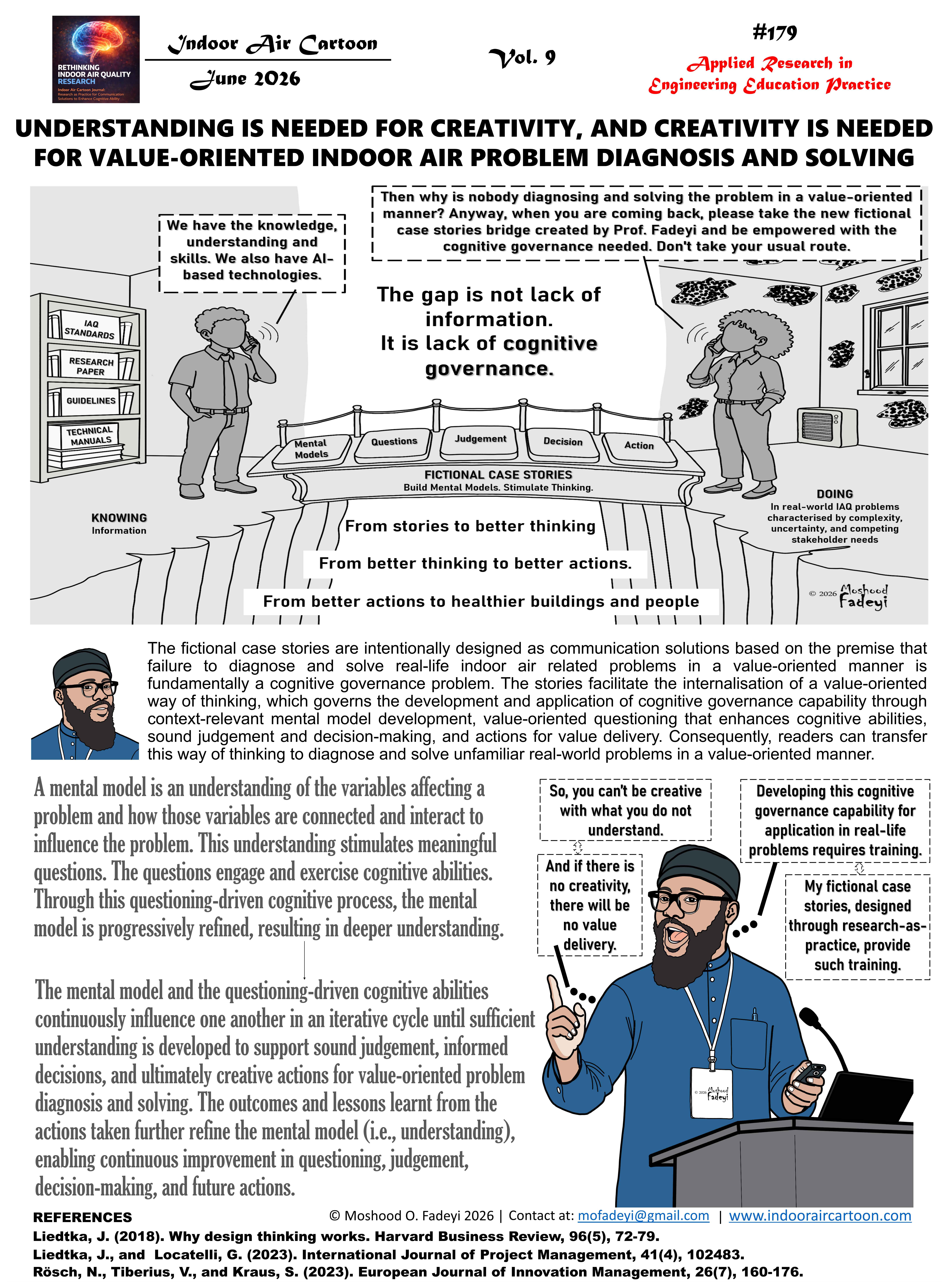

Leave a Reply