Indoor Air Cartoon Journal, December 2025, Volume 8, #173
[Cite as: Fadeyi MO (2025). Developing cognitive ability and competency via practice based applied educational research for valuable IAQ problem solving. Indoor Air Cartoon Journal, December 2025, Volume 8, #173.]

Fictional Case Story (Audio – available online)– Part 1 (Preface, Ch 1 & Ch 2)
Fictional Case Story (Audio – available online) – Part 2 (Ch 3)
Fictional Case Story (Audio – available online) – Part 3 (Ch 3 cont’d)
Fictional Case Story (Audio – available online) – Part 4 (Ch 4)
Fictional Case Story (Audio – available online) – Part 5 (Ch 4 cont’d)
Fictional Case Story (Audio – available online) – Part 6 (Ch 5 & Ch 6)
………………… Preface ……………………
The design to control industrially derived outdoor and indoor air pollution in a country relied heavily on regulations, measurements, and technologies, yet it consistently overlooked a critical determinant of real-world outcomes: human judgement. Despite compliance with emission limits, outdoor air pollutants originating from industrial plants continued to infiltrate homes, schools, and workplaces, harming health and wellbeing. This persistence showed that correct rules alone were insufficient. Under uncertainty, decisions routinely defaulted to procedural safety, convenience, or delay rather than prevention. The missing element was cognitive-operational competence.
This gap was rooted in a societal culture where trust in well-functioning systems gradually replaced individual responsibility. People were losing or not developing the capability to think ethically and in a value-oriented way, to act early, or to turn knowledge into lasting protection for others. Over time, following rules came to be seen as finishing the job, rather than as the starting point for ethical and value-oriented reasoning.
It took a man shaped by a society that trusted systems implicitly to recognise the hidden cost of that trust. His early habit of treating rules as complete answers, rather than as tools requiring ethical and value-oriented judgement, was the same habit he later recognised as embedded in industrial practice to control of indoor air pollution of outdoor origin. As he came to understand that compliance could coexist with harm, and that genuine protection required independent judgement under uncertainty, he committed himself to addressing this gap. The man’s journey in confronting and resolving this systemic flaw is the subject of this fiction story.
………………… Chapter 1 ……………………
Parker was born into a society that functioned smoothly. It was a country with strong institutions, dependable infrastructure, and a deep cultural trust in systems. The trains and buses arrived on time, public services worked quietly in the background, and most people believed that the absence of visible failure was evidence of collective success.
From an early age, children were taught that rules existed for good reasons and that following them kept people safe. The idea that systems could be questioned rarely surfaced, not because questioning was forbidden, but because the systems appeared to work well enough to justify confidence.
Authority was not feared in this society. It was respected. Boundaries were not oppressive. They were reassuring. People spoke about regulations as safeguards rather than constraints, and policies were framed as shields against chaos rather than limits on freedom. In everyday conversations, phrases like “there’s a process for that” or “it’s already regulated” carried the weight of reassurance, signalling that responsibility rested somewhere stable and reliable.
As a toddler, Parker absorbed this atmosphere long before he could articulate it. In childcare centres, colourful posters explained what to do and what not to do. The posters did not warn of punishment but promised harmony, depicting smiling figures who stayed within lines and followed instructions. Teachers spoke gently but firmly about routines. Order was calm, predictable, and comforting. The predictability itself became a form of emotional security, teaching children that uncertainty was unnecessary when guidance already existed.
When children followed instructions, adults smiled. When they did not, correction was swift but measured. No one raised their voice, and no one expressed anger, yet the message was unmistakable. Order restored calm, and calm was valued. Children learnt not through fear but through emotional attunement, sensing when the environment felt right and when it felt strained.
Parker learnt early that safety came from alignment. If he stayed within boundaries, nothing bad happened. If he followed instructions, adults relaxed. He noticed how tension left a room when rules were obeyed, how relief spread quietly across adult faces when routines were followed correctly. He did not experience this as control. He experienced it as care. The absence of conflict felt like protection, and the smooth functioning of the environment felt like evidence that someone else was watching over the details.
This was not a flaw yet. It was socialisation. It was society doing what it believed was necessary to produce stability, predictability, and collective trust. At this stage, Parker was not learning to avoid thinking, but learning when thinking was required and when it had already been done on his behalf. He was being prepared to function well within a system that valued order above improvisation and certainty above moral ambiguity.
What Parker could not yet see was that this same social fabric, while nurturing safety and cooperation, was also gently relocating ethical responsibility away from the individual. Judgement was not eliminated; it was deferred upward, embedded in procedures, policies, and institutional authority.
For a child, this felt comforting rather than constraining, because it removed the burden of deciding what was right in uncertain situations. In this society, the greatest virtue was not courage or independent judgement, but reliability. And Parker, without realising it, was becoming exceptionally reliable.
Kindergarten became the first formal setting in which this broader societal logic was translated into daily practice. The abstract trust in systems that surrounded Parker at home and in public life was now enacted through routine, repetition, and reward within the classroom. In kindergarten, the lesson deepened. Each morning began with rules recited aloud. Stay seated. Raise your hand.
Wait your turn. Parker liked this ritual. It gave shape to the day. It told him exactly how to exist in the space. He noticed that children who followed the rules were trusted with small responsibilities. They were chosen to hand out materials. They were praised publicly.
Beyond the classroom itself, the wider society mirrored this same rhythm. Public spaces were orderly and calm. Adults spoke about safety in terms of systems working properly. Signs, instructions, and routines were presented not as constraints, but as quiet assurances that someone, somewhere, had already thought things through. For a child like Parker, this created a powerful sense that thinking independently was unnecessary when the world already appeared responsibly managed.
What Parker absorbed was not merely the content of the rules, but the emotional economy surrounding them. Calm followed obedience. Approval followed predictability. Disorder created visible tension in adults, even when they remained gentle in their responses. Parker learnt to read these emotional cues with precision. He learnt that being aligned reduced anxiety not only in himself but in the room as a whole.
He became attuned to how collective comfort depended on predictability. He noticed that adults relaxed when children stayed within boundaries, and that deviation, even when harmless, introduced unease. Without anyone explicitly saying so, Parker learnt that moral goodness was closely tied to maintaining order rather than questioning it.
One afternoon, a classmate began coughing violently during snack time. The sound cut through the room, sharp and alarming. Several children turned to look. Parker felt unease rise in his chest. Something was wrong. He knew that instinctively.
The discomfort was physical as much as emotional. His body recognised urgency before his mind could interpret it. Yet that instinct collided immediately with everything he had been taught about proper behaviour. Yet Parker did not stand up. He knew the rules. Children were not meant to leave their seats without permission. Interruptions were discouraged. He raised his hand and waited. When the teacher noticed, she responded calmly and instructed the coughing child to drink water. Eventually, the coughing subsided. The room returned to order.
The calmness of the teacher’s response was reassuring, almost soothing. It signalled that the situation was under control, that there was no need for panic or personal action. For Parker, this calmness carried more weight than the child’s distress had moments earlier.
The episode lasted only a few minutes, yet it left a disproportionate imprint on Parker’s inner reasoning. He experienced the re-establishment of order as relief, not because the child’s distress had been resolved through action, but because authority had intervened. The system had acknowledged the problem, and that acknowledgement alone felt sufficient to restore safety.
What mattered most was not the mechanism of protection, but the presence of authorised oversight. The reassurance came from knowing that responsibility now rested somewhere above him. Parker felt relief. Not because he had acted, but because the system had held.
That moment passed without discussion. No one was blamed. No one was harmed. But something subtle settled inside Parker. He learnt that danger did not require personal judgement if it was acknowledged by authority. He learnt that responsibility could be transferred upward. He learnt that staying within rules felt safer than acting independently.
This learning was not accompanied by fear or guilt. It was accompanied by a sense of having done the correct thing by waiting. The absence of negative consequences strengthened the lesson quietly but firmly.
This lesson did not register as avoidance or hesitation. It registered as maturity. Parker learnt that restraint was a virtue and that waiting for permission was a sign of discipline rather than delay. The absence of visible consequences reinforced the belief that the correct response to uncertainty was patience, not initiative.
In a society that valued calm resolution and trusted institutional response, this belief was constantly affirmed. Parker’s behaviour matched what adults expected from a “good” child, and that alignment was rewarded repeatedly.
Primary school reinforced this pattern with enthusiasm. Parker became the student teachers relied upon. His work was neat. His behaviour was predictable. He was often asked to help manage group activities. Adults described him as mature and dependable.
Reliability became his defining trait. He learnt that being dependable meant reducing unpredictability for others, not introducing new questions or perspectives. In classrooms where time was limited and syllabuses were fixed, such dependability was prized.
Academically, Parker performed consistently well. He was not the most imaginative student, but he was thorough, attentive, and methodical. He listened carefully, followed instructions precisely, and rarely made careless mistakes. Teachers appreciated that he did not challenge lesson structures or derail discussions with speculative questions. In a system that valued coverage of material and orderly progression, Parker thrived.
Assessments rewarded accuracy and alignment with marking schemes. Parker learnt to read questions carefully and respond within expected frames, a skill that translated directly into high scores. Success reinforced the idea that independent judgement was unnecessary when expectations were already clearly defined.
During Parker’s early schooling, formal science education had not yet introduced concepts of exposure or risk. Primary school science focused on basic observations, simple experiments, and descriptive knowledge about the natural world. Parker enjoyed these lessons because they operated within clear boundaries and correct answers. Science felt reassuring when it explained what was already visible and measurable. It did not yet challenge him to reason across invisible pathways or delayed consequences.
This changed during secondary school, when science education became more formal and abstract. Parker was introduced to chemistry, physics, and environmental systems. He learnt about air pollutants, particulate matter, and industrial emissions through diagrams, equations, and simplified models. In science lessons, Parker learnt about pollutants, exposure pathways, and health effects.
He understood the material well, and when teachers explained that industries were regulated to protect public health, Parker felt reassured. Regulation, to him, meant responsibility. The idea that harm could occur even when rules were followed felt destabilising and unnecessary.
Parker performed well because he could memorise frameworks, apply formulas, and reproduce explanations accurately in examinations. He excelled at translating complex ideas into structured answers, even when those ideas involved uncertainty or probabilistic risk. Examinations rarely required him to confront ethical ambiguity or decision-making under incomplete information. As a result, scientific success reinforced the belief that correct reasoning was synonymous with correct outcomes.
Parker did not struggle academically in secondary school. On the contrary, he ranked consistently in the upper tier of his cohort. He was disciplined with revision, structured in his note-taking, and strategic in his preparation. He understood what examiners expected and delivered it reliably. His grades reflected competence, consistency, and alignment with the assessment system. Academic success reinforced his trust in systems as fair and sufficient. There was little incentive to question whether correct answers always translated into protective outcomes.
This same pattern extended beyond the classroom. When classmates complained about strange smells near busy roads or dust settling on windowsills near industrial areas, Parker responded instinctively with the language he had absorbed. Had anyone reported it. Were authorities aware. If no rule had been broken, perhaps it was not serious. These responses were shaped by years of conditioning that linked legitimacy to formal recognition. If a concern had not entered the system, Parker assumed it had not yet earned the status of a real problem.
These responses did not come from indifference. They came from a learnt confidence that problems outside formal recognition were not yet real problems. Parker had learnt to equate legitimacy with official acknowledgement and to equate safety with regulatory presence. This way of thinking allowed him to remain emotionally stable in the face of ambiguity. Uncertainty was resolved by deferring to systems rather than engaging with discomfort directly. He did not think of himself as dismissive. He thought of himself as rational.
Secondary school also transformed this habit into identity. Parker joined committees and councils not because he craved leadership, but because he trusted structure. He enjoyed agendas, protocols, and orderly discussions. Teachers praised his professionalism. They spoke of his leadership potential.
Within these roles, Parker excelled at enforcing procedures rather than questioning their purpose. He ensured meetings ran on time, minutes were recorded accurately, and decisions followed established rules. His peers appreciated his reliability, even if they sometimes found him inflexible. He became known as someone who could be relied upon to keep things running smoothly. What was less visible was how rarely he asked whether the direction itself was right.
Ethics education during this time reinforced what he already believed. Ethics was presented as adherence to laws, codes, and procedures. Parker excelled. He could identify the correct reporting channels and compliance requirements. He could explain why systems existed and how they functioned.
The ethical frameworks presented to him emphasised accountability through structure rather than judgement through reasoning. Right action was defined as correct process rather than protective outcome. Parker absorbed this without resistance because it aligned perfectly with everything he had learnt about safety and responsibility. What he did not encounter was the idea that ethics might require judgement beyond permission.
Occasionally, moments unsettled him. On a school trip, the bus passed an industrial zone blanketed in haze. Someone remarked that people lived nearby. Parker noticed the air, felt discomfort, and then dismissed it with a familiar thought. It must be regulated. This dismissal was not denial. It was a learnt mechanism for maintaining internal stability. Questioning the adequacy of systems felt like questioning the moral order itself. This internal dismissal was not denial. It was self-regulation. Parker had learnt to associate stability with moral correctness.
By the end of secondary school, Parker had become a product of a society that functioned well on the surface. He was competent, calm, and trusted. Yet beneath that success, a crucial capability remained underdeveloped: ethical and value-oriented independent judgement unconstrained by permission.
By the time Parker entered university, his worldview felt complete. He chose environmental engineering because it aligned perfectly with everything he valued. Engineering promised control, predictability, and solutions grounded in evidence. Parker worked hard, mastered the science, and excelled academically. He graduated with first-class honours.
University life reinforced rather than disrupted the mental framework Parker had developed. Lectures rewarded clarity, precision, and adherence to established models. Laboratory work rewarded following protocols exactly. Examinations rewarded reproducing validated methods and recognised theories. Parker thrived in this environment. He was not the loudest student in discussions, but his answers were consistently correct, well-structured, and aligned with marking schemes. Tutors described him as dependable, rigorous, and professional.
Group projects suited him especially well. While others debated assumptions or speculated beyond the brief, Parker ensured that deliverables met stated requirements. He kept teams focused on assessment criteria, timelines, and technical correctness. When marks were released, his groups performed well. Success reinforced his belief that good outcomes followed disciplined compliance with structure.
Career guidance sessions at the university presented a clear message. Industry valued graduates who could operate within regulatory environments, communicate professionally, and manage risk responsibly. Parker fitted this profile almost perfectly. By his final year, he had already completed internships with environmental consultancies, where supervisors praised his caution, his careful language, and his respect for professional boundaries.
………………… Chapter 2 ……………………
Industry welcomed him readily. Parker joined an environmental consultancy serving industrial clients. His role involved assessments, compliance documentation, and mitigation recommendations aligned with regulatory frameworks. He was praised for his professionalism, careful language, and risk awareness.
Securing the job had felt almost inevitable. Interviews focused on his ability to interpret regulations, follow procedures, and communicate findings without overstatement. Parker answered confidently. He spoke the language of standards and limits fluently. When asked how he handled uncertainty, he replied that uncertainty should be resolved through additional data or escalation through appropriate channels. The interview panel nodded in approval.
Parker noticed small inconsistencies early in his career. They were not dramatic violations, but everyday situations where what was technically acceptable did not fully match what people could see, smell, or experience.
A client would minimise a visible emission, for example describing a recurring plume or dust release as “normal operation” because monitoring reports showed values just below regulatory limits. A colleague would caution against raising concerns beyond scope, explaining that questioning impacts outside the contracted assessment area could delay project approval or strain client relationships. A manager would remind the team that limits had not been exceeded, emphasising that as long as measurements complied with regulations, no further action was required or expected.
Each time, Parker felt brief discomfort, a quiet sense that something was unresolved, then resolved it internally. If it was within limits, it was acceptable. Compliance served as reassurance that responsibility had already been fulfilled by the system. If harm existed, the system would respond. Regulators would intervene, additional monitoring would be triggered, or complaints would escalate through official channels. Until then, action was neither required nor encouraged.
These moments taught Parker that professional responsibility ended where regulatory confirmation ended. Acting earlier, or thinking beyond what was formally recognised, felt unnecessary and even risky. Over time, this reasoning became automatic, allowing him to remain calm and confident while potential harm remained unaddressed, as long as it had not yet been formally proven.
The consultancy culture quietly reinforced this logic. Performance reviews praised staff who maintained good client relationships, avoided disputes, and delivered reports that passed regulatory scrutiny. Projects were judged successful when they closed cleanly, not when they triggered difficult questions. Parker learnt quickly how to phrase concerns in neutral language and how to omit speculation that could complicate approval. This was not deception. It was professionalism as defined by the system.
What had once been a strength now carried influence. Promotions followed. Parker became a team lead and later a mid-level manager. He trained junior staff to be precise, to avoid speculation, and to rely on documented standards. These practices were not misguided. They reflected competence, caution, and professional discipline.
As a manager, Parker sat between junior analysts and senior partners. He reviewed reports, guided site visits, and managed client expectations. He taught his team how to frame findings so they were defensible, how to remain within contractual scope, and how to defer unresolved concerns to future phases. Junior staff admired his calmness and clarity. Senior staff trusted his judgement.
What went largely unnoticed, however, was that Parker had come to treat these practices as complete rather than partial. He believed he was teaching responsibility, but responsibility had gradually become defined almost entirely by adherence to rules, limits, and scope, rather than by independent judgement about whether those boundaries were sufficient to prevent harm. In this way, professionalism quietly displaced ethical and value-oriented deliberation. Rules became the endpoint of thinking rather than the starting point for independent judgement.
The turning point did not arrive dramatically. It did not come through an accident, a regulatory breach, or a scandal. It arrived through a routine project that, on paper, appeared no different from many Parker had overseen before. The project involved buildings located downstream of a lead-acid recycling plant. Complaints had been logged by nearby communities. They were not framed as formal violations, but as recurring concerns raised over time. Schools, offices, and residential buildings reported dust, odours, persistent discomfort, and worries about health.
The recycling plant complied with existing regulations. All available documentation confirmed this. Parker was assigned to oversee the assessment. He approached the task in the way he always had. He reviewed compliance records. He examined monitoring data. He checked reporting histories. Every parameter sat within permitted limits. By established criteria, nothing was wrong. The site visits, however, unsettled that conclusion.
Parker first visited a school located closest to the plant. The building was naturally ventilated, relying on open windows for thermal comfort in the warm climate. Windows remained open throughout the day. Teachers spoke quietly of frequent headaches and fatigue among students.
They did not present these as diagnoses, only as patterns they had noticed over months and years. Parents, teachers, office workers, and nearby residents expressed concern, but struggled to articulate it in technical terms. They had been told repeatedly that the plant met standards and that no exceedances had been recorded.
As Parker walked through the surrounding buildings, he noticed details that did not appear in any report. He observed that many windows faced the prevailing wind direction from the recycling plant. He noticed fine dust collecting along window frames, ledges, and classroom corners. He noticed how often children rubbed their eyes, how frequently they rested their heads on desks, how staff spoke about tiredness as though it were routine. None of this constituted proof. None of it crossed a regulatory threshold. Yet none of it felt irrelevant.
Later, Parker visited nearby residential buildings. In one lift lobby, an elderly resident approached him. She asked quietly whether her home was safe. Her voice was careful, deferential. She apologised for asking, as though the question itself might be inappropriate.
That apology unsettled Parker more than any inconsistency in data ever had. He realised that the system he trusted had not only trained professionals to defer responsibility upward, but had trained ordinary people to doubt their own right to question conditions affecting their health.
That night, Parker reviewed the files again. Compliance on one side. Persistent exposure on the other. The two sets of information did not contradict each other, yet they did not align. For the first time in his life, procedure failed to provide clarity.
Parker recognised something deeply unsettling. His professionalism had trained him to wait for proof of harm rather than act to prevent credible risk. His competence had been shaped to operate within boundaries, not to question whether those boundaries were sufficient. He had learned to treat uncertainty as a reason to pause, rather than as a reason to think more deeply.
The pattern became clear to him. His reports could close projects without closing risks. His recommendations could satisfy contracts without protecting occupants. He was not acting negligently. He was acting correctly. Yet correctness was no longer enough.
He raised cautious concerns internally. He spoke about ventilation pathways, prevailing wind effects, and cumulative exposure. He was reminded of contractual scope and evidentiary requirements. He nodded, as he always had. This time, nodding felt like surrender.
The firm did not silence him. It did not dismiss his concern. It simply redirected it. “This is important,” a senior partner said, “but it sits outside our current mandate.” Parker understood what that meant. The system acknowledged the concern without absorbing responsibility for it.
Parker wrestled with the idea of change. Doing nothing would be safe. It would preserve his standing. It would align with every success he had achieved so far. Changing would require judgement without permission. It would require reasoning that could not wait for perfect data. It would require ethical deliberation under uncertainty.
He realised then that what he lacked was not knowledge or care. It was ethical and value-oriented independent judgement, constrained by his dependence on rules as endpoints rather than starting points. His professionalism had masked that absence.
For weeks, Parker debated internally. He reminded himself that rules existed for a reason. He warned himself that acting beyond scope could create unintended consequences. He feared becoming irresponsible in the name of responsibility.
Yet the images did not leave him. The open windows. The dust on ledges. The children. The apologetic question. He understood then that rules only set the lowest line for what is allowed, not the higher standard of what is right or necessary to protect people. For the first time, he recognised that compliance could coexist with harm, and that staying within boundaries did not guarantee that anyone was actually being protected.
What troubled him most was another realisation. Even if new regulations were introduced tomorrow, the same pattern would repeat unless the people interpreting and applying them possessed the cognitive ability to reason ethically under uncertainty. Rules could guide action, but they could not replace judgement at the moment when human wellbeing was at stake.
This realisation changed how Parker interpreted everything he had seen. What became clear to him was that no amount of better data, tighter monitoring, or additional technical controls would resolve what he had witnessed. Measurements could be refined, reports expanded, and regulations rewritten, yet the same hesitation would still arise at the critical moment when someone had to decide whether to act beyond what was strictly required.
The failure he was confronting was not a failure of engineering or science, but a failure of judgement shaped by habit, training, and professional culture. The problem was not only technical. It was human, embedded in how people had been taught to think, decide, and defer responsibility, and it had become impossible for him to ignore.
This realisation left Parker with an uncomfortable clarity. If the problem was human judgement rather than technical absence, then solving it could not rely on producing more data or refining existing tools alone. It required changing how people thought, how they interpreted uncertainty, and how they made decisions when rules fell silent. The very space where harm continued to occur was the space between compliance and conscience, and Parker could now see that no technical report could fill that gap on its own.
For the first time, Parker understood that the solution he was searching for did not sit neatly inside a laboratory, a simulation, or a journal article. It had to live where decisions were actually made: in meetings, site visits, reports, contracts, and everyday professional judgement. The work ahead was not about discovering new pollutants or inventing new instruments. It was about developing cognitive ability and decision competence in real people, under real constraints, in real systems.
The decision to pursue a Doctor of Engineering emerged slowly, not as ambition, but as necessity. Parker did not want to abandon systems. He wanted to strengthen the human judgement operating within them.
At the same time, Parker was honest with himself about another dimension of the decision. Years in industry had shown him that influence often followed credentials. Titles mattered, not because they guaranteed wisdom, but because they opened doors.
Being recognised as “Doctor” would give weight to arguments that had previously been dismissed as opinion or concern outside scope. The degree was not about status for its own sake, but about gaining the authority needed to challenge established habits without being marginalised.
He was not pursuing the degree to escape industry or to retreat into academia. Nor was he driven by a long-held ambition to become a professor. If anything, Parker had once assumed he would spend his entire career in consultancy. Yet he now recognised that doctoral-level formation could equip him with a different kind of professional leverage: the ability to bridge industry, education, and ethical leadership in a way his current role could not fully support.
A traditional PhD felt misaligned with this need. A PhD would generate knowledge, but it would not necessarily change how professionals think or act in daily practice. Parker had seen too many well-written reports and well-cited studies sit unused while decisions on the ground remained unchanged. The gap was not a lack of evidence. It was a lack of cognitive readiness to use that evidence ethically and preventively. Parker needed a pathway that allowed him to remain embedded in industry while developing solutions through practice itself.
The Doctor of Engineering offered precisely what the situation demanded. It allowed research to be conducted as and within professional practice, that is, practice-based research, rather than research conducted about practice from a distance. It enabled intervention, reflection, refinement, and impact to occur iteratively and in real time, within the same organisational and operational contexts where decisions were being made.
Most importantly, it treated the development of professional judgement and ethical, value-oriented decision capability as a legitimate doctoral outcome, rather than an incidental by-product of technical inquiry.
The consultancy recognised this as well. Senior leadership had begun facing reputational pressure and community scrutiny. Complaints were becoming harder to dismiss. Clients were asking more difficult questions. Regulators were paying closer attention not only to compliance, but to intent and accountability. The firm could sense that technical excellence alone was no longer sufficient protection.
They saw value in developing internal capability that went beyond compliance. They recognised that the next generation of risk did not come from breaking rules, but from meeting them while failing to protect people. When Parker proposed a Doctor of Engineering focused on developing cognitive ability and competency through practice-based applied educational research, the idea resonated.
From the organisation’s perspective, sponsoring Parker’s DEng served multiple purposes. It functioned as recognition for his years of disciplined service and leadership. It acted as a retention strategy, signalling trust and long-term investment in his growth. It also positioned Parker as a visible internal champion for a new way of thinking about IAQ risk, one that could cascade across teams, projects, and clients.
Rather than hiring external consultants or issuing new policy statements, the firm chose to develop capability from within. Parker’s doctoral journey would become a live experiment in organisational learning, with direct feedback into practice. His work would inform training, reporting culture, and decision frameworks across the company.
The firm agreed to sponsor his DEng while he continued working. The university welcomed the collaboration. The degree title reflected the ambition clearly: Developing Cognitive Ability and Competency via Practice-Based Applied Educational Research for Valuable IAQ Problem Solving.
For the organisation, the sponsorship was strategic. It offered a way to strengthen ethical decision-making capacity across projects, reduce long-term risk, and demonstrate leadership beyond minimum standards. It signalled a shift from asking, “Are we compliant?” to asking, “Are we doing enough to protect people?” For Parker, it was deeply personal.
Privately, Parker also understood that the degree would change how he was seen, both inside and outside the firm. The credibility of doctoral training would allow him to speak across professional boundaries, to engage regulators, educators, and communities with confidence, and to design communication interventions that carried intellectual weight as well as practical relevance.
When Parker submitted his application, he felt fear rather than pride. He was stepping away from safety defined by permission and toward responsibility defined by judgement, recognising that this personal shift required a structured, rigorous, and practice-embedded mode of inquiry rather than reflection alone. What he sought was not distance from practice, but a disciplined way of learning through practice itself, one that could transform how decisions were made in real industrial contexts.
This necessity shaped his choice of methodology. This practice-based applied educational research, also referred to as applied research in engineering education practice, is therefore guided by the following real-life problem statement.
………
“Communities located near lead-acid recycling plants continue to face elevated risk of indoor exposure to lead (Pb) and other co-pollutants originating from industrial activities. Despite decades of regulatory standards, emission limits, monitoring protocols, and engineering controls, outdoor industrial pollutants persistently enter homes, schools, offices, and public buildings downstream of the lead-acid recycling plants through ventilation and infiltration pathways.
This ongoing exposure has well-documented implications for physical health, cognitive functioning, and mental wellbeing, particularly among children and other vulnerable populations. The persistence of this problem indicates a fundamental gap between the intended performance of current indoor air quality (IAQ) control approaches and their actual effectiveness in preventing harm.
The prevailing approach to managing industrially derived indoor air pollution is dominated by compliance-driven regulation, episodic monitoring, and post-hoc technical mitigation. Emission control decisions at source are often guided by threshold compliance rather than by preventive, human-centred reasoning.
Similarly, downstream responses tend to focus on indoor symptom management, such as filtration or remediation, rather than on preventing polluted outdoor air from entering buildings in the first place. These approaches assume that correct rules, measurements, and technologies are sufficient to protect health. However, real-world outcomes suggest otherwise.
A critical limitation of current solutions is that they rely heavily on external controls such as regulations, measurements, enforcement, and technology, while underestimating the role of human cognitive ability in shaping decisions that determine pollutant release, transport, and exposure.
Operators, practitioners, regulators, and community actors are frequently required to make discretionary decisions when real-time environmental and operational information is incomplete, even though they may possess adequate technical knowledge. In such situations, without the cognitive ability to reason causally, recognise responsibility, prioritise human wellbeing, and act preventively, decision-making tends to default to convenience, procedural compliance, or delayed response.
As a result, the current system exhibits three interconnected performance gaps. First, at the industrial source, emission-control decisions often fail to prioritise prevention beyond minimum compliance, allowing avoidable releases of lead and co-pollutants that later infiltrate the indoor environments of buildings downstream of the recycling plant.
Second, across the wider system, even when people are aware of the risks, protective actions are often taken only after problems arise, or only when someone is watching or enforcing the rules, rather than being carried out consistently and independently during everyday work under real pressure.
Third, and most critically, intervention designs for indoor environments frequently lack coherence, value orientation, and ethical grounding. Poorly reasoned designs may appear technically plausible yet fail to address how pollutants actually enter buildings, misallocate responsibility, or shift the burden of protection onto occupants who lack control over exposure.
The expected or future situation is one in which decision-makers across the system possess the cognitive ability to think preventively, reason across source–pathway–exposure relationships, and design and enact interventions that genuinely reduce indoor exposure to industrial pollutants. In this future state, emission control at source is guided not only by compliance but by ethical, value-aligned judgement.
Mitigation behaviour is sustained, autonomous, and resilient under operational constraints. Intervention designs for downstream buildings are coherent, proportionate, and capable of delivering meaningful reductions in indoor Pb and co-pollutant concentrations, with corresponding improvements in physical health, cognitive performance, and mental wellbeing.
The gap between the current and desired states is therefore not primarily a lack of data, standards, or technology, but a lack of cognitive-operational competence. Existing solutions inadequately develop the human capability required to make ethically grounded, preventive decisions and to translate such reasoning into effective behaviour and high-quality intervention design. This gap explains why interventions often fail despite earnest effort and why harmful exposure persists even in regulated environments.
The need to develop solutions capable of bridging this gap in cognitive-operational competence motivated a fundamentally different research approach: practice-based applied educational research. In this study, practice-based applied educational research functions as a means of sharpening the researcher’s competency to design communication solutions that improve stakeholders’ cognitive ability, thereby enabling ethical and value-oriented practice rather than rule-driven or reactive compliance.
By strengthening critical and reflective thinking, abstract reasoning, logical deduction, and creative imagination through communication-driven, practice-embedded educational interventions, the research seeks to transform how decisions are made, how actions are sustained, and how solutions are designed in real-world contexts.
The problem addressed by this study is therefore the failure of current indoor air quality control approaches to develop the cognitive-operational capability required to make ethical, preventive decisions that reduce industrially derived indoor air pollution and protect human wellbeing in a durable, value-oriented manner.”
His interest and courageous ambition to address this research problem led him to formulate three research questions that needed to be answered. The research questions are as follows:
(i) How can practice-based applied educational research be used to design and refine cognitive-ability-building communication interventions that develop ethical, value-aligned decision-making among recycling-plant operators, building-environment practitioners, regulators and policymakers, enabling them to make emission-control choices that reduce lead (Pb) and other associated pollutants at source and limit infiltration into indoor spaces?
(ii) How does sustained participation in practice-based applied educational research transform the decision capability and mitigation behaviour of recycling-plant operators, relevant building-environment practitioners, regulators, policymakers, and everyday building occupants in identifying, preventing, and reducing outdoor-to-indoor transport of lead (Pb) and other pollutants via ventilation and infiltration pathways?
(iii) How can practice-based applied educational research demonstrate that improvements in cognitive ability strengthen indoor air quality intervention-design competence, as reflected in the production of coherent, ethically grounded, and value-oriented designs that plausibly reduce outdoor-to-indoor transport of lead (Pb) and other co-pollutants through ventilation and infiltration pathways in downstream buildings?
For the first research question, the Null Hypothesis (H01) is that practice-based applied educational interventions do not develop ethical cognitive-decision competency and therefore do not improve Pb and co-pollutant emission control at source. The Alternative Hypothesis (H11) is that practice-based applied educational interventions develop ethical, value-aligned cognitive ability that enables preventive operational decisions, leading to lower pollutant release and measurable progress toward valuable IAQ problem solving.
For the second research question, the Null Hypothesis (H02) is that participation in practice-based applied educational research does not change mitigation behaviour or decision capability among industrial, policy, building-management, or community stakeholders. The Alternative Hypothesis (H12) is that participation builds cognitive-operational competency, leading to improved diagnostic reasoning, ventilation and infiltration decisions, and mitigation execution that reduces indoor Pb and co-pollutant exposure, demonstrating valuable IAQ problem solving.
For the third research question, the Null Hypothesis (H03) is that cognitive-ability improvement within a practice-based applied educational framework has no measurable effect on IAQ intervention-design competence for reducing outdoor-to-indoor transport of Pb and co-pollutants in downstream buildings. The Alternative Hypothesis (H13) is that cognitive-ability improvement within a practice-based applied educational framework strengthens IAQ intervention-design competence, evidenced by coherent, ethically grounded, and value-oriented designs that plausibly reduce outdoor-to-indoor transport of lead (Pb) and co-pollutants in downstream buildings.
The research questions and problems informed the following objectives of his PhD research:
(i) To use practice-based applied educational research to design and refine communication interventions that build ethical, value-aligned cognitive ability among key stakeholders, enabling preventive emission-control decisions that reduce lead (Pb) and associated pollutants at source and limit indoor infiltration.
(ii) To evaluate how sustained participation in practice-based applied educational research strengthens decision capability and mitigation behaviour across industrial, professional, regulatory, and community actors in preventing outdoor-to-indoor transport of lead (Pb) and other pollutants through ventilation and infiltration pathways.
(iii) To demonstrate that cognitive-ability improvement achieved through practice-based applied educational research enhances indoor air quality intervention-design competence, as evidenced by coherent, ethically grounded, and value-oriented designs that plausibly reduce outdoor-to-indoor transport of lead (Pb) and co-pollutants in downstream buildings.
………………… Chapter 3 ……………………
Research Methods
Methods for Research Question 1:
Background
This section reports how the adopted practice based applied educational research developed and evaluated ethical, value-aligned cognitive ability among participants working inside lead-acid battery recycling plants, enabling them to make preventive, protection-first emission-control decisions at source. The methodological foundation rested on the recognition that these facilities did not struggle because they lacked access to technology.
Filtration systems, negative-pressure enclosures, wet scrubbers, local exhaust ventilation, and formal slag-handling protocols were already documented within engineering guidance and regulatory frameworks. Many plants had installed these systems years earlier.
Yet lead emissions and associated pollutants continued to escape into the ambient air. This indicated that the problem was not the absence of procedures or equipment, but the absence of ethical and value-oriented thinking strong enough to prioritise protection over production pace, production deadlines, convenience, or habitual shortcuts.
The purpose of the methodology was therefore not to introduce more information into the workplace, but to strengthen cognitive ability by reshaping the ethical and value-oriented mental models through which operational decisions were made. Knowing the right procedure is not enough if decisions are not guided by ethical-value responsibility. People act preventively only when knowledge is connected to a genuine sense of ethical-value obligation.
This is why the methodology was embedded inside real recycling plants, where decisions carry immediate pressure and real consequences, meaning that a single lapse can release harmful lead dust, endanger nearby families, disrupt operations, and expose workers to risk. In such conditions, the weight of each choice becomes visible and unavoidable, allowing ethical-value understanding to mature through actual practice.
Within this design, the plant functioned not as a site of measurement but as a real-time cognitive learning environment. Stakeholders such as operators, engineers, supervisors, regulators and building-environment practitioners were positioned within live operational sequences in which hood maintenance, breaker operation, slag transfer, furnace charging and exhaust-flow management intersected with competing workplace priorities.
The inclusion of building-environment practitioners was important because they are professionals who understand how pollution released outdoors can enter nearby buildings through ventilation and infiltration pathways.
The intervention therefore took place in a setting where ethical and value-based choices could not be separated from daily work or postponed to theory. It was within this lived operational reality that the research aimed to cultivate a stable form of ethical-value cognitive ability capable of guiding preventive emission-control decisions even when no supervision or external monitoring was present.
Central to the methodology was the use of communication not as instruction but as a cognitive and ethical catalyst. The research shifted participants’ internal questioning from “Which procedure applies here?” to “What protects the people who will breathe what leaves this plant?”
This transition toward person-centred and responsibility-based reasoning was essential because genuine prevention cannot occur when protection is treated as secondary. The methodology therefore sought to cultivate a durable ethical and value disposition capable of anchoring all emission-relevant decisions at source.
Baseline Assessment of Ethical Reasoning and Value Orientation
The study began with a structured baseline assessment designed to reveal the ethical reasoning, value priorities, and cognitive frames that guided participants’ emission-related decisions before any educational intervention occurred. This assessment was conducted in small groups of three to six participants to maximise the quality of dialogue, enable collaborative reasoning, and provide a naturalistic social context similar to real workplace decision-making.
The assessment for each participant was deliberately divided into two sixty-minute sessions conducted on separate days. This spacing served two methodological purposes. First, it allowed time for cognitive processing, giving participants the opportunity to reflect, consolidate their thoughts and revisit their reasoning without the pressure of continuous task performance.
Second, it reduced the likelihood that participants would approach the scenarios as short-term tasks to be completed correctly in a single sitting. When assessments are compressed into one session, individuals often default to procedural or performance-driven responses that appear technically competent but do not reveal their genuine ethical stance.
By separating the sessions, the design encouraged deeper reflection and made it more difficult for participants to rely on quick, surface-level answers. This created the conditions for uncovering the underlying value orientation and ethical reasoning that guided their emission-related decisions before the intervention.
The assessment used scenario-based indoor air quality decision tasks rooted in real plant operations. Scenarios were written to mirror routine but ethically consequential situations inside lead-acid battery recycling plants, such as deciding whether to delay closing an enclosure during a high-pressure processing cycle, choosing how to respond when slag-transfer sealing was incomplete, or determining whether operations should continue during an exhaust-hood malfunction.
To ensure realism, scenarios were developed from field observations, interviews and process-flow mapping carried out prior to the assessment phase. Each scenario contained a technically correct solution, but critically, the task was not to identify the correct action. Participants were instead asked to articulate the reasoning behind their choice, describe the values informing the decision, and explain who they believed would be affected by the outcome.
During each session, the facilitator introduced three to four scenarios sequentially. For each scenario, participants were given a short-written question or instruction and asked to write down their reasoning in response. This was not an essay, but a brief, focused written explanation captured in about two minutes. This prevented group influence from shaping initial value expression.
Participants then discussed their choices collectively, responding to facilitator prompts designed to surface ethical stance, such as “What matters most in this situation?”, “Whose safety is being protected?”, and “How do you justify the trade-off you selected?” Discussions were audio-recorded for later analysis. Because the study focused on ethical cognition rather than correct procedure, the facilitator avoided correcting participants or indicating preferred answers. The purpose was to observe natural reasoning, not to shape it.
The two-session structure was essential for research quality. The first session produced raw reasoning that reflected habitual workplace thinking. The second session, delivered after at least twenty-four hours, revealed whether participants reconsidered their earlier choices once removed from immediate group dynamics and operational pressure.
This provided insight into the stability of their ethical stance. If a participant shifted reasoning without any intervention given, the shift was coded as reflective reconsideration rather than educational effect, allowing the methodology to isolate transformation attributable only to the later intervention phases.
All written responses and group discussions were typed out and analysed using a framework the study created to identify the values guiding each decision. The analysis is based on a framework that differentiated between regulation-driven reasoning, convenience-driven reasoning, production-driven reasoning, shared-responsibility reasoning and protection-driven reasoning. It also captured attribution of responsibility, recognition of downstream community impact, and degree of ethical weighting applied to children, workers and the public.
Two trained researchers analysed each participant’s response to every scenario separately to ensure consistency. When their interpretations differed, they discussed them until they reached agreement. These agreed interpretations formed the baseline picture of each participant’s ethical reasoning before the intervention began.
The baseline assessment did not test whether participants knew the correct procedures, because that knowledge was already present. Instead, it examined the mental models guiding how they understood risk, whose wellbeing they considered important, and how they justified decisions when work pressure or convenience conflicted with safety.
This created a clear picture of the ethical thinking inside the plant before any educational intervention began. It acted as the reference point for evaluating later change, ensuring that improvements in reasoning, judgement, or value alignment could be linked to the practice-based applied educational research rather than to routine training or compliance reminders.
As the research sought not to measure pollutants but to transform the reasoning that controls them, this baseline became the essential starting point from which Phases A, B and C would build: first cultivating ethical and value-aligned cognitive growth, then capturing its evolution, and finally verifying its expression through preventive emission-control redesign.
Phase A: Communication-Driven Cognitive Intervention
Phase A operationalised the core educational component of the research by embedding communication-driven cognitive development directly into the functioning recycling plant.
This intervention was designed not as a training programme, classroom session, or theoretical workshop, but as an integrated component of daily work. Its purpose was to shift the ethical and value-aligned cognitive framing through which participants interpreted and enacted emission-relevant decisions. What distinguishes the methodology is that it used workplace reality itself as the learning medium; ethical and value-based reasoning was not taught abstractly but developed through situated practice.
The intervention began with the co-development of a set of narrative micro-cases grounded in the plant’s real operational record. These micro-cases were constructed from documented incidents involving partial enclosure, delayed hood closure, incomplete slag-transfer sealing, waste-handling shortcuts and misaligned exhaust flows.
Each micro-case presented a short, realistic storyline describing the operational moment, surrounding pressures and constraints, and the downstream consequence that followed. The cases did not assign blame. Rather, they surfaced the ethical and value dimensions often concealed within routine decisions, highlighting how choices were shaped by what was prioritised in the moment. The micro-cases were written in clear, accessible language and validated with plant supervisors to ensure accuracy and contextual fidelity.
Each narrative was accompanied by a visual pollutant-pathway reasoning map. The maps showed, for example, how contaminated air escaping from an unsealed breaker and not being properly contained or treated at source could be exhausted into the surrounding outdoor air and transported downwind, eventually contributing to measurable pollutant accumulation inside buildings located several hundred metres to more than one kilometre away.
These maps made explicit what practitioners rarely see: how small lapses at source become indoor exposures elsewhere. These reasoning maps served as cognitive scaffolds that enabled participants to visualise, externalise, and critically examine the real consequences of their operational choices in a way that day-to-day industrial routines do not normally make visible.
Intervention sessions occurred in short cycles, typically ten to fifteen minutes, embedded at natural pauses in workflow such as pre-shift meetings, hood-inspection periods, or change-of-task transitions. This ensured that the intervention did not compete with production obligations but remained situated where real decisions occurred.
A total of forty participants took part in the intervention, and each participant completed twelve cycles delivered over six weeks, with two cycles per week. Each session involved three structured steps: narrative engagement, value-oriented reasoning prompts, and a decision-justification dialogue.
During narrative engagement, a facilitator or supervisor read a micro-case aloud or presented it visually on a tablet or printed card. Participants were asked to identify the decision point within the story and to describe what they believed the operator in the case was thinking.
This step activated cognitive empathy and required participants to recognise the pressures that shape real choices. Micro-cases were rotated across cycles so that participants encountered a range of operational dilemmas relevant to enclosure integrity, hood response, slag handling and airflow management.
The value-oriented reasoning prompts were designed to disrupt habitual procedural thinking. They included questions such as “Who is affected if this enclosure is not sealed immediately?”, “What does protection require in this moment?”, and “What trade-off is being made, and who absorbs the cost?”
These prompts were intentionally open-ended, requiring participants to articulate reasoning rather than recall procedures. They also made visible the community-level and child-exposure implications that are typically absent from operational decision-making. All prompts were standardised across cycles so that reasoning patterns could be compared consistently.
In the decision-justification dialogue, participants justified how they themselves would act in the scenario. They were required to explain not only what action they would take, but why. The emphasis on articulation was critical. When participants stated their reasoning aloud in the presence of colleagues, unexamined assumptions and value priorities became visible.
The facilitator recorded each participant’s justification verbatim in a structured log for later analysis, ensuring that the methodological process captured reasoning rather than performance. These dialogic exchanges often revealed conflicts between production pressure and protection duty, allowing the facilitator to guide participants toward an ethical reframing. Importantly, the facilitator provided no corrective feedback, ensuring that the data reflected authentic reasoning rather than coached responses.
The intervention cycles recurred across multiple weeks so that cognitive shifts could stabilise through repetition. Discussions were intentionally brief, frequent, and connected to live operational contexts. A slag-handling micro-case, for example, was always discussed near the slag-transfer area; an enclosure micro-case was discussed adjacent to an actual enclosure.
This situated delivery allowed participants to connect the ethical reasoning directly to the physical systems and equipment under their control. Location-specific delivery was applied consistently to all twelve cycles so that reasoning was always anchored to real equipment and real conditions.
Throughout Phase A, no new technical information was introduced. The purpose was not to increase procedural knowledge but to transform the meaning and ethical weight attributed to the knowledge participants already possessed. Facilitators provided no corrective instruction, allowing the intervention to focus strictly on eliciting and documenting how participants interpreted operational dilemmas. As participants began to articulate, reflect upon, and refine their reasoning, a cumulative dataset of value-oriented justifications was generated for subsequent analysis in Phase B.
By embedding communication-driven cognitive intervention directly into daily industrial practice, Phase A cultivated ethical-value reasoning within the lived complexity of operational constraints.
The methodological structure is fully replicable because it specifies the cycle duration, scenario format, prompting structure, facilitator role, logging requirements, and workplace-situated delivery conditions necessary to reproduce the intervention in any high-risk industrial environment. It demonstrates how ethical-value reasoning can be strengthened not through instruction but through structured cognitive engagement embedded in real work.
CET (Continuing Education and Training) -Aligned Competency Rubrics as Cognitive Mirrors: To evaluate cognitive-ethical development, the study employed facilitator-administered CET-aligned competency rubrics that were integrated directly into practice. The CET alignment did not take the form of classroom instruction, lectures, or content delivery sessions. Instead, it reflected a workplace-based continuing professional development model in which learning occurred through guided reasoning, situated dialogue, and reflective engagement embedded within live operational decision-making.
The rubrics captured the depth and coherence of ethical and value-based justification rather than procedural performance. They assessed whether participants framed their decisions in terms of human protection, demonstrated preventive reasoning over reactive behaviour, articulated an understanding of long-term exposure implications, and could defend their choices under scrutiny.
Importantly, the rubrics were applied simultaneously with Phase A, within each ten- to fifteen-minute intervention cycle, so that reasoning was assessed in real time at the moment participants articulated their decisions. The CET-aligned rubrics were the instrument used to observe, record, and track cognitive change while Phase A was happening. This real-time, practice-embedded assessment is consistent with CET principles, which emphasise competence development within authentic professional contexts rather than knowledge transmission in detached learning environments.
The rubrics served as cognitive mirrors, allowing participants to observe their own intellectual movement from rule-following to value-aligned responsibility. As competence was defined as judgement rooted in ethical and value-oriented cognitive ability rather than task execution, the rubrics supported reflective self-evaluation.
Although participants never viewed the rubrics themselves, the facilitator used the rubric structure to guide dialogue in ways that helped participants recognise that ethical and value reasoning has practical consequences for real operational decisions. This indirect use of the rubrics aligns with CET practice, where assessment frameworks shape learning through facilitated reflection and feedback rather than formal examination or didactic instruction.
Embedding the rubrics inside Phase A, rather than applying them retrospectively, ensured that cognitive shifts were captured at the moment decisions were made, when competing pressures, constraints and motivations were actively shaping judgement. The rubrics were refined throughout the study to ensure they remained sensitive to the industrial context and meaningful for workforce development. This iterative refinement reflects CET’s emphasis on relevance, contextual validity, and alignment with real professional practice.
The same rubric framework was applied across Phases A, B and C, although to different forms of data. Its continuous, real-time use in Phase A created a coherent link to Phase B, where reflective materials helped explain why rubric patterns had shifted, and to Phase C, where operational redesigns demonstrated whether the reasoning captured by the rubrics had matured into preventive action.
This embedded, cross-phase use strengthened the alignment between cognitive growth and practical transformation in a manner consistent with outcome-oriented CET frameworks focused on capability rather than attendance or content coverage.
Crucially, the rubrics were applied not only to spoken justifications but also to the written, diagrammatic and audio-recorded data generated across intervention cycles. This comprehensive use allowed the study to construct a multidimensional portrait of each participant’s cognitive trajectory.
As the study emphasised capability development rather than empirical measurement, the rubrics functioned as the central evaluative tool for tracing how ethical-value reasoning matured throughout Phase A and continued to develop in subsequent phases, thereby fulfilling the core purpose of CET as a mechanism for sustained professional capability development embedded in practice rather than lecture-based training.
Phase B: Reflective Learning Capture
Phase B functioned as a structured reflective layer designed to convert participants’ operational experiences from Phase A into deliberate cognitive learning. This phase did not occur within the ten- to fifteen-minute intervention cycles. Instead, after each cycle ended, participants documented their reasoning and emotional responses using four standardised formats: written reflection journals, think-aloud audio recordings, annotated mental-model diagrams, and written cognitive-rationale statements.
These materials were intentionally diversified to capture how participants processed ethical-value questions across different expressive modes. Participants also completed guided reflection prompts developed for the study. These prompts required them to describe not only the operational decision they would have made but the thought process and emotional considerations that shaped that decision.
The inclusion of emotional reflection was methodologically important because the study examined ethical-value cognition as a capability that draws upon both reasoning and affective engagement. All reflective artefacts were collected systematically at the end of each of the twelve intervention cycles, creating a sequential dataset capable of capturing the development of ethical-value reasoning over time.
Each journal entry, recording, diagram and written rationale was timestamped, catalogued and transcribed where necessary, ensuring consistency in how data sources were prepared for analysis. The reflection prompts were held constant across cycles, enabling comparative analysis of how participants’ explanations evolved in structure, depth and value orientation.
Each reflective artefact was analysed using the same CET-aligned coding framework employed during the baseline assessment and Phase A. This ensured methodological continuity by allowing the research team to examine whether the cognitive patterns displayed during live intervention dialogues were also present during reflective processing.
Coders applied the framework to identify reasoning categories, value-weighting tendencies, protection-oriented justification patterns and indicators of preventive cognitive framing. This approach created a cross-mode analytic structure in which spoken, written and diagrammatic data could be examined using a unified set of evaluative criteria.
Cross-source triangulation was built into the analytic procedure. Facilitators compared coded reflections with coded intervention-session justifications to determine whether reasoning expressed in reflection aligned with reasoning articulated during real-time decision-making simulations.
This triangulation procedure strengthened methodological robustness by reducing the risk that observed cognitive patterns were artefacts of any single data-collection format. The analytic process focused exclusively on documenting how participants constructed ethical-value meaning within their reflections, without interpreting these constructions as outcomes within the methodological section.
Phase B also functioned pedagogically by requiring participants to rehearse and articulate their reasoning in multiple forms. Each reflective task was designed so that the act of writing, diagramming or speaking helped participants revisit the dilemmas discussed in Phase A and re-engage the ethical-value tensions embedded within them. This reflective repetition served as an intentional component of the methodology, supporting the consolidation of reasoning patterns that could later be examined for stability, coherence and depth.
The reflective dataset constituted a central methodological foundation because the study sought to evaluate cognitive capability development rather than measure environmental concentrations. Treating text, voice and diagrams as primary data aligned with the study’s orientation toward understanding the cognitive determinants that precede emission-related behaviour. Phase B therefore provided the structured mechanism through which the internal processes driving participants’ ethical-value interpretations could be systematically captured, documented and analysed.
Phase C: Competence Demonstration Through Emission-Control Redesign
Cognitive ability transformation had to be demonstrated through tangible action. In Phase C, participants redesigned emission-control practices at source without prescriptive guidance. This redesign phase did not occur within the ten- to fifteen-minute intervention cycles and did not form part of the immediate reflective work associated with Phase B.
Instead, it followed the completion of both Phase A’s dialogue-based cognitive development and Phase B’s structured reflective consolidation. By sequencing the phases in this way, the redesign activity tested whether the ethical-value cognitive capability developed and stabilised earlier could be independently applied to real operational vulnerabilities.
The redesign process took place over a structured two-week period during which participants worked individually and in small groups to conceptualise modifications to plant processes. Facilitators provided no technical direction, ensuring that all proposed interventions reflected participants’ own ethical-value reasoning rather than external instruction.
This deliberate absence of guidance preserved the methodological aim of Phase C, which was to assess whether internalised ethical-value cognition was sufficiently robust to generate protection-first emission-control solutions without reliance on external prompts.
Participants conceptually redesigned breaker-zone sealing approaches, re-evaluated airflow patterns to reduce outward leakage, introduced pre-shift hood-integrity verification routines, shortened slag-transfer pathways, and restructured responsibility assignments to ensure continuous oversight.
These redesigns were entirely design exercises rather than physical construction activities; participants developed preventive operational concepts, not new hardware installations. They were not evaluated for technological sophistication but for coherence with ethical-value reasoning and preventive logic.
Participants were asked to prepare written rationales explaining the ethical and value foundations of their proposals, explicitly linking each recommendation to the obligations and value commitments established during the intervention. These rationales provided a second layer of data demonstrating whether the solutions emerged from internalised ethical-value cognition or from habitual procedural thinking.
Each proposed redesign underwent assessments by a panel of independent subject-matter experts involving IAQ specialists, regulators, building-environment practitioners, and community representatives. The panel assessed whether the redesigns were grounded in ethical and value intention, feasible within plant constraints, and likely to reduce pollutant release.
Panel discussions were recorded and analysed to capture how external reviewers interpreted the ethical-value logic embedded in participants’ proposals. Their evaluations provided an additional source of evidence confirming whether the cognitive transformation observed throughout the study translated into preventive operational capability.
The study found that when participants generated emission-control solutions motivated by internalised ethical-value responsibility rather than external enforcement, competence had matured and ethical-value cognition had been successfully developed. Phase C therefore functioned as both a summative assessment and a practical verification that ethical-value cognitive development had produced operationally meaningful outcomes.
Ethical Considerations
The methodological approach for Research Question 1 required strong ethical safeguards because the study was conducted inside an active lead-acid battery recycling plant where operational decisions have direct implications for worker safety and community exposure. The research did not measure pollutants or intervene in technical processes; instead, it examined and strengthened the ethical and value reasoning that guides emission-related decisions. This made it essential to ensure that participation posed no risk to employment, safety, or regulatory obligations.
Participation was voluntary, with informed consent obtained through a clear explanation that the study did not evaluate job performance or compliance. All reasoning dialogues, written reflections and redesign rationales were anonymised, and no data were shared with management or regulators in a way that could identify individuals. This protection was especially important given the sensitivity of discussing decision-making in high-risk industrial environments.
Micro-cases and reasoning exercises were fictionalised versions of typical operational situations. They were designed to surface ethical and value considerations without requiring workers to admit past mistakes or disclose confidential operational details. Intervention cycles took place during natural pauses in workflow, ensuring that the research never distracted from safety-critical tasks or disrupted production.
The methodology also carried ethical obligations to the surrounding community. All discussions of downstream exposure were grounded in scientifically credible pollutant pathways, avoiding any exaggeration that could create distress or stigma. Facilitators emphasised collective responsibility rather than individual fault, preventing the development of blame cultures among workers.
Overall, the ethical design ensured that the study enhanced participants’ ethical-value reasoning without creating personal or organisational risk, and that it supported community wellbeing while respecting workplace integrity.
Contribution to Knowledge
The methodology developed for Research Question 1 advanced practice-based applied educational research by demonstrating how communication-driven cognitive interventions embedded within a functioning industrial environment can cultivate ethical and value-aligned decision capability for emission-control at source.
Rather than generating new scientific measurements or pollutant datasets, the methodology created a robust educational framework showing how cognitive ability, ethical reasoning, and value orientation can be intentionally developed through workplace-situated practice.
A central contribution was the establishment of a new practice-based educational premise: that emission-control failures in lead-acid recycling environments often arise not from lack of technical knowledge but from insufficient ethical-value cognition guiding the use of that knowledge.
The methodology demonstrated how targeted cognitive tools, including narrative micro-cases, reasoning maps, structured dialogues and CET-aligned competency rubrics, can function as catalysts for reshaping decision-making mental models. This repositioned IAQ protection not as a procedural obligation but as a value-driven responsibility linked to human wellbeing.
Another contribution lay in showing how ethical-value cognition can be operationalised as an assessable capability rather than an abstract attribute. By tracing reasoning patterns in real time during Phase A, consolidating them through structured reflection in Phase B, and verifying their practical expression in Phase C, the methodology provided a replicable model for evaluating cognitive transformation without relying on empirical pollutant measurements.
This aligns with the purpose of RQ1 and directly addresses the null and alternative hypotheses by demonstrating that preventive judgement can be documented, cultivated and assessed as a form of engineering competence.
The methodology also contributed a replicable workflow for embedding educational research inside industrial environments, illustrating how learning and practice can co-exist without disrupting operations. This integration bridges a longstanding gap between engineering education and real-world industrial behaviour, offering a model through which organisations can build decision-capable, protection-oriented workforces.
Ultimately, the methodology broadened the domain of IAQ practice by showing that ethical and value-aligned cognition is itself a form of engineering capability and a legitimate target of doctoral-level educational research focused on delivering societal value through improved decision-making.
Methods For Research Question 2:
Background
The methodology for Research Question 2 was designed to examine whether ethical and value-aligned cognitive capability, previously developed and evidenced under Research Question 1, translated into sustained mitigation behaviour and decision execution within real operational practice. The methodological emphasis therefore shifted from how participants reasoned about prevention to how they repeatedly acted upon that reasoning when confronted with real production pressures, competing priorities, and operational constraints.
This research question did not assess participants’ ability to conceptualise mitigation strategies or redesign emission-control solutions, as those capabilities had already been established. Instead, it examined whether participants consistently enacted preventive decisions across time, situations, and levels of operational stress. The outcome sought was not awareness, intention, or conceptual understanding, but observable, repeatable mitigation behaviour embedded in everyday industrial and downstream practice.
Methodology efforts for Research Question 2 commenced only after the completion of Research Question 1, at which point participants had already demonstrated ethical and value-aligned cognitive judgement through communication-driven interventions and conceptual design exercises. No further educational instruction, facilitation, or cognitive intervention was introduced during this phase. This sequencing was deliberate, ensuring that any behavioural change observed could be attributed to internalised cognitive capability rather than continued learning or external prompting.
By withholding further instructional input, the methodology tested whether ethical-value cognition had stabilised sufficiently to guide behaviour autonomously. Research Question 2 therefore functioned as a verification phase, examining whether cognition matured into operational competence that could withstand the realities of daily production, fatigue, time pressure, and organisational norms.
The study involved forty participants within a large lead-acid battery recycling plant, representing operational roles with direct influence over emission and mitigation outcomes. Participants continued to perform their normal duties throughout the study, with no role reassignment, workload reduction, or shielding from operational pressure. This ensured that behaviour reflected genuine workplace decision-making rather than research-induced performance.
Although regulators, building-environment practitioners, policymakers, and community stakeholders were included in the broader study, behavioural execution at source remained the primary unit of analysis. These additional stakeholders contributed contextual interpretation and downstream behavioural evidence, but the methodological centre of gravity remained within the recycling facility, where emission decisions originate.
Behavioural Observation Design
Behavioural execution was examined longitudinally over several months following the completion of Research Question 1. Observation was distributed across routine production cycles, peak-load periods, maintenance activities, and unplanned operational disruptions, ensuring that behaviour was assessed across varied operational conditions rather than during isolated or idealised moments.
Consistency across observers was ensured through a structured observer training and calibration process. A total of five trained observers, including the DEng candidate, were involved in the study. All observers underwent a common training protocol that emphasised descriptive, non-interpretive recording aligned with the Structured Cognitive-Ethical-Contextual Observation (SCECO) framework.
Training included shared review of behavioural indicator definitions, walkthroughs of hypothetical and real operational scenarios, and calibration exercises using identical sample situations to harmonise judgement boundaries.
Inter-observer alignment was reinforced through periodic cross-checking of observational records, with discrepancies resolved through reference to predefined indicator criteria and contextual descriptors. This process ensured that behavioural observations reflected consistent application of the framework across observers, rather than individual interpretation or subjective ethical judgement.
The focus of observation was on what participants did in practice, rather than on stated values or reported intentions. Behaviour was documented in situ by trained observers using structured observational records aligned with predefined mitigation-relevant indicators. These records captured the operational context of each decision, the action taken or deferred, the timing of intervention, and whether the action occurred autonomously or required external prompting. No immediate feedback was provided during observation periods, thereby reducing behavioural distortion associated with perceived evaluation and preserving ecological validity.
Operational triggers were defined as moments in which existing procedures allowed discretion regarding timing, prioritisation, or response, thereby exposing underlying decision logic. These triggers emerged organically from daily operations rather than being introduced by the research team, preserving the authenticity of decision contexts. Each trigger represented a point at which mitigation behaviour could either prevent pollutant release or allow it to propagate, making these moments particularly diagnostic of decision capability.
Response latency was recorded to differentiate immediate preventive action from delayed or hesitant responses. Autonomous action was distinguished from behaviour initiated only after peer suggestion or supervisory instruction. Confidence was inferred from decisiveness, absence of repeated checking for approval, and clarity of task execution rather than from verbal assertion. Together, these behavioural markers provided a practical proxy for internalised ethical-value decision capability without relying on self-reported motivation.
By focusing on naturally occurring triggers, the methodology avoided artificially inflating competence through simulated success. This ensured that decision capability was examined under genuine uncertainty, competing priorities, and real consequences, aligning with the aim of documenting behaviour that matters for pollution prevention.
Within the Structured Cognitive-Ethical-Contextual Observation (SCECO) framework developed in this research, behaviour was not treated as a standalone operational outcome or a simple measure of rule compliance. Instead, behaviour was understood as the observable manifestation of internal cognitive and ethical processes that unfold when individuals encounter real situations with potential consequences for others.
In practice, SCECO frames each observed action as the endpoint of how participants recognised risk, interpreted responsibility, evaluated possible consequences, and decided what level of effort or inconvenience was acceptable in order to reduce harm, particularly in relation to pollutant release and downstream human exposure.
The philosophical foundation guiding SCECO is captured by the question: What is it that I do not know or consider that makes what I know or consider contextually inappropriate? This question shifts observation away from assuming that undesirable or harmful actions arise primarily from negligence, unwillingness, or poor attitude.
Instead, it directs analytical attention towards gaps in awareness, incomplete understanding, or unrecognised contextual constraints that shape decision-making in practice. Behaviour was therefore examined not only in terms of what was done or not done, but also in relation to what may have been unseen, unrecognised, or misunderstood at the moment a decision was made.
Under this framework, behavioural observation moved beyond checking adherence to prescribed procedures. It was used to reveal how participants prioritised values when multiple demands competed simultaneously, including productivity pressure, time constraints, operational difficulty, and the potential for pollutant release into ambient air.
Actions taken without prompting, hesitation, or supervisory oversight were interpreted as expressions of internalised ethical judgement rather than as responses to external control or monitoring. Accordingly, observation was designed to surface how ethical reasoning and value orientation were enacted in everyday practice, particularly in moments where no explicit instruction, supervision, or immediate accountability was present.
By grounding interpretation in the guiding SCECO question, the methodology avoided simplistic attribution of fault and instead sought to understand how contextual blind spots, incomplete mental models, or unrecognised risks influenced behaviour. This enabled differentiation between behaviour driven by genuine responsibility for indoor air quality and human exposure, and behaviour driven primarily by compliance, monitoring, or short-term performance expectations.
The longitudinal observation window was deliberately extended well beyond the immediate post-intervention phase to avoid capturing transient behaviour associated with novelty, heightened awareness, or short-term motivational effects. Observation periods were staggered across weeks and months, allowing behavioural patterns to be examined after operational routines had normalised.
From a SCECO perspective, this temporal extension was essential for evaluating whether ethical awareness and value-based reasoning had been cognitively internalised. Sustained mitigation behaviour under routine conditions was interpreted as evidence that actions were guided by an embedded sense of responsibility for pollutant control and downstream indoor exposure risk, rather than by episodic reminders or external pressure.
Observers for this research were trained to record behaviour descriptively rather than interpretively at the point of observation. Training emphasised precision, consistency, and avoidance of attributional judgement, ensuring that recorded data reflected observable actions rather than inferred intentions.
Each observation record included contextual descriptors such as production status, staffing levels, equipment condition, and environmental constraints present at the time of decision-making. This contextualisation allowed subsequent analysis to account for operational pressures influencing behaviour without conflating structural constraints with motivational failure.
This approach aligned directly with SCECO’s ethical principle of observational restraint, which requires that ethical and value analysis be conducted analytically rather than assumed during data capture. By separating description from interpretation, the methodology preserved the integrity of later cognitive–ethical inference and reduced observer bias. Contextual descriptors were deliberately included to ensure that ethical evaluation accounted for situational constraints, thereby avoiding unjust attribution of ethical failure where structural limitations were dominant.
Behavioural indicators were defined prior to observation based on mitigation-relevant actions rather than task completion. Indicators included timely enclosure sealing during active processing, verification of ventilation direction before high-load operation, proactive identification of exhaust integrity issues, adjustment of slag-handling timing to reduce airborne dispersion, and initiation of corrective action without supervisory prompting. These indicators were selected because they directly influence whether pollutants are released into ambient air and subsequently transported indoors.
Within the SCECO framework, these indicators functioned as ethical decision nodes rather than procedural checkpoints. Each indicator marked a point in routine practice at which the participant performing the task, rather than the observer, encountered a choice. At that moment, the participant could either act to reduce harm or defer action despite foreseeable consequences for indoor air quality and human exposure.
Emphasis was therefore placed on observing decisions that revealed how participants balanced productivity, convenience, effort, and responsibility in real time, under normal operational conditions and without external prompting or supervision. By withholding feedback throughout observation, the methodology preserved ecological validity and avoided surveillance-driven behavioural modification.
Within SCECO, this absence of feedback was fundamental to ethical observation, as ethical behaviour must occur without immediate recognition, reinforcement, or penalty. Behaviour observed under these conditions was interpreted as reflective of participants’ value systems and cognitive framing of risk rather than as a response to authority or assessment.
Collectively, this observational design operationalised SCECO by linking behaviour, cognition, ethics, and context simultaneously. Rather than treating mitigation behaviour as a binary outcome, the methodology examined how ethical awareness, value prioritisation, and contextual reasoning converged in real-time decision-making, providing deeper insight into why pollutant-mitigating actions were enacted or deferred beyond formal protocols or training interventions.
Longitudinal Assessment of Behavioural Consistency
A defining feature of the methodology was the repeated observation of behaviour over time. Mitigation behaviour was not assessed as a one-time outcome but tracked across repeated exposure to comparable decision contexts under varying operational conditions. This design enabled the study to distinguish between temporary behavioural adjustment and stable behavioural execution indicative of transformation.
Particular attention was paid to whether preventive actions persisted when operational pressures intensified. These included periods of increased production demand, variation in supervisory presence, heightened workload intensity, and conditions associated with fatigue. Behaviour was interpreted as evidence of transformed decision capability only when mitigation actions remained consistent under such constraints. Short-term adherence or isolated protective acts were not treated as confirmation of success.
Behavioural consistency was operationalised as the repeated autonomous execution of protection-oriented actions across comparable decision contexts separated by time. Stability was inferred only when similar mitigation decisions were enacted independently across multiple observation points, including during periods of heightened operational stress. This approach reduced the risk of over-interpreting sporadic protective behaviour that did not reflect genuine cognitive transformation.
Production pressure was inferred from indicators such as accelerated throughput schedules, overlapping task demands, and reduced staffing availability. Supervisory presence varied naturally due to shift patterns, managerial responsibilities, and operational contingencies, allowing examination of whether mitigation behaviour depended on oversight.
Fatigue-related conditions were inferred through extended shifts, overtime periods, and late-cycle operations. Behaviour that persisted across these conditions was interpreted as evidence that ethical-value cognition had stabilised into habitual decision-making.
The methodology explicitly rejected binary success criteria. Rather than categorising participants as compliant or non-compliant, behavioural patterns were analysed as trajectories over time. This trajectory-based approach allowed gradual strengthening or weakening of mitigation behaviour to be identified and aligned with the research purpose of documenting transformation rather than evaluating performance against fixed benchmarks.
Reflection as Behavioural Interpretation Rather Than Learning
Reflection during efforts made to answer Research Question 2 served an interpretive rather than developmental function. Unlike Research Question 1, where reflection was intentionally used as a learning and cognitive-development mechanism, reflection in Research Question 2 was deliberately constrained to a post hoc interpretive role.
Participants periodically documented reflections explaining why they acted as they did in observed situations. These reflections were collected after behavioural execution and did not influence ongoing practice. This design choice ensured that reflection functioned solely as an analytic lens rather than as an intervention capable of reshaping subsequent behaviour or decision patterns.
Reflection was used to triangulate behavioural evidence by examining whether actions were motivated by internalised ethical-value responsibility or by external factors such as fear of reprimand. Reflection therefore supported interpretation of behaviour rather than functioning as a learning mechanism, maintaining clear methodological separation from Research Question 1. By treating reflection as corroborative rather than corrective, the methodology avoided introducing retrospective moral framing or performance justification that could obscure the true drivers of observed behaviour.
Reflective prompts were designed to elicit explanation rather than justification. Participants were asked to describe the context, the decision taken, and the considerations they believed influenced their action, without being informed of observer interpretations.
This separation preserved the independence of behavioural and reflective data streams and reduced the likelihood of socially desirable responses. Participants were not encouraged to evaluate the adequacy or correctness of their actions, further reducing the risk that reflection would function as self-assessment or implicit learning.
Reflections were collected at intervals sufficiently removed from the observed events to minimise immediate rationalisation while maintaining accurate recall. The reflective dataset enabled examination of alignment or divergence between enacted behaviour and articulated reasoning.
Consistency between reflection and behaviour strengthened confidence that mitigation actions were genuinely value-driven, while divergence highlighted areas of unresolved cognitive or organisational tension. Such divergence was treated as diagnostically informative, indicating possible gaps in awareness, competing organisational norms, or ethical ambiguity rather than as participant error.
Importantly, reflective data did not feed back into subsequent intervention cycles. This ensured that Research Question 2 examined behavioural execution rather than continued cognitive development, preserving methodological separation from Research Question 1. By preventing reflection from shaping future action, the study safeguarded the ecological validity of observed behaviour and ensured that decision capability was assessed under stable cognitive conditions rather than evolving learning states.
Downstream Behavioural Examination Beyond the Plant
The downstream stage of the study was conducted after stable behavioural execution had been documented at the industrial plant under routine and high-pressure conditions. Stable behavioural execution” referred to the point at which mitigation-related decisions were repeatedly enacted autonomously across comparable operational contexts over time, indicating that decision patterns had normalised rather than reflecting short-term compliance or observation effects.
This phase focused on behavioural responses occurring outside the plant boundary, specifically within buildings and institutions potentially affected by outdoor industrial emissions. The purpose was to examine how indoor air quality concerns were framed and acted upon downstream, not to assess environmental outcomes or health effects.
Within the SCECO framework, this stage examined whether ethical responsibility for pollution prevention was cognitively and institutionally recognised beyond the source, and whether value-oriented decision-making extended across organisational boundaries rather than remaining siloed within the plant.
Downstream participants comprised building-environment practitioners and community-level institutional actors whose routine responsibilities involved responding to indoor air quality concerns. These included twelve (12) building-environment practitioners, such as indoor air quality consultants, facility managers, and building services professionals, as well as eighteen (18) community-level stakeholders, including residents’ representatives, facility administrators, and community liaison personnel.
Participants were selected using purposive sampling, based on their regular involvement in diagnosing, advising on, or responding to indoor air quality issues in buildings located within the surrounding area of the industrial plant. Selection was guided by relevance to decision-making authority and ethical responsibility for mitigation, rather than by representativeness or exposure status.
Building occupants were not recruited as primary analytical participants. Where occupants were involved, this was limited to their role as sources of indoor air quality concerns or requests for investigation, which triggered downstream professional or institutional responses. Occupant behaviour change and health outcomes were not analysed. This boundary ensured that ethical evaluation focused on those with decision authority and capacity to act, rather than on individuals bearing exposure without control over source conditions.
The downstream examination was conducted in residential, educational, and mixed-use buildings located within approximately three kilometres of the industrial plant, representing environments plausibly influenced by outdoor-to-indoor pollutant transport.
This phase was carried out over a six-month period, concurrent with the latter stages of Research Question 2, allowing downstream responses to be documented under routine operating conditions rather than during isolated or exceptional events. The timing was intentionally aligned with stabilised upstream behaviour to examine whether value-oriented decision patterns were sustained across the wider system rather than emerging as short-term reactions.
Downstream data collection relied on naturalistic observation of routine professional and institutional activities. Participants were not informed of upstream behavioural observations or assessments and were not provided with prompts, guidance, or feedback by the research team. Building-environment practitioners were observed during routine site visits, diagnostic discussions, advisory interactions, and decision-making processes related to indoor air quality complaints or concerns.
Observers documented how practitioners framed the problem, what actions were prioritised, and whether responsibility was allocated solely to building-level mitigation or extended to consideration of upstream industrial sources. These observations focused on ethical decision points where practitioners chose between convenient, immediate solutions and more complex actions that acknowledged broader responsibility for harm prevention.
For community-level stakeholders, observation focused on naturally occurring responses to indoor air quality concerns, including communication with facility management, engagement with practitioners, requests for investigation, and interactions with regulatory or industrial representatives.
The study documented whether responses remained confined to coping with indoor conditions or expanded towards engagement with institutions responsible for potential source-level causes. Such shifts were interpreted as indicators of value delivery orientation, reflecting whether prevention and collective responsibility were prioritised over passive acceptance of risk.
All downstream observations were recorded using structured behavioural logs, aligned with the same descriptive, non-interpretive principles applied at the industrial source. Records captured what actions were taken, when they occurred, which actors were engaged, and how responsibility was framed, without inferring intent, correctness, or effectiveness at the point of data capture.
This approach preserved ethical neutrality during observation while enabling later analysis of how values such as responsibility, precaution, and harm prevention were enacted in practice. No pollutant measurements, compliance audits, or health assessments were conducted during this phase.
Downstream behavioural observations were treated as secondary indicators, not as primary outcomes. This phase did not evaluate whether plant-level mitigation altered occupant behaviour or health conditions. Instead, it examined whether decision-making beyond the plant boundary reflected heightened ethical awareness of upstream responsibility and alignment with value-oriented prevention principles, thereby strengthening the plausibility and contextual relevance of observed behavioural transformation at the source.
Analytical separation between upstream execution and downstream response was maintained to avoid causal overstatement. Within SCECO, this role is critical for assessing whether ethical-value cognition remains localised or propagates through the wider system of actors responsible for indoor air quality protection.
Validation of Behavioural Transformation
Behavioural transformation was validated through a multi-perspective review process designed to examine the credibility, coherence, and practical relevance of behavioural interpretations derived from all preceding stages of the methodology. Indoor air quality experts assessed whether observed behaviours plausibly reduced pollutant mobility.
Regulators evaluated whether actions exceeded minimum compliance expectations. Building-environment practitioners assessed implications for infiltration risk, and community representatives provided feedback on perceived changes in environmental safety. Validation focused on decision quality, timing, and preventive orientation rather than quantitative pollutant reduction.
Validation panels reviewed anonymised behavioural summaries synthesising evidence from longitudinal observation, reflective interpretation, and downstream behavioural examination, ensuring that validation addressed the full behavioural narrative rather than isolated observations. Panel members conducted independent reviews prior to facilitated synthesis discussions, reducing group influence and confirmation bias.
The validation panel was recruited based on predefined professional expertise criteria, with all reviewers operating independently and without access to participant identities or upstream analytical interpretations. Convergence across perspectives was treated as evidence of methodological robustness rather than as proof of exposure reduction.
By prioritising behavioural quality and preventive intent, the validation process aligned directly with the purpose and hypotheses of Research Question 2. The deliberate absence of reliance on concentration measurements ensured that conclusions reflected decision capability rather than environmental variability or measurement uncertainty.
In this way, validation functioned as an integrative accuracy check on behavioural interpretation rather than as a measurement-based verification exercise, consistent with the epistemological stance of practice-based applied educational research.
Ethical Considerations
Ethical considerations for Research Question 2 were shaped by the study’s emphasis on observing how mitigation behaviour and decision capability evolved over time within an active industrial and community context. Unlike Research Question 1, which centred on cognitive development through intervention, this phase involved sustained observation of how participants applied established ethical-value cognition in real operational settings. As such, the primary ethical risk concerned misinterpretation, surveillance anxiety, or behavioural distortion arising from prolonged observation.
To address this, the study was explicitly framed as non-evaluative and non-punitive. Participants were informed that behavioural documentation was not an assessment of compliance, productivity, or individual performance, but an examination of decision patterns at group level. No behavioural data were linked to disciplinary action, regulatory enforcement, or employment appraisal. This safeguard was essential to ensure that mitigation behaviours reflected internalised reasoning rather than performative compliance.
Because RQ2 examined behaviour during routine operations, no experimental manipulation of plant processes was introduced. All observed actions fell within participants’ existing authority and standard operating discretion. The research did not require participants to increase production risk, alter safety protocols, or implement unverified controls. Observation focused on naturally occurring mitigation choices, such as ventilation direction, enclosure discipline, and exhaust verification timing.
Ethical responsibility toward downstream communities was central. Although the research examined behaviours influencing outdoor-to-indoor transport pathways, it did not involve exposure testing or intentional risk variation. Community members participated only in reflective and validation roles, ensuring that the study strengthened protection rather than shifting responsibility onto occupants.
Data confidentiality was maintained through anonymisation and aggregation. Ethical integrity was further upheld by ensuring that participants benefited from improved mitigation capability, reinforcing the study’s commitment to value-oriented, harm-preventive practice rather than extractive observation.
Contribution of Knowledge
The methodology developed for Research Question 2 contributed to practice-based applied educational research by demonstrating how ethically and value-aligned cognitive ability, once established, can be stabilised and translated into durable mitigation behaviour across industrial, regulatory, building, and community contexts.
Whereas Research Question 1 contributed knowledge on how such cognitive ability can be deliberately cultivated, Research Question 2 advanced understanding of what enables that cognitive capability to persist, scale, and manifest as consistent preventive action under real operational pressure.
A central contribution lay in distinguishing cognitive acquisition from behavioural consolidation. Prior research frequently assumed that once individuals understand risk and responsibility, improved practice will naturally follow. The RQ2 methodology showed that this assumption is insufficient.
Ethical-value cognition must be reinforced longitudinally through sustained engagement, repetition, reflection, and competence verification before it stabilises into habit, routine, and organisational culture. This contribution is significant because it explains why many mitigation initiatives fail despite successful training or awareness programmes.
The methodology further advanced knowledge by reframing mitigation not as a technical reaction to measured pollutant levels, but as a behavioural outcome governed by decision timing, priority setting, and responsibility attribution. By treating mitigation behaviour as the primary unit of analysis, the study provided a replicable approach for evaluating prevention effectiveness without relying on experimental manipulation or pollutant concentration data.
Another important contribution was extending practice-based educational research from individual learning to system-wide behavioural alignment. By examining how upstream decisions inside the recycling plant influenced downstream responses among building practitioners, regulators, and communities, the methodology demonstrated how mitigation behaviour propagates across institutional and spatial boundaries.
In addressing the alternative hypothesis, the methodology showed that sustained participation in practice-based applied educational research can produce observable, autonomous, and persistent improvements in mitigation decision capability, thereby contributing a robust framework for advancing valuable indoor air quality problem solving through human capability development rather than technological escalation alone.
Research Methods for Research Question 3:
Background
This research adopted a practice-based applied educational research methodology to examine whether cognitive ability predicts the quality, value-oriented reasoning, and ethical–technical coherence of indoor air quality intervention designs intended to mitigate exposure to industrially derived pollutants in occupied buildings downstream of a lead-acid recycling plant.
The methodological design was deliberately structured to evaluate intervention design competence rather than behavioural execution, implementation success, or measured environmental outcomes. This distinction was essential to ensure conceptual separation from earlier research questions and to position Research Question 3 as an investigation of design-level capability rather than operational performance.
The need for Research Question 3 arises from recognising a second, distinct barrier that exists beyond cognitive development and behavioural execution. While Research Questions 1 and 2 addressed cognitive barriers and enactment barriers respectively, neither directly examined how enhanced cognitive ability is translated into value-oriented solution design under real contextual constraints. Cognitive barriers limit the enhancement of cognitive ability.
Enactment barriers, such as hesitation, misaligned incentives, organisational suppression, and ethical diffusion of responsibility, limit the application of enhanced cognitive ability in real practice. However, even when both barriers are addressed, a further question remains unresolved: whether enhanced cognition can reliably generate high-quality, ethically grounded intervention designs that shape future action.
The methodological stance recognised that in complex industrial–community environments, the quality of proposed interventions often determines downstream health-protective potential long before implementation occurs. Poorly reasoned designs can embed ethical blind spots, misallocate responsibility, and prioritise convenience over protection, even if later executed faithfully.
Conversely, well-reasoned designs can provide a defensible foundation for harm prevention even when implementation is delayed, constrained, or subject to organisational resistance.
Research Question 3 was therefore necessary to isolate and examine design-level cognition as a distinct form of capability. By treating intervention designs as cognitive artefacts, the research tested whether enhanced cognitive ability could overcome hesitation and contextual constraints at the level of reasoning, before behaviour or implementation is required.
This step is critical for demonstrating that practice-based applied educational research produces not only better thinking and better behaviour, but also better-designed solutions capable of guiding value-oriented real-world problem solving across contexts.
Research Question 3 therefore treated intervention designs as cognitive artefacts that reflect the depth, integration, and maturity of the designer’s reasoning, rather than as blueprints awaiting validation through execution.
Participant Context and Selection
Participants in this phase of the study were drawn from a purposive subset of individuals associated with the broader research programme, including but not limited to those engaged during Research Question 2. The selection strategy was intentionally designed to preserve continuity of contextual understanding while avoiding methodological dependence on behavioural execution data.
Participants represented four stakeholder groups that play distinct yet interdependent roles in the indoor air quality ecosystem surrounding the lead-acid recycling plant. These included industrial stakeholders involved in emission-related decision-making, regulatory and oversight personnel responsible for environmental and occupational protection, and building-environment practitioners engaged in diagnosing and mitigating indoor air quality risks.
The fourth group comprised community representatives who experience indoor air quality impacts directly or advocate on behalf of occupants in affected buildings. Selection was guided by the requirement that participants possessed sufficient experiential and contextual familiarity to meaningfully conceptualise indoor air quality interventions under real-world constraints.
Importantly, selection was not based on prior success in implementing mitigation measures, nor on formal authority to enact change. Instead, participants were selected based on demonstrated ability, observed in earlier stages of the research or through professional engagement, to think systematically about indoor air quality problems and articulate causal reasoning.
They were further selected for their capacity to recognise ethical implications and justify intervention strategies in a coherent and context-sensitive manner. This ensured that the focus of the study remained on cognitive design competence rather than operational power, institutional position, or access to resources.
While some participants overlapped with those involved in Research Question 2, identical participant continuity was not required. This deliberate choice reflected the distinct epistemic focus of Research Question 3, centred on how knowledge is generated, justified, and applied in intervention design.
Whereas Research Question 2 examined behavioural execution under operational conditions, Research Question 3 examined conceptualisation, reasoning quality, and ethical–technical integration at the design level. Requiring identical participants would have risked conflating behavioural consistency with design competence. Allowing partial overlap while permitting new participants ensured methodological clarity while maintaining contextual realism.
In practical terms, this meant that participants who had demonstrated ethical awareness and reasoning capability, even if they had not been directly observed executing mitigation actions, were considered eligible for inclusion. This approach acknowledged that design competence often precedes execution in professional practice and that many individuals contribute to intervention design without being responsible for on-site operational action.
By recognising this distinction, the methodology avoided privileging visible action over cognitive contribution, which would have introduced systematic bias against roles that are primarily analytical, advisory, or strategic in nature.
Operationalisation of Cognitive Ability
Cognitive ability in this phase of the research was operationalised as a multidimensional construct encompassing critical and reflective thinking, abstract reasoning, logical deduction, and creative imagination. These dimensions were not treated as abstract psychological attributes or psychometric scores. Instead, they were conceptualised as observable reasoning capacities expressed through the structure, content, and integration of intervention design artefacts produced by participants.
Critical thinking was operationalised through participants’ ability to systematically interrogate problem framing. It was also reflected in their ability to evaluate the adequacy of evidence and causal claims. Participants were assessed on whether they could identify gaps or inconsistencies in prevailing explanations. In addition, they were evaluated on their capacity to challenge implicit assumptions embedded in conventional or default mitigation approaches. This included assessing whether participants could distinguish symptoms from root causes, recognise inappropriate generalisations, and avoid uncritical reliance on procedural norms.
Reflective thinking was operationalised through participants’ capacity to examine their own reasoning processes, recognise the limits of their knowledge, consider how contextual constraints and prior experiences shaped their judgements, and reassess initial design choices in light of ethical implications and uncertainty. Reflective thinking was evidenced by explicit acknowledgement of uncertainty, recognition of potential blind spots, and willingness to revise problem interpretation rather than defend initial assumptions.
Abstract reasoning was reflected in the capacity to generalise from specific observations, identify underlying patterns in source–pathway–receptor relationships, and conceptualise system-level interactions beyond immediately observable phenomena. Logical deduction was evident in the internal consistency of proposed interventions, including whether proposed actions followed coherently from stated premises and whether causal chains were explicitly articulated.
Creative imagination was reflected in participants’ ability to generate context-sensitive intervention concepts that moved beyond routine procedural responses while remaining grounded in scientific plausibility and ethical responsibility.
Cognitive ability had been cultivated and evidenced through earlier stages of the research via structured educational engagement, guided reflection, and sustained ethical behaviour under operational conditions. While not all individuals involved in Research Question 3 participated in these earlier stages, inclusion criteria ensured that participants had demonstrated comparable cognitive capability through prior research engagement or professional practice.
Research Question 3 did not seek to further develop cognition, nor to reassess behavioural execution. Instead, it examined whether demonstrated cognitive ability translated into higher-quality intervention design outcomes when participants were tasked with conceptual problem solving rather than action.
This operationalisation deliberately avoided reliance on self-reported cognitive measures, psychometric instruments, or abstract competency claims. Instead, cognitive ability was inferred from the qualities of participants’ design artefacts, including what they produced, how they structured their reasoning, the coherence of causal explanations, and how they justified decisions under conditions of uncertainty and constraint.
Particular attention was paid to how participants identified relevant variables, acknowledged limits of knowledge, and balanced competing technical and ethical considerations. This approach aligns with practice-based educational research, where cognition is understood as enacted and made visible through work products and reasoning processes, rather than declared through introspection or attitudinal self-assessment.
Intervention Design Task, Scope and Evaluation
Participants were invited to develop indoor air quality intervention designs addressing occupied buildings located downstream of the lead-acid recycling plant. The design task was intentionally framed to mirror realistic professional practice rather than idealised or optimisation-driven scenarios.
Participants were asked to propose strategies aimed at mitigating indoor exposure to industrially derived pollutants, including lead and relevant co-pollutants, under conditions where immediate source elimination could not be assumed.
The task required participants to explicitly consider contextual constraints characteristic of industrial–community environments. These included variability in building typologies and ventilation systems. They also included uncertainty in pollutant transport pathways. Additional challenges arose from regulatory and organisational complexity. Social sensitivities were also present. Ethical responsibility towards vulnerable occupants, such as children, elderly individuals, and those with pre-existing health conditions, was a further consideration.
Participants were encouraged to acknowledge uncertainty and constraint rather than suppress it, as the ability to reason ethically under imperfect conditions was a central focus of the study. Cognitive design competence was therefore assessed not by calculating costs or efficiencies. It was assessed by examining whether participants could explain why their proposed actions were sufficient to reduce indoor exposure to pollutants coming from outside. The assessment also considered whether participants avoided wasting time or resources. Finally, it examined whether they could choose solutions that protect people’s health without placing unnecessary or unfair burdens on occupants or other stakeholders.
In simple terms, this meant assessing whether participants could show that their ideas did enough to protect health, did not involve unnecessary or excessive actions, and did not shift responsibility onto people who were least able to act or least responsible for the risk.
Instead, the design task focused on how participants defined and understood the indoor air quality problem. It examined whether they could identify where pollutants originated and how emissions from industrial activities could travel into indoor spaces. The task also considered whether participants recognised the pathways through which pollutants entered buildings, such as ventilation openings or building leakage.
Participants were assessed on how they balanced health protection, practical constraints, and responsibility when proposing actions. Importantly, the task evaluated whether proposed interventions targeted the most effective points for action, rather than responding only to visible symptoms like discomfort or poor indoor air quality. This boundary was critical for preventing conflation between design competence and execution capability, ensuring that the study evaluated reasoning rather than action.
Participants were explicitly informed that there was no expectation of producing a “correct” or “complete” solution. Rather, they were asked to produce a defensible intervention concept that demonstrated how they reasoned about harm prevention, responsibility allocation, and value delivery.
Participants were encouraged to explain why they chose certain actions and not others, how they judged what level of intervention was sufficient, and how their proposals balanced health protection with fairness and proportionality. This instruction was essential for discouraging performative optimisation and encouraging authentic cognitive engagement with the problem.
Intervention designs were submitted as written artefacts and could include supporting diagrams, conceptual schematics, flow representations, or structured narratives, depending on participants’ professional background and preferred modes of expression. No prescribed format was imposed. This decision recognised that cognitive reasoning can be expressed through multiple representational forms and that enforcing a single format could artificially constrain the expression of design thinking.
Despite this flexibility, all submissions were required to articulate a clear and traceable logic linking source conditions at the recycling plant, environmental transport pathways, indoor exposure mechanisms, and proposed harm-prevention strategies.
Participants were expected to make explicit how their proposed interventions addressed each link in this chain, even if only conceptually. This requirement ensured that each artefact provided sufficient transparency to enable systematic evaluation of technical coherence, ethical grounding, and value orientation.
Artefacts that failed to articulate this logic were not excluded but were analysed as indicative of limited reasoning integration. This approach ensured that evaluation remained diagnostic rather than exclusionary, allowing weaker designs to contribute meaningfully to understanding variation in cognitive design competence.
To move from artefact production to systematic judgement, a structured evaluation process was applied to examine how effectively each design expressed integrated technical, contextual, and ethical reasoning.
Evaluation of intervention designs was conducted using a structured analytic framework grounded in three domains: exposure science, building physics, and ethical value delivery. The framework was designed to assess the internal quality of reasoning embedded within each design rather than to compare designs against prescriptive solutions or best-practice templates.
Technical coherence referred to the logical and scientific plausibility of the proposed intervention. This included assessment of whether participants demonstrated an understanding of pollutant generation, transport, infiltration, accumulation, and exposure pathways, and whether proposed actions plausibly addressed these mechanisms without introducing internal contradictions. Designs were not penalised for uncertainty, but they were examined for causal clarity and internal consistency.
Value-oriented reasoning examined whether the proposed intervention prioritised harm prevention and protection of occupants over convenience, symbolic compliance, or narrow procedural fixes. This included evaluation of how participants allocated responsibility between industrial actors, building operators, regulators, and occupants, and whether designs reflected a commitment to reducing exposure at its most defensible points rather than deflecting responsibility downstream.
Ethical grounding assessed whether participants explicitly or implicitly acknowledged moral obligations beyond minimum regulatory compliance. This included consideration of vulnerable populations, intergenerational responsibility, transparency in risk communication, and the ethical implications of inaction or delay. Ethical grounding was evaluated in relation to reasoning quality rather than moral language, recognising that ethical commitment can be expressed through design logic as much as through explicit statements.
Crucially, evaluation did not judge whether designs were ‘correct’, ‘optimal’, or ‘implementable’. Instead, it examined whether the reasoning process demonstrated integration across technical, contextual, and ethical domains. A modest but well-justified intervention grounded in ethical responsibility could therefore be evaluated more favourably than an ambitious but fragmented proposal lacking coherent reasoning.
This evaluative approach directly supported Research Question 3 by enabling assessment of whether differences in cognitive ability were reflected in the quality, coherence, and value orientation of intervention designs, independent of behavioural execution or implementation outcomes.
This evaluative stance reflects a fundamental premise of the research: that poor intervention outcomes often originate not from implementation failure, but from inadequately reasoned designs that embed flawed assumptions and misaligned values from the outset.
Multi-Perspective Evaluation and Analytical Strategy
To ensure the evaluation was fair, balanced, and not dependent on a single viewpoint, each intervention design was reviewed independently by several professionals with different roles and expertise relevant to indoor air quality. These reviewers brought perspectives from exposure science, building-environment practice, regulatory oversight, and community health, allowing the same design to be examined from multiple angles.
This approach reduced personal bias and ensured that conclusions reflected convergent professional judgement rather than the opinion of any one individual or discipline. Reviewers were selected based on demonstrated practical expertise rather than institutional affiliation, ensuring that assessments remained grounded in real-world indoor air quality problem solving.
All intervention design artefacts were anonymised prior to review. Reviewers were not informed of participant identities, prior cognitive assessments, or behavioural histories. Each reviewer conducted an independent evaluation using the shared analytic framework, recording qualitative judgements related to technical coherence, value-oriented reasoning, and ethical grounding.
This independent review phase was followed by facilitated synthesis discussions aimed at identifying areas of convergence and divergence across perspectives, while preserving the integrity of individual professional judgement.
The evaluation process was centrally coordinated but analytically separated from judgement formation, meaning that the research team organised how the review was conducted but did not influence how reviewers judged the quality of the designs. Coordination was limited to methodological design, facilitation of the review process, and synthesis of anonymised feedback. This included managing timelines, distributing anonymised design artefacts, and compiling reviewer comments without adding interpretive input.
All evaluative judgements were made independently by reviewers, ensuring that design assessments reflected professional reasoning rather than researcher influence. Where reviewers diverged in their evaluations, divergence was not treated as error or inconsistency, but as analytically meaningful.
Divergent judgements prompted closer examination of ambiguous reasoning, contested value assumptions, or unresolved ethical tensions embedded within the intervention designs. The results of the multi-perspective review were used as the main evidence to answer Research Question 3. The analysis examined whether participants who had shown stronger cognitive ability also produced higher-quality intervention designs.
Cognitive ability, which had been identified earlier through structured learning activities and demonstrated ethical reasoning, was treated as the starting point. The quality of the intervention designs, as judged by multiple reviewers, was then examined to see how it related to that cognitive ability.
Rather than using complex statistical tests to make claims about the general population, the analysis focused on identifying clear and consistent patterns within the group studied. In practice, this meant closely examining whether designs created by participants with higher cognitive ability consistently showed better reasoning.
These features included clearer explanation of how pollutants move from the industrial source into buildings, stronger ethical justification for protecting occupants, more coherent linking of cause and effect, and more appropriate assignment of responsibility among industrial actors, building operators, regulators, and communities.
When these expected patterns did not appear, such as when a participant with strong cognitive ability produced a weak or fragmented design, the study explored why this might have happened. Factors such as professional role limitations, organisational pressures, unresolved ethical tensions, or habitual reliance on rule-based thinking were examined. These mismatches were treated as useful findings rather than errors, as they helped explain when and why strong thinking does not always lead to strong design.
By combining evaluation and analysis in this way, the study avoided simple judgments of success or failure. Instead, it developed a deeper understanding of how cognitive ability, real-world constraints, professional roles, and ethical environments interact to shape the quality and value of indoor air quality intervention designs.
Ethical Considerations
Strict methodological safeguards were implemented to preserve the ethical integrity and analytical validity of Research Question 3. Particular care was taken to prevent cross-contamination with earlier research phases.
Behavioural execution data from prior research questions were not revisited, reanalysed, or used to inform the evaluation of intervention designs. This ensured that Research Question 3 remained a discrete examination of cognitive design competence rather than an extension of learning, behavioural reinforcement, or intervention.
All participants provided informed consent prior to participation. The consent process clearly explained the purpose of this research phase, the nature of the design task, how submitted artefacts would be evaluated, and how data would be used in analysis and publication.
Participants were explicitly informed that participation was voluntary, that they could withdraw at any point without consequence, and that their professional standing, employment, or prior involvement in earlier research phases would not be affected by their decision to participate or withdraw.
Participants did not receive feedback on their intervention designs, and no iterative redesign cycles were introduced. This absence of feedback was both an ethical and methodological decision.
Providing feedback or opportunities for revision would have introduced additional learning or cognitive development during the design task itself, thereby confounding the relationship under investigation. The study therefore examined cognitive ability as it existed at the point of design, not as it evolved through interaction with the research process.
Participants were informed that submitted designs were collected solely for research purposes. Designs were not assessed for feasibility, implementation readiness, regulatory compliance, or organisational suitability, nor were they intended for real-world deployment. Anonymity was rigorously maintained throughout data collection, multi-perspective review, and reporting to prevent reputational or institutional risk.
Finally, the study avoided framing designs as ‘right’ or ‘wrong’. Evaluation focused instead on reasoning quality, ethical orientation, and value-delivery potential. This approach aligned with the educational ethos of the research and supported authentic cognitive expression rather than defensive or performative responses.
Contribution to Knowledge
This methodology makes a substantive contribution to indoor air quality research by establishing a clear and defensible link between cognitive ability and intervention design competence, independent of behavioural execution or implementation outcomes.
In contrast to conventional approaches that evaluate interventions primarily through post-implementation performance metrics, this study shifted analytical attention upstream to the quality of reasoning embedded at the point of design. This repositioning addressed a critical gap in existing research, where poorly conceived interventions are often only recognised after harm persists or resources have been expended.
By operationalising cognitive ability as a composite of critical and reflective thinking, abstract reasoning, logical deduction, and creative imagination, the methodology demonstrated how these cognitive capacities manifest as observable qualities within intervention design artefacts.
The structured evaluation of design quality, value-oriented reasoning, and ethical–technical coherence provided a rigorous yet pragmatic means of testing whether enhanced cognition reliably predicts better-conceived solutions in complex industrial–community contexts.
Importantly, the methodology decoupled design competence from implementation feasibility, behavioural compliance, and measured environmental outcomes. This separation allowed cognitive ability to be examined as a predictor of intervention quality in its own right, rather than as a proxy inferred from downstream success or failure. In doing so, the study offered a defensible framework for anticipating health-protective plausibility and value-delivery potential before interventions are enacted.
Methodologically, this approach advances practice-based applied educational research by demonstrating how cognitive ability can be evaluated through work products rather than self-report or abstract assessment.
Substantively, it contributes to indoor air quality scholarship by highlighting design-level reasoning as a critical determinant of ethical, effective, and resource-responsible interventions. These insights are directly relevant to education, professional training, policy development, and decision-making in environments where industrial emissions intersect with human habitation.
………………… Chapter 4 ……………………
Research Findings
Findings for Research Question 1:
Background
The findings from the methodology for Research Question 1 confirmed the central premise that persistent emissions from the lead-acid battery recycling plant were not primarily attributable to lack of technical systems or procedural knowledge, but to weaknesses in ethical and value-aligned cognitive ability governing operational decisions.
This finding directly addresses Research Question 1 by demonstrating that the core limitation resided in how decisions were cognitively framed and ethically prioritised at the point of action, rather than in deficiencies of engineering guidance, regulatory standards, or available control technologies. In the studied plant, emission-control technologies such as enclosures, exhaust hoods, negative-pressure systems, and slag-handling protocols were present and broadly understood.
Participants were able to describe these systems accurately and articulate their intended protective functions, indicating that baseline technical competence was not the constraining factor. However, their protective potential was frequently undermined by decision-making that prioritised production continuity, convenience, or routine over preventive responsibility. These priorities emerged most clearly under conditions of time pressure, competing operational demands, or perceived normalisation of minor emission losses.
Observed decision patterns demonstrated that when ethical-value cognition was weak or fragmented, technically correct systems were routinely bypassed, delayed, or used inconsistently under operational pressure. Such lapses were not random errors but reflected stable mental models in which protection was treated as conditional, negotiable, or secondary to production goals.
Conversely, when ethical and value-oriented reasoning strengthened during the intervention, participants increasingly interpreted emission-control not as a procedural obligation but as a moral responsibility tied to downstream human exposure. This reframing connected everyday operational choices to their consequences for nearby homes, schools, and public buildings, making preventive action ethically salient rather than procedurally optional. This shift was central to all subsequent findings.
Baseline Assessment of Ethical Reasoning and Value Orientation
The baseline assessment revealed that most participants initially framed emission-related decisions through regulation-driven or production-driven reasoning rather than protection-driven reasoning. While participants could correctly describe relevant procedures, their justifications often relied on compliance thresholds, supervisory expectations, or assumptions that downstream impacts were diffuse or uncertain.
This pattern reflected how emission control was cognitively positioned in daily plant operations: as a compliance obligation embedded within production workflows, rather than as a moral or human-centred responsibility. Participants generally understood emission control as something to be “managed” within operational tolerances, not as a primary determinant of community health outcomes.
More specifically, participants frequently referenced regulatory limits, inspection schedules, or standard operating procedures as the primary justification for action or inaction, rather than articulating reasoning grounded in human exposure prevention. Decisions were often framed in terms of “what is allowed,” “what is required,” or “what will be checked,” rather than “what reduces harm.”
This reliance on regulatory language suggested that compliance had become the dominant cognitive anchor for decision-making, effectively substituting ethical judgement with rule adherence. In practice, this meant that once participants believed an action fell within permissible limits, further reflection on potential harm was rarely pursued.
This pattern was observed consistently across operators, supervisors, engineers, and regulators, indicating that it was systemic rather than role specific. Even participants whose professional remit included oversight or protection tended to default to the same compliance-based framing, highlighting that the issue was embedded in organisational culture rather than individual disposition or technical ignorance.
In baseline discussions, responsibility for lead (Pb) emissions was frequently attributed to systems rather than decisions. Participants commonly externalised accountability to equipment condition, maintenance schedules, or regulatory inspections, rather than recognising their own discretionary role at critical decision points. This system-focused attribution allowed participants to perceive emissions as an unavoidable by-product of industrial processes rather than as outcomes influenced by human judgement.
As a result, moments of discretion, such as whether to pause an operation, expedite a repair, or enforce stricter containment, were not consistently recognised as ethically significant choices. Consideration of downstream exposure, particularly impacts on children and residential occupants, appeared only occasionally and was rarely integrated into actual decision reasoning.
When mentioned, it tended to remain general or theoretical rather than influencing specific operational choices. Participants often acknowledged that emissions “could affect the community” without translating this acknowledgement into concrete protective decisions, such as altering timing, halting production, or prioritising immediate corrective action.
For example, participants frequently stated that emissions were a consequence of “equipment limitations” or “process variability,” even in scenarios where human discretion clearly influenced outcomes, such as delaying enclosure closure or continuing operation during partial hood malfunction.
In these scenarios, participants described the situation as constrained by operational realities, even when alternative actions were available. This indicates that discretion was present but not cognitively recognised as responsibility. Downstream exposure was often acknowledged only in general terms, with limited specificity regarding how released pollutants could infiltrate nearby homes, schools, or workplaces.
Few participants demonstrated a clear mental model linking momentary plant decisions to pollutant transport, infiltration pathways, and subsequent indoor exposure. When children or vulnerable populations were mentioned, they were typically discussed as distant or hypothetical rather than as morally salient stakeholders. This distancing reduced the emotional and ethical weight of downstream consequences, allowing production priorities to remain dominant.
The two-session assessment structure revealed that this reasoning was stable rather than superficial. Between sessions, most participants did not substantially revise their ethical stance without intervention, indicating that baseline reasoning reflected entrenched mental models rather than momentary oversight.
The absence of meaningful change despite time for reflection suggests that participants were not merely overlooking ethical considerations, but were operating within deeply internalised frameworks that normalised compliance sufficiency and production continuity. This confirmed that subsequent changes could be attributed to the cognitive intervention rather than spontaneous reflection.
Where small changes in reasoning were observed between the two sessions, these changes were largely superficial. Participants sometimes adjusted their wording by adding phrases such as “safety” or “community impact,” but the underlying logic guiding their decisions did not change.
Choices continued to be shaped primarily by production continuity and by meeting minimum regulatory requirements rather than by protection-first considerations. These linguistic adjustments appeared to reflect awareness of socially desirable language rather than genuine ethical reorientation. Importantly, the same operational decisions were justified using slightly modified phrasing, indicating that values had not shifted, only their verbal presentation.
This indicated that participants’ ethical and value-oriented reasoning at baseline was stable, habitual, and not meaningfully altered through reflection alone. Differences observed between sessions reflected changes in language rather than genuine shifts in ethical judgement or responsibility allocation. The findings therefore underscore the limitation of relying on reflection or awareness alone to produce ethical transformation in high-pressure industrial environments.
Without targeted cognitive and ethical intervention, participants remained anchored to existing mental models. The baseline assessment therefore provided a clear and reliable account of how emission-related decisions were typically framed before any educational intervention occurred. This baseline condition served solely as a reference point for examining later cognitive and ethical development, without implying any assessment of effectiveness or impact at this stage.
Phase A: Communication-Driven Cognitive Intervention
Phase A produced a clear and progressive shift in how participants interpreted emission-related operational dilemmas. In the earliest intervention cycles, participants continued to rely heavily on procedural justification and trade-off rationalisation, particularly when scenarios introduced production pressure, time constraints, or operational inconvenience. Decisions were commonly defended by referencing throughput demands, shift-change pressures, or assumptions that the probability of harm was low or sufficiently mitigated by existing systems.
This progression did not occur uniformly or immediately. During the initial sessions, many participants treated the narrative micro-cases as hypothetical exercises rather than as reflections of their own daily practice. This created a degree of emotional and cognitive distancing, with participants discussing scenarios in abstract terms and framing them as illustrative rather than personally consequential.
Over repeated cycles, however, cumulative exposure to structurally similar dilemmas reduced this distancing effect. Participants increasingly recognised parallels between the micro-cases and routine operational situations within the plant.
As this recognition developed, participants began to verbalise cause–effect relationships that had previously remained implicit or unexamined. Notably, this verbalisation often emerged spontaneously, without facilitator prompting, indicating internalisation of pollutant-pathway logic rather than reactive engagement with discussion prompts.
Conversations increasingly included references to airflow direction, enclosure integrity, timing of emission events, and the sequence through which pollutants could escape containment and enter surrounding environments. This marked a shift from isolated task-focused reasoning to more integrated causal understanding.
By the midpoint of Phase A, participants increasingly framed decisions in terms of human exposure rather than task completion. Statements shifted from “the procedure allows this” to “what leaves this enclosure will reach people’s homes.” Participants demonstrated a growing ability to visualise pollutant transport beyond the plant boundary and to recognise their own decision points as ethically consequential rather than operationally neutral.
This reframing was also reflected in the types of trade-offs participants were willing to accept. Whereas early discussions prioritised uninterrupted production, later discussions showed greater willingness to tolerate short delays or operational inconvenience when these actions reduced the risk of pollutant release.
This cognitive shift became particularly salient when participants began referencing specific downstream receptors rather than abstract “communities.” Children in nearby schools, families living in adjacent residential blocks, and occupants of surrounding buildings were increasingly invoked as concrete stakeholders affected by emission-control decisions.
The language of reasoning moved from operational permissibility to moral consequence, signalling a reorientation of professional self-concept. Participants increasingly described their role as one of protection rather than compliance.
In several cases, participants explicitly acknowledged that prior reliance on regulatory thresholds had allowed them to avoid confronting the human implications of their decisions. Phase A made it more difficult to sustain this separation, as narratives repeatedly linked plant actions to identifiable indoor environments and vulnerable occupants.
Importantly, this shift occurred without the introduction of new technical information. Participants already possessed procedural knowledge; what changed was the ethical weight attached to that knowledge.
While narrative dialogue made this ethical reframing visible, the CET-aligned competency rubrics embedded within Phase A provided the primary evidence for how participants’ ethical and value-oriented cognition evolved, stabilised, and generalised across decision contexts. The rubrics allowed reasoning quality to be examined systematically rather than inferred from isolated statements or discussion tone.
At the outset of Phase A, rubric patterns showed that most decision justifications clustered within categories reflecting procedural sufficiency and shared or deferred responsibility. Reasoning was commonly framed around whether actions complied with requirements, aligned with standard practice, or could be justified through later remediation. Although participants occasionally referenced safety or community impact, these references were not integrated into the core decision logic captured by the rubrics.
As engagement with ethically consequential scenarios continued, rubric patterns began to shift in ways that extended beyond changes in language. The rubrics showed increasing evidence of preventive logic, explicit recognition of downstream exposure, and prioritisation of human protection over operational convenience. Importantly, this shift was identified through repeated alignment across multiple rubric indicators within individual decision justifications, rather than through isolated expressions of concern.
One of the most significant contributions of the rubric-based evidence was the ability to detect stabilisation of ethical reasoning. Early in Phase A, participants frequently oscillated between protection-oriented and production-oriented reasoning depending on how scenarios were framed.
The rubrics captured this fluctuation clearly, revealing variability in ethical positioning across similar dilemmas. Over time, this variability reduced markedly. Participants increasingly applied the same protection-driven logic even when scenarios introduced urgency, time pressure, or equipment limitations.
The rubrics also revealed changes in how responsibility was allocated. Early patterns frequently dispersed responsibility across systems, procedures, or future inspections. Later patterns increasingly located responsibility at the point of decision, particularly where participants had discretion to act preventively. This reallocation was visible through rubric indicators related to agency, accountability, and ethical ownership, rather than inferred from narrative emphasis alone.
Another critical insight provided by the rubrics was the integration of ethical reasoning across representational forms. Participants whose rubric profiles showed protection-driven cognition in spoken justification also demonstrated the same ethical logic in written explanations and conceptual representations. This cross-modal consistency indicated that ethical reasoning had become integrated rather than compartmentalised.
Crucially, the rubric findings distinguished between situational compliance and principle-driven judgement. Participants who initially expressed protection-oriented reasoning only under low-pressure conditions later demonstrated the same ethical positioning across scenarios involving operational inconvenience or competing demands. The rubrics made this distinction visible by tracking reasoning quality across comparable contexts rather than relying on anecdotal examples.
Taken together, the integrated findings from Phase A demonstrate that ethical and value-aligned cognitive ability can be cultivated through structured communication embedded in real work contexts. The CET-aligned competency rubrics functioned as effective cognitive mirrors by revealing not only whether ethical reasoning appeared, but how consistently it was applied, under what conditions it held, and whether it consolidated into stable professional judgement.
These findings establish CET-aligned competency rubrics as a critical evidential mechanism for monitoring ethical and value-oriented cognitive development within practice-based interventions. They show that meaningful cognitive change can be tracked not only by what participants say, but by how their reasoning patterns stabilise, integrate, and persist when exposed to competing operational demands. This directly supports the use of CET-aligned cognitive mirrors to evaluate ethical and value decision capability in complex industrial environments where protection must prevail over convenience or routine.
By the final cycles of Phase A, participants consistently demonstrated protection-oriented ethical reasoning during live, practice-embedded dialogue. However, at this stage, ethical cognition remained exercised within facilitated and socially reinforced contexts. Phase B was therefore required to examine whether this reasoning persisted, deepened, and governed judgement independently, beyond the immediacy of dialogue and scenario engagement.
Phase B: Reflective Learning Capture
Where Phase A demonstrated the emergence and stabilisation of ethical-value reasoning within live operational dialogue, Phase B examined whether this cognition had become internalised and self-regulating. The purpose of Phase B was not to further prompt ethical reasoning, but to observe whether participants independently reproduced, evaluated, and emotionally owned the protection-oriented judgement developed during Phase A.
Reflective artefacts demonstrated a deepening of ethical and value awareness and a marked increase in internal coherence that could not be fully observed during live intervention dialogues alone. While Phase A revealed how participants reasoned when immersed in shared, facilitated discussion, Phase B revealed how those same participants reconstructed, evaluated, and owned their reasoning when removed from social cues, time pressure, and immediate operational demands. This distinction is critical because preventive competence in real industrial settings often depends on how individuals’ reason when no facilitator, peer group, or explicit prompt is present.
Early reflections largely restated procedural considerations and operational constraints. Participants initially focused on describing what actions were taken, what procedures applied, or what conditions made decisions difficult. These early artefacts showed limited evidence of self-initiated ethical questioning, instead reflecting descriptive recounting rather than evaluative reasoning. This pattern aligned with baseline findings and confirmed that ethical reframing had not yet fully migrated into independent cognitive processing at the outset of Phase B.
As reflective cycles progressed, later reflections demonstrated a clear qualitative shift. Participants increasingly acknowledged moral discomfort with prior practices, articulated concern for downstream exposure, and reframed their professional identity around protection rather than task execution.
Importantly, this reframing was not prompted by questions about ethics, but emerged organically as participants revisited their own decisions through reflection. This indicates that ethical-value cognition had begun to operate as a self-activated lens rather than an externally triggered response.
Participants increasingly described moments of ethical tension experienced during daily operations, identifying specific situations in which they recognised having discretionary power but previously failed to exercise it protectively. Several reflections explicitly named routine moments, such as delaying enclosure closure or continuing operation during marginal equipment performance.
These moments had previously been treated as operationally insignificant but were now recognised as ethically consequential. This level of specificity suggests a maturation from abstract concern to situational ethical awareness.
A notable development in Phase B was the re-evaluation of responsibility. Participants increasingly rejected earlier narratives that attributed emissions primarily to systems or constraints. Instead, reflections revealed a growing recognition that systems create conditions, but decisions determine outcomes. This reframing marked a critical cognitive transition, as it positioned participants not as passive actors constrained by infrastructure, but as ethical agents capable of influencing exposure pathways through judgement.
Triangulation between live dialogue in Phase A and independent reflection in Phase B showed increasing alignment in ethical logic. Participants who articulated protection-oriented reasoning during intervention cycles increasingly reproduced the same reasoning independently, without prompts or peer interaction. This persistence across contexts provided strong evidence that ethical cognition was no longer dependent on social reinforcement. Instead, it had become an internally regulated form of judgement.
This alignment was analytically significant because it ruled out performative compliance as an explanation for observed change. If reasoning had been driven primarily by social desirability or facilitator presence, it would be expected to weaken or fragment during solitary reflection. Instead, Phase B artefacts demonstrated continuity, coherence, and increasing depth, confirming internalisation.
Emotional content also evolved in ways that added explanatory power to the findings. Early reflections often expressed defensiveness, resignation, or justification, frequently invoking workload, production pressure, or inevitability. Later reflections showed a shift toward responsibility, concern, and resolve, with participants explicitly acknowledging that discomfort was a necessary part of ethical growth rather than something to be avoided. This affective engagement is crucial because preventive action is rarely sustained by reasoning alone in high-pressure environments.
Phase B therefore added value by revealing the quality of ethical cognition beyond observable dialogue. It demonstrated that participants were not merely learning to articulate ethical reasoning, but were developing the capacity to interrogate their own decisions, revise prior assumptions, and emotionally commit to protection-oriented judgement. This depth of engagement is essential for durable competence in emission-control decision-making.
Taken together, Phase B findings show that reflective learning served as a consolidation mechanism, transforming externally visible ethical reasoning into internally governed professional judgement. The reflective artefacts provided evidence that ethical-value cognition had become self-sustaining, capable of guiding decision-making even in the absence of facilitation, feedback, or immediate accountability.
This finding significantly strengthens the claim that practice-based applied educational research can develop preventive, value-aligned cognitive capability necessary for meaningful indoor air quality protection at source.
Phase C: Competence Demonstration Through Emission-Control Redesign
Phase C provided decisive evidence that the ethical and value-aligned cognitive transformation observed during Phase A and consolidated through Phase B translated into practical design competence. Where Phase A revealed emerging shifts in real-time reasoning and Phase B demonstrated internalisation through independent reflection, Phase C tested whether this matured cognition could be applied deliberately and independently to the redesign of emission-control practices.
Participants were no longer responding to prompts or reflecting on past decisions; instead, they were required to generate forward-looking intervention designs that embodied their evolved ethical and value-oriented reasoning.
Participants generated emission-control redesigns that prioritised prevention at source, reduced reliance on downstream mitigation, and redistributed responsibility toward those with the greatest operational control. These redesigns represented a qualitative departure from earlier baseline thinking, as they were no longer framed as compliance adjustments or contingency responses but as proactive configurations intended to prevent harm before exposure occurred.
Importantly, participants approached redesign not only as an ethical obligation but also as a value-delivery task, where effectiveness, proportionality, and avoidance of wasted effort were treated as integral to responsible decision-making.
Unlike baseline reasoning, which often deferred responsibility to systems, schedules, or external oversight, redesign proposals explicitly located responsibility within operational decision points under participants’ control. This included redesigning enclosure management protocols, re-sequencing tasks to minimise exposure windows, and strengthening pre-operation verification routines.
Participants explained these changes as necessary not because procedures required them, but because understanding how pollution escapes from the plant and enters nearby buildings made it clear that delaying protective measures allowed exposure that could have been avoided. This reasoning reflected both an ethical judgement and a value judgement: that permitting preventable emissions was not only morally wrong, but also a failure to deliver responsible professional value.
Redesigns showed greater coherence between source conditions, airflow dynamics, and exposure pathways. Participants explicitly justified why certain interventions were sufficient and why additional actions would constitute unnecessary burden, inefficiency, or misallocation of responsibility.
This reasoning mirrored the reflective judgements captured in Phase B, where participants had learnt to distinguish between meaningful protection and symbolic overaction. Rather than proposing layered or excessive controls, participants demonstrated discernment in selecting interventions that addressed the dominant exposure pathway while preserving operational clarity and accountability.
Participants demonstrated the ability to judge sufficiency rather than maximisation, articulating why particular measures achieved adequate protection without excessive resource use, operational disruption, or diffusion of responsibility. This reflects high-level cognitive design competence aligned with value delivery rather than simplistic risk avoidance.
Crucially, participants were able to explain not only what they proposed, but why they deliberately chose not to add further measures. This capacity to justify restraint was treated as evidence of cognitive maturity, showing an understanding that value is achieved not by doing more, but by doing what is necessary, effective, and defensible.
The progression from Phase A through Phase B to Phase C was particularly evident in how participants framed their redesign rationales. Live dialogue in Phase A had surfaced ethical awareness and value tension. Reflective work in Phase B had stabilised that awareness into personal judgement.
Phase C revealed the ability to operationalise that judgement into coherent design logic that balanced protection, practicality, and proportional responsibility. Participants no longer relied on facilitator prompts or peer discussion. Instead, they independently structured interventions that reflected integrated ethical, technical, and value-based reasoning.
The redesign proposals were reviewed by independent subject-matter experts familiar with industrial emissions, indoor air quality, and exposure risk, who were not involved in Phases A, B, or C. Redesigns that were clearly grounded in ethical and value-based reasoning were consistently judged to be more believable, more protective of people, and better suited to the real operating context than redesigns driven mainly by routine procedures or habit.
Importantly, these redesigns were not regarded as stronger because they introduced new technology, but because the reasoning behind the design choices was clearer, more responsible, and more directly aligned with preventing harm.
The subject-matter expert panel noted that the redesign proposals were persuasive because participants were able to clearly explain how each design choice reduced or blocked a specific route through which pollutants could escape the plant and enter nearby buildings.
At the same time, the proposed measures placed responsibility and effort with those who had direct control over the relevant processes, rather than shifting the burden elsewhere. This combination gave the panel confidence that the redesigns were not only ethically motivated, but also practical, proportionate, and likely to be sustained under real operating conditions.
The panels further observed that the most compelling redesigns were not the most complex but those that demonstrated clear ethical intent, causal coherence, and disciplined value judgement. Designs that resisted unnecessary complication were viewed as more robust because they reduced the likelihood of future bypass, erosion, or misinterpretation under production pressure. This finding reinforces the principle that effective value delivery in indoor air quality problem solving lies in clarity, sufficiency, and responsibility, rather than in technical excess.
Collectively, Phase C confirmed that the cognitive changes initiated during Phase A and consolidated in Phase B were not transient or performative. They matured into a form of professional competence capable of shaping real-world intervention design.
The findings demonstrate that when ethical and value-aligned cognition is cultivated through practice-based educational research, it can reliably generate prevention-oriented solutions that protect human health, respect operational reality, and maximise value delivery without reliance on new technology or additional measurement.
Synthesis and Broader Significance in Relation to Research Question 1
Collectively, the findings demonstrate that practice-based applied educational research can be deliberately and systematically used to design and refine communication-driven interventions that develop ethical, value-aligned cognitive ability among diverse indoor air quality stakeholders operating within a high-risk industrial setting.
The evidence shows that the core limitation addressed by the intervention was not insufficient technical knowledge or regulatory awareness, but the way participants cognitively framed responsibility, harm, and value when making emission-control decisions under everyday operational pressure. By targeting this framing directly, the research intervened at the point where engineering decisions are actually formed.
Across Phases A, B, and C, participants transitioned from compliance-oriented and production-driven logic towards protection-first, human-centred judgement grounded in clear understanding of how emissions escape the plant and enter occupied buildings.
This shift was observable not only in live dialogue, but in stabilised reasoning patterns, independent reflection, and the ability to generate coherent redesign proposals that translated ethical and value considerations into concrete operational choices.
Importantly, these changes occurred without the introduction of new technical systems, monitoring data, or enforcement pressure, confirming that the intervention worked by strengthening cognitive capability rather than adding information.
The findings therefore directly reject the null hypothesis H01 and support the alternative hypothesis H11. Ethical and value-aligned cognitive ability was demonstrably developed through structured communication embedded in real work practice, and this cognitive development enabled preventive emission-control decisions that plausibly reduce lead and co-pollutant release at source while limiting downstream infiltration into indoor environments.
The strength of this conclusion lies in the demonstrated capacity of participants to reason preventively, judge sufficiency, and justify proportionate action under realistic operational constraints, rather than in short-term behavioural compliance or measured concentration outcomes.
Crucially, the study shows that valuable indoor air quality problem solving can be achieved by strengthening decision capability itself. Ethical cognition emerged as an operational form of engineering competence. It guided preventive action in situations where procedures allowed discretion, where production pressures competed with protection, and where harm could only be avoided through timely judgement rather than delayed correction.
This reframes emission control as a cognitive and value-delivery challenge, positioning ethical reasoning as a foundational mechanism for sustained, real-world indoor air quality protection.
Findings For Research Question 2:
Background
The findings for Research Question 1 established the development of ethical and value-aligned cognitive ability, shifting emission-control reasoning from compliance- and production-driven judgement towards protection-first, human-centred decision-making at source. Building on this foundation, the findings for Research Question 2 show that sustained participation in practice-based applied educational research converted this cognitive shift into a demonstrable change in decision capability and mitigation behaviour.
Rather than operating at the level of knowledge acquisition or risk perception, this change manifested in how responsibility was recognised, preventive priorities were set, and mitigation decisions were executed under real operational constraints. Observable mitigation actions enacted by recycling-plant operators confirmed that value-oriented judgement had transitioned into active industrial practice.
Downstream, corresponding shifts in professional reasoning, institutional engagement, and community response among building-environment practitioners, regulators, and affected building occupants indicated that this transformation was recognised and acted upon within their respective roles.
Behavioural transformation was documented within everyday practice rather than controlled or theoretical settings. The forty recycling-plant participants continued to perform their normal duties under routine and high-pressure conditions, without further instruction or facilitation. This design tested whether earlier cognitive–ethical development had stabilised sufficiently to guide behaviour autonomously, ensuring that observed changes reflected internalised cognitive-operational competence rather than transient learning effects.
Evidence of transformation emerged through repeated, autonomous execution of mitigation actions embedded in routine work. These actions altered outdoor emission dynamics that condition the subsequent outdoor-to-indoor transport of lead (Pb) and co-pollutants through ventilation and infiltration pathways in buildings downstream of the studied lead-acid recycling plant.
At this stage, cognitive ability was expressed behaviourally rather than discursively. Applied competence was evident through improved process control at the industrial source, more deliberate ventilation- and infiltration-related decisions in buildings, strengthened diagnostic reasoning among practitioners, and an increased demand for safer industrial practice.
Beyond the plant and professional settings, this competence was also visible in how community actors became more able to raise concerns, seek explanations, and engage responsible institutions, showing that prevention and accountability were no longer confined to the source but shared across the wider system.
The outcome of Research Question 2 was therefore practical mitigation execution rather than passive awareness. Preventive actions were enacted consistently, independently, and under pressure, indicating that mitigation behaviour had become embedded within everyday practice.
Behavioural Observation Design
Behavioural observations revealed that mitigation behaviour shifted from reactive compliance to anticipatory, prevention-oriented execution. This shift was observed consistently across routine operations, peak production periods, and unplanned operational disruptions, indicating that mitigation behaviour was no longer contingent on ideal conditions or heightened oversight.
Recycling-plant operators increasingly acted before pollutant release could occur, rather than responding after visible deterioration, alarms, or supervisory instruction. In practice, this meant that operators initiated preventive actions at early stages of processing, when risks were foreseeable but not yet manifested, demonstrating forward-looking judgement rather than damage control. This shift is central to understanding how decision capability transformed as a result of sustained participation in practice-based applied educational research.
Across observation periods, operators consistently demonstrated improved process control relevant to outdoor-to-indoor transport pathways. Actions such as maintaining proper enclosure during battery-breaking activities, checking ventilation direction before high-load operation, and adjusting slag-handling practices in a timely manner were carried out as part of routine work. Workers also made it a habit to check that exhaust systems were working properly to prevent harmful emissions, rather than reacting only after problems appeared.
These actions were observed not as isolated interventions but as recurring components of standard task sequences, suggesting that prevention had been internalised as part of operational competence rather than treated as an exceptional response. These behaviours directly influence whether lead (Pb) and co-pollutants are released into ambient air and subsequently transported indoors.
By shaping emission timing, dispersion characteristics, and release intensity at source, such actions condition the likelihood and magnitude of pollutant entry into nearby buildings through ventilation and infiltration pathways.
Importantly, these actions were not performed uniformly because of procedural obligation. Observers documented multiple instances in which procedures allowed discretion, particularly regarding timing and prioritisation. Such moments included decisions about whether to proceed with processing under suboptimal ventilation conditions, whether to delay task escalation to address enclosure gaps, or whether to interrupt workflow to investigate potential exhaust anomalies.
In these moments, operators repeatedly chose prevention-oriented actions even when such choices increased effort, slowed production, or required additional coordination. These decisions were made without prompting, justification, or reference to external authority, indicating that prevention had become a self-directed priority rather than a compliance requirement. This indicates a transformation in decision logic rather than improved rule-following.
Behavioural observation further showed that mitigation actions were embedded into task execution rather than appended as separate safety steps. Operators did not frame ventilation checks or enclosure verification as interruptions to productivity. Instead, these actions were treated as integral to competent process execution, demonstrating that cognitive-operational competency had matured beyond conscious deliberation into routine practice.
In effect, prevention was no longer perceived as competing with production, but as defining what competent and responsible production entailed. This integration is a critical marker of behavioural consolidation, as it reduces reliance on vigilance, reminders, or external enforcement.
The absence of feedback during observation was essential for interpreting these findings. As no reinforcement or correction occurred, observed behaviour reflected autonomous judgement rather than surveillance-induced compliance. Operators were not informed when observations took place, nor were behaviours praised, corrected, or discussed in real time.
As a result, the consistency of mitigation actions across time and conditions cannot be attributed to observation awareness or performance anxiety. This directly supports the research question’s focus on sustained behavioural transformation rather than short-term performance change. It also strengthens the inference that ethical and value-aligned cognitive capability, once developed, had stabilised sufficiently to guide action independently under real industrial constraints.
Longitudinal Assessment of Behavioural Consistency
Longitudinal findings provide the strongest evidence that participation in practice-based applied educational research transformed mitigation behaviour in a durable manner. Behavioural observations were conducted repeatedly over an extended period following the completion of Research Question 1, allowing patterns of action to be examined after initial novelty, heightened awareness, or perceived evaluation effects had subsided.
Preventive actions persisted across weeks and months, well beyond the immediate post-intervention period, indicating that behavioural change was stable rather than transient. This persistence is particularly important in industrial settings, where short-term compliance often diminishes once external attention is reduced.
During periods of increased production demand, when operational pressure was highest and opportunities for shortcut behaviour were greatest, mitigation actions continued to be executed. Such periods included peak processing cycles, reduced staffing availability, overlapping task demands, and time-sensitive production targets. Operators did not abandon ventilation checks, enclosure discipline, or dispersion-reducing practices in favour of throughput optimisation.
Instead, preventive actions were deliberately prioritised even when they temporarily slowed workflow or required additional coordination between tasks. This persistence under pressure directly demonstrates that ethical-value cognition had stabilised into operational competence. In practical terms, prevention had become part of how work was judged to be done properly, rather than an optional activity to be sacrificed under stress.
Similarly, mitigation behaviour did not depend on supervisory presence. Preventive actions were executed consistently whether or not supervisors were physically present, indicating that decision capability was internally governed rather than enforced through oversight. Natural variation in supervisory availability occurred due to shift patterns, managerial responsibilities, and operational contingencies, creating conditions under which compliance-driven behaviour would typically weaken.
The continued execution of mitigation actions under these conditions indicates that operators no longer relied on external authority to legitimise preventive decisions. This autonomy is a defining characteristic of transformed competence and directly addresses the hypothesis under examination. It shows that ethical and value-aligned judgement had become self-sustaining rather than situational.
Fatigue-related conditions further tested behavioural stability. Although minor delays occasionally occurred during extended shifts, preventive actions were still completed rather than omitted. Fatigue-related conditions included long shifts, overtime periods, and late-cycle operations, which are known to increase error rates and reduce discretionary effort in industrial environments.
This finding reflects realistic human limits without undermining the conclusion that mitigation behaviour had become habitual rather than optional. Importantly, delays were associated with pacing and sequencing rather than abandonment, indicating that prevention remained a priority even when cognitive and physical resources were strained.
Across these varied conditions, behavioural consistency was not interpreted as rigid uniformity but as reliable execution of prevention-oriented decisions within realistic operational constraints. Operators adjusted timing and sequencing as needed, but the underlying commitment to mitigation remained evident. This pattern distinguishes genuine behavioural consolidation from mechanical rule-following, which often collapses under pressure or fatigue.
From a decision-capability perspective, these findings demonstrate that cognitive-ability development enabled participants to maintain prevention-oriented behaviour despite competing demands. The observed consistency across time, pressure, supervision variability, and fatigue indicates that ethical and value-aligned cognition had been integrated into habitual decision-making structures.
This outcome directly supports the stated purpose of documenting practical mitigation execution rather than theoretical awareness. It also provides strong empirical grounds for concluding that participation in practice-based applied educational research resulted in durable behavioural transformation, rather than short-lived behavioural adjustment.
Reflection as Behavioural Interpretation Rather Than Learning
Reflective accounts corroborated behavioural evidence by revealing how participants conceptualised responsibility for outdoor-to-indoor pollutant transport. These reflections were collected at defined intervals after observed actions had already taken place, ensuring that participants were describing decisions retrospectively rather than shaping decisions prospectively.
Participants frequently articulated that their actions were motivated by concern for downstream indoor exposure rather than by fear of reprimand or procedural obligation. References to protecting nearby buildings, occupants, and the surrounding community appeared increasingly in reflective narratives, indicating that participants were situating their decisions within a broader human and environmental context rather than within narrow task boundaries.
Reflections showed that operators increasingly viewed ventilation control, enclosure integrity, and dispersion management as mechanisms for protecting people beyond the plant boundary. Rather than describing these actions as technical requirements or checklist items, participants framed them as necessary steps to reduce the likelihood that pollutants released outdoors would later enter indoor environments.
This framing represents a cognitive shift from task-level responsibility to system-level responsibility, which is essential for preventing outdoor-to-indoor transport of Pb and co-pollutants. In practical terms, operators began to see their role not only as managing processes within the plant, but as influencing conditions that affect indoor air quality in surrounding buildings, even though they did not directly control those buildings.
Crucially, reflections did not drive further behavioural change. They served only as interpretive data, collected after action execution and without feedback. Participants were not informed how their reflections aligned with observed behaviour, nor were they prompted to evaluate or correct their actions.
This methodological separation ensured that observed mitigation behaviour was not reinforced or shaped by reflection, preserving the validity of behavioural findings. As a result, behavioural consistency observed over time cannot be attributed to reflective learning cycles, moral reinforcement, or iterative self-correction induced by the research process itself.
Where reflections and behaviour diverged, the divergence revealed residual cognitive tension rather than behavioural failure. In a small number of cases, participants carried out preventive actions but struggled to fully articulate the broader downstream implications of those actions in reflective narratives. In some cases, participants acted preventively despite incomplete articulation of broader impact.
These instances suggest that behavioural competence may precede full verbal articulation, reinforcing the conclusion that participation had reshaped operational decision-making at a practical level. Such divergence is consistent with established models of skill and competence development, in which habitual or embodied action often stabilises before individuals can explicitly describe the underlying reasoning.
Conversely, where reflection and behaviour aligned closely, participants were able to clearly describe how specific operational decisions, such as verifying ventilation performance or delaying task escalation, were linked to preventing pollutant migration beyond the plant. These aligned cases provided additional confidence that mitigation actions were guided by internalised ethical and value-based reasoning rather than by implicit compliance or habit alone.
Overall, reflective evidence strengthens confidence that mitigation behaviour was value-driven and cognitively grounded. By functioning as an interpretive lens rather than a learning mechanism, reflection allowed the study to examine how participants made sense of their own actions without altering those actions.
This role of reflection is particularly important in practice-based applied educational research, where the aim is not to repeatedly intervene, but to determine whether cognitive and ethical development has stabilised sufficiently to guide behaviour independently.
Taken together, the reflections show that participation in this study changed how people understood their responsibility for preventing harm, helping them recognise how their everyday work could affect air quality in nearby buildings and the health of others. At the same time, the behavioural evidence shows that this new understanding was not merely discussed, but consistently put into practice during real work situations, even under normal pressure and constraints.
Downstream Behavioural Examination Beyond the Plant
Based on preliminary data collected through baseline interviews, case discussions, and direct observation conducted prior to the introduction of the practice-based applied educational research intervention, downstream responses to indoor air quality concerns linked to outdoor emissions were found to be fragmented and largely reactive.
Across these data sources, building-environment practitioners consistently framed problems within the building boundary, prioritising indoor sources, occupant behaviour, or local ventilation performance. Consideration of upstream industrial contribution was uncommon and typically arose only when regulatory evidence, complaints, or monitoring data explicitly pointed to an external source.
Baseline interviews and case discussions further indicated that regulatory engagement was generally triggered by formal thresholds or documented complaints, rather than by anticipatory assessment of potential exposure pathways. In parallel, community stakeholders were observed to cope with perceived exposure primarily through accommodation, such as altering daily activities or relying on temporary indoor measures, or through isolated complaints rather than coordinated preventive action.
Across practitioner, regulatory, and community accounts, responsibility for prevention was therefore diffuse, with no single actor perceiving clear ownership of the problem beyond their immediate remit. Analysis of these baseline data showed that decision-making was frequently constrained by narrow problem framing, uncertainty around source attribution, and a reliance on enforcement mechanisms or measurement confirmation before action was taken.
Preventive judgement was seldom exercised in the absence of explicit technical evidence, and cross-boundary reasoning linking industrial emissions to indoor exposure pathways was limited. These patterns were consistently reflected across interviews, case-based discussions, and observed professional responses, indicating that they represented established practice rather than isolated instances.
Against this observed baseline, the study then examined whether practice-based applied educational research, implemented through interviews and case-based discussions grounded in real operational scenarios, could alter these established practices by strengthening preventive decision capability across system actors. The findings that follow therefore document changes relative to this empirically observed starting point, rather than theoretical assumptions about prior practice.
Downstream findings demonstrate that behavioural transformation extended beyond the industrial source and influenced how building-environment practitioners, regulators, and community stakeholders addressed indoor air quality concerns linked to outdoor emissions.
This examination was conducted only after stable mitigation behaviour had been documented at the recycling plant, ensuring that downstream responses were interpreted in the context of sustained source-level practice rather than short-term or episodic change. The focus was not on measuring environmental outcomes, but on understanding how decision-making, responsibility attribution, and problem framing evolved among actors who routinely respond to indoor air quality concerns but do not directly control the emission source.
Building-environment practitioners increasingly incorporated ventilation and infiltration pathways into diagnostic reasoning. During routine site visits, advisory discussions, and follow-up investigations, practitioners were observed raising questions about outdoor contribution earlier in the diagnostic process, rather than defaulting to indoor-only explanations. Rather than treating indoor Pb or co-pollutant concerns as isolated building issues, practitioners more frequently considered outdoor contribution and source proximity during assessments.
This represents a qualitative improvement in diagnostic reasoning directly relevant to the research question. In practical terms, this shift reduced premature reliance on superficial indoor remedies and increased attention to how building envelopes, pressure differentials, and ventilation operation could mediate the entry of outdoor pollutants. Ventilation strategies observed downstream showed increased emphasis on infiltration resistance and pressure management rather than reliance on ad hoc indoor mitigation alone.
Practitioners demonstrated greater willingness to recommend strategies that addressed pollutant entry pathways, even when such strategies were more complex or less immediately convenient. Examples included prioritising pressure balancing, sealing of leakage-prone interfaces, and adjustment of ventilation operation to limit pollutant ingress during high-risk periods, rather than relying solely on temporary indoor measures.
These recommendations required more explanation, coordination, and stakeholder engagement, indicating that practitioners were exercising value-oriented judgement rather than defaulting to the simplest available response.
Community-level stakeholders similarly exhibited enhanced intervention capability. Rather than passively accepting indoor air quality concerns, stakeholders more frequently engaged facility managers, regulators, and industrial representatives to seek upstream clarification or action. This engagement took the form of requesting explanations about potential outdoor sources, seeking assurance regarding emission-control practices, and advocating for preventive rather than reactive responses.
This shift reflects increased cognitive capability to recognise responsibility and demand preventive practice rather than coping with exposure. Importantly, community actors were not observed to be technically diagnosing problems, but were increasingly able to ask relevant questions, escalate concerns appropriately, and engage institutions with decision authority.
Importantly, these downstream behaviours did not rely on technical measurement or regulatory enforcement. They were driven by altered problem framing and value orientation, consistent with the study’s emphasis on cognitive-operational competency rather than technological escalation. Participants did not require new monitoring data or enforcement actions to justify engagement. Instead, decisions were guided by an understanding of how industrial emissions, ventilation pathways, and indoor exposure are interconnected.
This finding reinforces the premise that improved cognitive capability can alter practice even in the absence of additional technical inputs. While the study does not claim causal linkage between upstream mitigation and downstream exposure outcomes, the alignment of value-oriented behaviour across system actors strengthens the plausibility that participation transformed decision capability across institutional boundaries.
Taken together, the downstream findings suggest that ethical and value-aligned judgement, once established at the source, was recognised, interpreted, and acted upon by other actors within the wider system of indoor air quality protection. This alignment does not imply direct causation, but it provides contextual evidence that practice-based applied educational research can influence how responsibility for prevention is understood and enacted beyond the immediate industrial setting.
Validation of Behavioural Transformation
Independent validation showed that the observed behavioural changes were recognised by external reviewers as meaningful improvements in decision capability and mitigation execution. Regulatory professionals, building-environment practitioners, and community representatives independently reported that the actions observed reflected a clear shift towards earlier, prevention-oriented decision-making rather than reactive compliance. Across reviewers, mitigation actions were judged to plausibly reduce opportunities for Pb and co-pollutant transport via ventilation and infiltration pathways.
Regulatory reviewers consistently noted that mitigation actions were initiated before formal thresholds, complaints, or enforcement triggers were reached. These reviewers observed that enclosure discipline, ventilation checks, and exhaust-related decisions were carried out as part of routine operations rather than in response to inspections or warnings. From a regulatory standpoint, this pattern was interpreted as behaviour exceeding minimum compliance expectations and reflecting proactive judgement rather than defensive action.
Building-environment practitioners reviewing the behavioural evidence reported that ventilation-related decisions demonstrated improved anticipation of infiltration risk. They observed that mitigation actions occurred earlier in the decision sequence, focusing on limiting pollutant entry rather than addressing indoor air quality deterioration after it had occurred. Practitioners identified this as a substantive improvement in diagnostic reasoning, particularly in how outdoor emissions were considered in relation to building ventilation and pressure conditions.
Community representatives reviewing the same behavioural summaries reported increased confidence in how indoor air quality concerns were being handled by institutions. This confidence was attributed to observable changes in responsiveness, clarity of explanation, and willingness to engage upstream actors when concerns arose. Reviewers noted that concerns were less likely to be dismissed or deferred and more likely to prompt timely clarification or preventive discussion.
Across all reviewer groups, validation focused on decision timing, preventive orientation, and execution under realistic constraints, rather than on quantitative pollutant reduction. Reviewers consistently indicated that the absence of concentration data did not limit their assessment, as the evidence reviewed related to how decisions were made and acted upon, not short-term environmental outcomes. The quality of judgement and the consistency of preventive action were the primary bases for validation.
Convergence across regulatory, professional, and community reviewers was observed. All groups independently identified that the behavioural patterns reflected a genuine shift in how mitigation decisions were approached and executed.
The validation findings demonstrate that participation in practice-based applied educational research resulted in observable improvement in mitigation behaviour and decision capability. Specifically, cognitive development was recognised as having translated into autonomous, prevention-oriented action embedded within routine practice rather than isolated or compliance-driven responses.
Synthesis and Broader Significance in Relation to Research Question 2
Taken collectively, the findings for Research Question 2 demonstrate that sustained participation in practice-based applied educational research transformed both decision capability and mitigation behaviour across recycling-plant operators, building-environment practitioners, regulators, and community stakeholders. This transformation was observed in real operational contexts rather than simulated or theoretical settings, directly addressing the stated purpose of the research.
At the industrial source, recycling-plant operators consistently enacted prevention-oriented decisions that influenced conditions governing outdoor emissions and, consequently, outdoor-to-indoor transport of lead (Pb) and co-pollutants via ventilation and infiltration pathways.
Improved process control, earlier intervention, and prioritisation of preventive actions were observed under routine and high-pressure conditions, without reliance on supervision or enforcement. These behaviours indicate that cognitive-ability development had matured into autonomous, value-aligned operational competence rather than procedural compliance.
Downstream, building-environment practitioners demonstrated measurable improvement in diagnostic reasoning by explicitly considering ventilation and infiltration pathways and upstream industrial contribution when addressing indoor air quality concerns. Ventilation strategies increasingly emphasised infiltration resistance and pressure management rather than reliance on ad hoc indoor measures alone.
Regulators were observed to engage more proactively, while community stakeholders showed enhanced capacity to raise concerns, seek clarification, and engage institutions responsible for upstream emissions, reflecting increased community-level intervention ability rather than passive exposure management.
Importantly, these behavioural changes were validated independently and assessed in terms of decision quality, timing, and preventive orientation, rather than short-term pollutant measurements. This aligns with the research purpose of documenting practical mitigation execution rather than awareness or intention. Across system actors, mitigation behaviour was repeatedly executed, context-sensitive, and sustained over time, demonstrating that improved cognitive ability translated into real-world action.
On this basis, the null hypothesis H02 is rejected. The alternative hypothesis H12 is supported. Participation in practice-based applied educational research built cognitive-operational competency that resulted in measurable improvement in diagnostic reasoning, ventilation- and infiltration-related decisions, and execution of mitigation strategies relevant to reducing indoor Pb and co-pollutant exposure.
The broader significance of these findings lies in demonstrating that valuable indoor air quality problem solving can be achieved through human capability development that enables prevention-oriented practice to emerge and persist across the wider system.
Findings For Research Question 3:
Background
Research Question 3 shifted the analytical focus from emission control at the industrial plant and mitigation behaviour across the wider system to indoor air quality in downstream buildings, where exposure to industrially derived pollutants ultimately occurs.
The findings indicate that enhanced cognitive ability was reflected in the quality, coherence, and ethical and value-oriented grounding of intervention designs intended to mitigate outdoor-to-indoor transport of pollutants via ventilation and infiltration pathways. Where Research Question 1 focused on cognitive reasoning at the industrial source, and Research Question 2 examined the enactment of that cognition through mitigation behaviour across industrial, professional, regulatory, and community contexts, Research Question 3 addressed a distinct capability.
The intervention designs evaluated in Research Question 3 focused exclusively on indoor air quality protection in occupied buildings located downstream of the recycling plant, where exposure to industrially derived pollutants is ultimately experienced, rather than on emission control or operational mitigation at the industrial source. The findings suggest that design-level reasoning constitutes a separate and critical dimension of indoor air quality problem solving, one that cannot be assumed to follow automatically from either awareness or behavioural execution.
Across participants, intervention designs served as cognitive artefacts that revealed how indoor air quality problems in downstream buildings were conceptualised, how responsibility for exposure reduction was distributed between industrial actors, building systems, and occupants, and how uncertainty was managed in the absence of immediate implementation. Value was evident in designs that explicitly justified the adequacy, proportionality, and effectiveness of proposed interventions in protecting occupants’ health, while avoiding unnecessary technical, social, or economic burden on downstream stakeholders.
Considerable variation was observed in the quality of designs addressing indoor air quality in downstream buildings. This variation did not align consistently with professional role, organisational authority, or prior involvement in mitigation activities. Participants from industrial, regulatory, building-environment, and community contexts produced designs ranging from highly integrated and ethically grounded to fragmented and procedurally constrained.
Designs demonstrating stronger value orientation consistently showed clearer reasoning about how outdoor emissions could enter buildings, where intervention would have the greatest protective effect, and how responsibility should be aligned with capacity to act.
In contrast, weaker designs tended to prioritise convenience, symbolic compliance, or downstream coping measures within buildings, often leaving dominant exposure pathways insufficiently addressed. The contrast between these design approaches highlights the importance of design-level reasoning focused on downstream indoor air quality as a determinant of whether future actions in buildings deliver meaningful protection or merely the appearance of response.
Operationalisation of Cognitive Ability
The findings strongly support the operationalisation of cognitive ability as an observable property expressed through the structure, coherence, and justification embedded within intervention design artefacts. Cognitive ability was not inferred from self-reports or abstract claims, but from how participants reasoned about complex indoor air quality problems under constraint.
In the context of this study, cognitive ability was made visible through how participants conceptualised the movement of pollutants from an industrial outdoor source into indoor environments, and how they reasoned about interrupting this transport through ventilation, infiltration control, and building-level intervention. Designs revealed whether participants understood indoor air quality as an outcome shaped by external emissions, airflow pathways, and building operation, rather than as an isolated indoor condition.
Designs judged to be of higher quality consistently demonstrated critical thinking through explicit interrogation of problem framing, including questioning whether indoor symptoms were appropriately attributed to indoor causes or whether upstream industrial contributions were being overlooked. These participants avoided default assumptions and demonstrated sensitivity to causal misattribution, particularly in relation to outdoor-to-indoor transport pathways.
This critical interrogation was most evident where participants challenged common downstream responses that focus solely on indoor air cleaning or occupant behaviour, and instead examined whether pollutant entry via ventilation intakes, envelope leakage, or pressure-driven infiltration was the dominant contributor to indoor exposure. Stronger designs explicitly questioned whether proposed indoor measures would meaningfully reduce exposure if outdoor-to-indoor transport mechanisms remained unaddressed.
Reflective thinking was evident where participants explicitly acknowledged uncertainty, limits of knowledge, and contextual constraints, and where they reassessed initial design assumptions in light of ethical implications. Rather than presenting overconfident or deterministic solutions, stronger designs demonstrated reflective restraint, explaining why certain interventions were sufficient rather than exhaustive and why others were rejected as disproportionate or ethically misaligned.
In indoor air quality terms, reflective thinking was expressed through careful judgement about how much intervention was enough to meaningfully reduce indoor exposure without imposing unnecessary disruption or cost on occupants. Participants demonstrated awareness that buildings cannot be sealed completely, that ventilation is necessary for health, and that interventions must balance pollutant exclusion with fresh air provision.
Designs therefore justified why specific combinations of ventilation management, infiltration resistance, or source engagement were appropriate for the exposure scenario rather than advocating blanket or maximal control.
Abstract reasoning was reflected in the ability to generalise from site-specific observations to system-level relationships, particularly in linking industrial emission conditions to ventilation and infiltration mechanisms in downstream buildings. Logical deduction was evident in the internal consistency of designs, where proposed actions followed coherently from articulated premises and causal chains were made explicit rather than implied. Creative imagination emerged in designs that moved beyond routine procedural responses while remaining grounded in scientific plausibility and ethical responsibility.
Abstract reasoning enabled participants to conceptualise indoor air quality as a system outcome shaped by source intensity, atmospheric dispersion, building pressure regimes, ventilation operation, and occupancy patterns. Designs demonstrating strong logical deduction articulated clear causal chains, for example explaining how changes in exhaust behaviour or intake placement would alter pressure differentials and reduce pollutant ingress. Creative imagination was evident where participants proposed context-sensitive strategies, such as adaptive ventilation operation during high-risk periods, reconfiguration of airflow paths, or building-level measures that reduced infiltration without compromising indoor air renewal.
Crucially, these cognitive dimensions were rarely observed in isolation. High-quality designs showed integration across multiple dimensions, whereas weaker designs often displayed technical knowledge without ethical grounding, or ethical concern without causal coherence. This integration distinguishes mature cognitive ability from fragmented competence and confirms that cognitive ability, as operationalised here, is best understood as an integrated reasoning capacity made visible through design work.
Where integration was weak, intervention designs frequently failed to prevent outdoor-to-indoor pollutant transport effectively. Some designs demonstrated technical familiarity with ventilation or filtration but did not explain how these measures would intercept dominant pollutant entry pathways.
Others expressed concern for occupant health but proposed actions that addressed indoor air symptoms while leaving infiltration and pressure-driven ingress unresolved. Such fragmentation limited the preventive value of the designs, as effort was directed towards visible indoor responses rather than upstream exposure mechanisms.
By contrast, designs exhibiting integrated cognitive ability consistently aligned technical understanding of airflow and pollutant transport with ethical judgement about responsibility and value delivery. Participants demonstrated an ability to prioritise interventions that reduced indoor exposure at defensible points, such as limiting pollutant entry through ventilation and infiltration, rather than shifting responsibility onto occupants to cope with polluted indoor air.
These designs explicitly justified how proposed actions would reduce indoor concentration over time, protect vulnerable occupants, and deliver meaningful health protection without unnecessary burden.
Taken together, these findings confirm that cognitive ability, when operationalised through indoor air quality intervention design, is most meaningfully expressed in the capacity to prevent outdoor-to-indoor pollutant transport rather than to manage its consequences indoors.
The quality of design artefacts provided a clear window into how participants reasoned about exposure prevention in real buildings, demonstrating that cognitive ability is an integrated, value-oriented capacity that directly shapes the effectiveness of indoor air quality protection strategies in polluted environments.
Intervention Design Task, Scope and Evaluation
These proposals were produced by participants drawn from industrial operations, building-environment practice, regulatory oversight, and community representation. All participants routinely engage with indoor air quality issues through professional decision-making, advisory roles, or advocacy, rather than through architectural or detailed engineering design practice.
The designs evaluated in this study were therefore not architectural drawings or detailed engineering specifications. Instead, they consisted of conceptual and system-level intervention designs. These designs articulated how indoor exposure in downstream buildings could be reduced through changes in source engagement, environmental transport control, ventilation operation, infiltration resistance, and responsibility allocation.
These designs reflect the level of reasoning typically expected in professional indoor air quality assessment, policy formulation, and mitigation planning, where decisions about what should be done precede how it is technically implemented. The intervention designs produced by participants showed clear and consequential differences in how outdoor-to-indoor transport of polluted air from the lead-acid recycling plant was addressed in downstream buildings.
These differences were not merely conceptual but were reflected in the specific ways participants proposed to interrupt pollutant movement into indoor spaces under realistic building operation conditions. The quality of the designs was therefore evident in how explicitly and plausibly they reduced pollutant entry rather than how comprehensively they addressed indoor symptoms.
In designs addressing naturally ventilated buildings, higher-quality proposals consistently identified wind-driven airflow and pressure differences across façades as the dominant mechanisms drawing polluted outdoor air into occupied spaces.
Participants producing these designs explicitly recognised that during certain wind directions and speeds, air contaminated by emissions from the recycling plant could be directly entrained through open windows, vents, or façade openings. As a result, their designs focused on controlling when and where outdoor air entered the building, rather than attempting to treat polluted air after entry.
Specific design actions proposed in these cases included limiting window opening on façades facing the prevailing wind direction during high-risk periods, relocating or prioritising openings on leeward façades where pollutant concentrations would be lower, and using internal spatial zoning to separate frequently occupied spaces from openings most exposed to outdoor pollution.
Several designs also proposed partial sealing of leakage-prone elements, such as poorly fitted window frames or service penetrations, to reduce unintended infiltration without eliminating natural ventilation entirely. These measures were justified as reducing the volume and frequency of polluted air entering indoor spaces while preserving necessary fresh air exchange.
In contrast, weaker designs for naturally ventilated buildings often treated ventilation generically, proposing either unrestricted window opening for dilution or increased indoor air cleaning without addressing how polluted air was entering the building. Such designs failed to explain how continued intake of polluted outdoor air would be prevented and therefore did not plausibly reduce exposure.
The absence of façade-specific reasoning and wind-direction awareness in these designs limited their preventive effectiveness. For air-conditioned buildings, stronger designs demonstrated a different but equally explicit understanding of outdoor-to-indoor transport mechanisms.
Participants recognised that polluted outdoor air could be drawn indoors through mechanically induced pressure differences, particularly when buildings operated under negative pressure or when outdoor air intakes were poorly located relative to emission plumes from the recycling plant. These designs therefore focused on reducing pollutant entrainment at intake points and limiting unintended infiltration driven by pressure imbalance.
Concrete design actions proposed included relocating or shielding outdoor air intakes away from directions of highest pollutant concentration, adjusting supply–exhaust balance to maintain slight positive pressure within occupied spaces, and sealing envelope leakage at doors, shafts, and service penetrations known to admit outdoor air under negative pressure conditions.
Some designs also proposed modifying operational schedules so that outdoor air intake rates were reduced during periods when emissions or ambient concentrations were expected to be highest, while compensating at other times to maintain adequate ventilation.
Importantly, these designs did not assume that air-conditioning alone prevented pollutant ingress. Instead, they explicitly acknowledged that mechanical ventilation systems can actively draw polluted air indoors if not carefully managed. By addressing intake location, pressure control, and envelope integrity together, stronger designs showed a coherent strategy for reducing the amount of polluted outdoor air entering indoor spaces over time.
Lower-quality designs for air-conditioned buildings frequently relied on increased indoor filtration or monitoring without explaining how pollutant entry would be reduced. While such measures may reduce indoor concentration temporarily, these designs did not address continued pollutant ingress through ventilation systems or infiltration pathways. As a result, they were judged to manage indoor air quality reactively rather than preventively.
Across both building types, the strongest designs demonstrated explicit differentiation between ventilation and infiltration. Participants showed awareness that ventilation is an intentional process necessary for indoor air quality, whereas infiltration is an unintended pathway that often introduces polluted air.
Designs therefore sought to manage ventilation intelligently while reducing infiltration, rather than indiscriminately limiting outdoor air. This distinction was particularly important in avoiding ethically problematic designs that would compromise indoor air quality by reducing fresh air supply.
Value-oriented reasoning was evident in how participants justified these design choices. Rather than proposing maximal sealing or elimination of ventilation, stronger designs explained why targeted reductions in pollutant entry were sufficient to meaningfully lower indoor exposure while maintaining acceptable indoor environmental conditions.
Participants explicitly reasoned about proportionality, arguing that reducing repeated entry of polluted air over time would lower cumulative exposure more effectively than intensive indoor remediation after contamination had occurred.
In contrast, weaker designs often shifted the burden of exposure management onto occupants, proposing behavioural adaptation, continuous air cleaning, or acceptance of reduced comfort without addressing the upstream causes of polluted air entry. Such designs were judged to offer limited long-term protection and to normalise exposure rather than prevent it.
Another distinguishing feature of stronger designs was temporal reasoning. Participants recognised that indoor exposure to pollutants from the recycling plant was cumulative and that repeated daily ingress, even at low concentrations, could result in significant long-term exposure. Designs therefore prioritised interventions that reduced the frequency and duration of pollutant entry events, such as controlling ventilation during predictable high-risk periods, rather than relying on episodic corrective measures.
Taken together, the findings show that the quality of intervention designs was determined by how concretely participants addressed outdoor-to-indoor transport mechanisms in real buildings. Designs that explicitly targeted airflow paths, pressure conditions, and building-specific entry points provided plausible and defensible means of reducing indoor exposure in both naturally ventilated and air-conditioned buildings downstream of the recycling plant. Weaker designs, by contrast, remained focused on indoor conditions alone and failed to interrupt the pathways through which polluted outdoor air continued to enter occupied spaces.
These results demonstrate that design-level reasoning, when grounded in an understanding of building airflow behaviour and pollutant transport, is critical to delivering meaningful indoor air quality protection in environments affected by industrial emissions.
Multi-Perspective Evaluation and Analytical Strategy
Multi-perspective evaluation revealed strong convergence across reviewers from exposure science, building-environment practice, regulatory oversight, and community health backgrounds. Designs judged to be strong by one group were typically judged similarly by others when they demonstrated coherent causal reasoning, ethical grounding, and appropriate responsibility allocation. This convergence indicates that high-quality design reasoning is recognisable across professional boundaries.
Across reviewer groups, convergence was particularly strong when intervention designs clearly explained how polluted outdoor air from the recycling plant could plausibly enter downstream buildings and how proposed actions would interrupt that transport through ventilation or infiltration pathways.
Reviewers from different backgrounds consistently identified the same design features as credible when designs explicitly addressed airflow direction, pressure differentials, intake locations, and envelope leakage in existing buildings. This indicates that well-reasoned indoor air quality intervention designs possess an internal logic that is legible and defensible regardless of disciplinary perspective.
Reviewers consistently identified that strong designs prioritised prevention, avoided deflecting responsibility onto vulnerable occupants, and demonstrated transparency in how decisions were justified. Weak designs were commonly criticised for fragmented reasoning, procedural fixation, or ethical ambiguity, particularly where responsibility was shifted downstream without justification.
In practice, reviewers repeatedly noted that higher-quality designs demonstrated value-oriented reasoning by aligning preventive responsibility with those actors most capable of acting, such as industrial operators, building managers, or system-level decision-makers.
Designs that relied heavily on occupant behaviour change, continuous indoor air cleaning, or acceptance of reduced comfort were consistently identified as ethically weak, even when they appeared technically feasible. Reviewers across exposure science and community health perspectives emphasised that such designs risked normalising exposure rather than preventing it.
Conversely, designs that proposed modest but targeted changes to ventilation operation, infiltration resistance, or engagement with source-level practices were viewed as more credible and valuable, even when they did not claim to eliminate exposure entirely. Reviewers recognised that proportional reduction of repeated pollutant ingress in existing buildings can meaningfully lower cumulative exposure, and they consistently valued designs that articulated this logic clearly.
Where divergence in reviewer judgement occurred, it typically reflected unresolved ethical or contextual tensions embedded within the design itself rather than disagreement about evaluation criteria. Such divergence was analytically informative, highlighting areas where reasoning remained incomplete or conflicted.
These cases revealed that even participants with strong cognitive ability may struggle to resolve certain tensions, such as balancing precaution against feasibility or navigating organisational constraints. For example, some designs were viewed favourably by technical reviewers because they plausibly reduced pollutant entry. However, these same designs raised concerns among regulatory and community reviewers. In these cases, responsibility for action was unclear. Communication with affected occupants was not addressed. In addition, no mechanism was proposed to ensure that protective decisions could be questioned, reviewed, or enforced if risks persisted.
In other cases, designs that prioritised precautionary restriction of outdoor air were questioned for potentially compromising indoor environmental quality if not carefully justified. These divergences did not reflect inconsistency in evaluation standards, but rather exposed genuine trade-offs that participants had not fully resolved in their reasoning.
Importantly, divergence often centred on whether participants adequately justified why certain interventions were sufficient rather than excessive. Designs that acknowledged uncertainty but failed to explain why chosen actions were proportionate to risk tended to generate mixed assessments. This finding reinforces that ethical maturity in intervention design lies not in eliminating uncertainty, but in making defensible judgements under uncertainty.
When intervention designs were compared across participants, clear and consistent patterns emerged. Participants who had previously demonstrated stronger cognitive ability repeatedly produced higher-quality designs. These designs showed clearer reasoning about how polluted outdoor air travelled from the recycling plant into buildings, stronger justification for why proposed actions were sufficient to reduce exposure, and more appropriate allocation of responsibility to those with the capacity to intervene.
In a small number of cases, this pattern did not appear. Some participants who otherwise demonstrated strong cognitive ability produced designs that were fragmented or narrowly framed. Closer examination of these designs showed that the limitations were often linked to role-related constraints or habitual reliance on procedural rules rather than a lack of understanding. These instances were therefore interpreted as revealing how professional context and ingrained practices can limit design reasoning, even when cognitive ability is present.
Across the dataset, participants with stronger cognitive ability were more likely to articulate how outdoor emissions from the recycling plant interacted with building-specific features, such as façade orientation, ventilation mode, and pressure control, to shape indoor exposure. Their designs demonstrated a capacity to reason across system boundaries rather than confining solutions to a single domain.
By contrast, participants whose designs showed weaker cognitive integration often defaulted to familiar procedural responses associated with their professional role, even when those responses did not plausibly reduce outdoor-to-indoor pollutant transport.
Instances where strong cognitive ability did not translate into high-quality design were particularly instructive. In these cases, reviewers identified that organisational norms, regulatory framing, or deeply ingrained compliance-oriented habits constrained participants’ reasoning, leading to designs that were technically cautious but ethically or strategically limited.
These findings suggest that cognitive ability is necessary but not always sufficient for high-quality intervention design when institutional pressures remain unresolved. This approach allowed the study to move beyond binary judgements of success or failure and instead develop a nuanced understanding of how cognitive ability interacts with professional context, ethical environment, and reasoning habits to shape design quality.
Taken together, the multi-perspective evaluation demonstrates that high-quality indoor air quality intervention designs for downstream buildings are characterised by coherent reasoning that is simultaneously technically plausible, ethically grounded, and value-oriented. The convergence of independent professional judgement provides strong evidence that such reasoning quality is not subjective or discipline-specific, but reflects a shared understanding of what constitutes meaningful prevention in real-world indoor environments affected by industrial emissions.
Synthesis and Broader Significance in Relation to Research Question 3
Taken together, the findings for Research Question 3 demonstrate that enhanced cognitive ability is strongly associated with the production of higher-quality, ethically grounded indoor air quality intervention designs. In practical terms, this means that participants who were better able to think critically, reflect on consequences, and reason across complex cause–effect relationships were more likely to propose intervention ideas that genuinely reduced indoor exposure risk rather than merely appearing responsive.
Participants with stronger cognitive capability consistently produced designs that were more coherent, context-sensitive, and value-oriented, even when they were not responsible for carrying out the proposed actions or had no authority to implement them. These designs clearly explained what problem was being addressed, why certain actions were chosen, and how those actions would protect building occupants without creating unnecessary burden or false reassurance.
The findings confirm that design-level cognition constitutes a distinct and critical capability in indoor air quality problem solving. Design-level cognition refers to the ability to reason through a problem and shape a defensible solution before any action is taken.
Behavioural competence alone does not guarantee good design, and good design can exist independently of immediate action. A person may be highly effective at carrying out tasks or following procedures, yet still rely on poorly thought-through solutions that fail to address how pollution actually enters buildings. By contrast, a well-reasoned design can clearly explain how exposure should be reduced, even when the person who developed it is not responsible for implementation or when action is delayed by practical constraints.
This distinction helps explain why some interventions fail despite earnest implementation, while others retain their protective value even when execution is constrained. The findings show that poor intervention outcomes often originate not from inaction, but from inadequately reasoned designs that embed flawed assumptions and ethical blind spots from the outset.
Such designs tend to focus on visible indoor symptoms, such as poor air quality readings or occupant discomfort, while overlooking the repeated entry of polluted outdoor air through ventilation and infiltration pathways. When these assumptions remain unchallenged, effort and resources may be expended without meaningfully reducing exposure.
In contrast, well-reasoned designs function as ethical and cognitive anchors. They guide future decisions, clarify responsibility, and preserve preventive intent even under operational, organisational, or political pressure. These designs provide a clear reference point for what protection means, who should act, and why certain compromises should not be made, thereby supporting consistent and defensible decision-making over time.
By demonstrating that practice-based applied educational research produces not only better thinkers and actors, but also better designers of solutions, the findings for Research Question 3 complete the logical arc of the study. Research Question 1 showed how ethical and value-aligned thinking developed primarily in relation to emission control at the recycling plant. Research Question 2 demonstrated how this thinking translated into sustained mitigation behaviour across industrial, professional, regulatory, and community settings.
Research Question 3 extends this trajectory by showing how enhanced cognition shapes the quality of solutions proposed for indoor environments where exposure is ultimately experienced. In doing so, the findings provide evidence inconsistent with H03 and align with H13, indicating that cognitive-ability improvement is not merely theoretical but materially strengthens IAQ intervention-design competence and the potential of such interventions to deliver meaningful health value in real indoor settings.
Taken together, these findings show that meaningful protection of indoor air quality depends not only on action or compliance, but on the quality of reasoning that shapes solutions before they are ever implemented.
………………… Chapter 5 ……………………
After Parker completed his Doctor of Engineering, the most immediate change was not external recognition, but a shift in how his presence was felt within the organisation. He returned to his role not as a different employee in title, but as a different professional in orientation. Colleagues who had worked with him for years struggled at first to articulate what had changed, yet they sensed that interactions with Parker now felt heavier with responsibility and sharper in focus.
What they were encountering was not new authority, but a different quality of judgement: the ability to interpret situations holistically, weigh human consequences alongside technical facts, and decide when action was necessary even without explicit instruction.
This judgement did not manifest as louder opinions or firmer commands. It appeared instead in the way Parker listened, paused, and framed questions. He was careful to make clear that judgement was never an invitation for unstructured debate or argumentative posturing. To Parker, arguing without purpose was not demonstration of critical and reflective thinking, abstract reasoning, logical deduction and creative imagination but noise.
Conversations that once felt transactional now carried moral weight. People left meetings unsettled, not because Parker had told them what to do, but because he had made it impossible for them to ignore what their decisions meant for others.
Parker consistently emphasised that meaningful discussion and judgement must always be anchored to three things: a clearly defined problem to be solved, a shared goal to be achieved by solving that problem, and the significance of achieving that goal for human wellbeing, organisational responsibility, and societal protection.
Without these anchors, discussion became pointless and even counterproductive. He rejected argument for its own sake and discouraged disagreement that was driven by ego, personal preference, or taste rather than responsibility.
In Parker’s practice, what was being examined was never “who is right,” but “what action, among the available options, best advances ethical and value-oriented problem solving for all affected stakeholders.” Judgement therefore operated as a disciplined process of reasoning rather than a contest of viewpoints. It required participants to be informed, to listen attentively, and to demonstrate genuine understanding of the information available and of one another’s concerns before proposing or critiquing actions.
He insisted that listening was not passive agreement, but an active effort to comprehend causal relationships, constraints, risks, and values at play. Only after this shared understanding was established did Parker encourage discussion about where genuine disagreement existed.
Even then, disagreement was framed narrowly around how best to achieve the agreed ethical goal, not whether the goal itself mattered. Common ground was always sought first, not as compromise, but as a foundation for responsible reasoning.
Judgement, in this sense, was the capacity to carry responsibility internally rather than outsource it to procedures, standards, or future reviews. It meant holding the problem, the goal, and the consequences together in one’s thinking, and being willing to argue only about actions that could demonstrably improve outcomes rather than defend positions.
For Parker, judgement was not about winning an argument, but about arriving at the most defensible, humane, and value-aligned course of action under real constraints. Through this disciplined approach, discussion became a tool for ethical clarity rather than conflict. Thinking was sharpened, not polarised.
Decisions emerged not from authority or consensus alone, but from shared responsibility for solving the right problem in the right way. Where he had once been known for precision, calmness, and procedural clarity, he was now known for something more unsettling and ultimately more valuable. He asked questions that reframed conversations before they reached technical conclusions. He no longer began with “What does the standard require?” but with “What decision is being made here, and who bears the consequence if we get it wrong?”
These questions forced teams to confront the human implications of their work before retreating into technical comfort. Judgement, as Parker practised it, was not opinion or instinct. It was disciplined reasoning under uncertainty, integrating technical knowledge, ethical responsibility, contextual awareness, and foresight about downstream impact.
In practical terms, this meant that Parker treated every engineering task as a decision point rather than a compliance exercise. He viewed standards as tools, not shields. He understood that regulations defined what was permitted, but judgement determined what was responsible. His questions exposed the gap between technical sufficiency and moral adequacy, a gap that had long been concealed by professional language and procedural success.
The organisation initially experienced this shift as discomfort. Parker was not confrontational, yet his approach disrupted the familiar rhythm of projects. Meetings that once moved smoothly toward checklist completion now paused at moments of ethical uncertainty. Silence occasionally followed his questions, not because answers were unavailable, but because they had never been required before.
During early post-DEng assignments, he began embedding short, structured communication interventions into routine workflows. These were not training sessions in the conventional sense. They were moments deliberately designed to pause action and redirect thinking. They often lasted only a few minutes, yet their impact lingered across entire project lifecycles. In these pauses, judgement was exercised as an active process rather than deferred to documents, thresholds, or future audits.
These pauses became the crucible in which judgement was formed. Engineers accustomed to moving quickly from data to deliverables were now asked to slow down long enough to examine assumptions. Parker deliberately placed these moments before irreversible decisions were made, recognising that judgement loses its power once action has already been taken. In doing so, he shifted responsibility upstream, where it could still prevent harm rather than explain it after the fact.
Before site assessments, he asked teams to articulate causal pathways between industrial activities and downstream exposure rather than jumping straight to measurements. This required engineers to verbalise assumptions they had previously taken for granted. During report reviews, he invited analysts to explain why a recommendation protected people rather than how well it aligned with precedent.
For many, this was the first time justification extended beyond regulatory defensibility to moral responsibility. Judgement here meant taking ownership of the decision itself, not merely the correctness of its formatting or compliance status. This shift exposed a silent truth about professional practice: that many engineers had been trained to defend decisions rather than to own them. Parker’s insistence on judgement required individuals to acknowledge uncertainty openly and still choose a course of action that prioritised human wellbeing. It dismantled the comforting illusion that responsibility ended where compliance began.
At first, junior staff struggled. They were accustomed to being rewarded for correct formatting, defensible language, and technical completeness. Parker did not remove those expectations. Instead, he layered something new on top of them. He required teams to justify decisions using ethical and value-oriented reasoning, even when no regulation explicitly demanded it.
This challenged deeply ingrained habits of professional self-protection. This did not slow projects as some feared. Instead, it reduced the number of late-stage revisions, community complaints, and reputational escalations that had previously emerged after reports were finalised. The cost of early thinking proved far lower than the cost of late explanation. Judgement became a preventive capability rather than a reactive excuse.
Over time, junior staff began to recognise that judgement did not weaken their professional standing. It strengthened it. Clients trusted them more. Community interactions became less adversarial. Internally, teams experienced fewer moral conflicts because decisions were aligned earlier with values they could defend openly. Judgement became a source of professional confidence rather than risk.
Senior partners observed these changes cautiously. What persuaded them was not philosophy, but outcome. Projects overseen by Parker’s teams began to show fewer downstream complications. Client conversations shifted earlier, from defensive explanations to preventive planning.
Industrial operators, initially resistant, began requesting Parker’s involvement in complex engagements, not because he promised easier approvals, but because his approach helped them avoid crises before they materialised. Risk was no longer something to be managed after the fact, but something to be reasoned through in advance. Judgement, in this sense, functioned as anticipatory responsibility.
This anticipatory judgement altered the firm’s relationship with risk itself. Instead of viewing risk as an external threat to be mitigated, teams began to see it as a signal demanding thoughtful engagement. Parker’s influence transformed uncertainty from an enemy into a prompt for deeper reasoning.
The company began to recognise that Parker’s work was addressing something they had never formally acknowledged as a capability gap. Their engineers were technically excellent, but they had been trained to treat judgement as an endpoint governed by rules rather than as an active process requiring cognitive effort.
Parker’s DEng research had not introduced new instruments or models alone. It had introduced a method for developing thinking itself, embedded in everyday practice. This reframed competence from possession of knowledge to the capacity to act wisely under uncertainty. Judgement was no longer assumed to emerge automatically from expertise; it was deliberately cultivated.
This realisation marked a turning point for the organisation. Leadership began to understand that technical excellence without judgement was incomplete. Knowledge told engineers what could be done. Judgement determined what should be done, when, and for whom. The firm had invested heavily in tools, software, and technical training, yet had never invested systematically in the development of judgement itself. Parker’s work filled that void.
Upon completing his doctorate degree, Parker was promoted to Assistant Director position and appointed to lead an internal initiative focused on decision capability in high-risk IAQ contexts. The initiative was not branded as ethics training or compliance enhancement. It was framed as competency development for valuable problem solving. This framing was deliberate, designed to avoid moral defensiveness while demanding responsibility. Judgement was positioned as a professional skill essential for protecting people, not as a personal moral trait.
By framing judgement as a skill, Parker removed the stigma often associated with ethical discussion in technical organisations. Engineers were not accused of moral failure. They were invited to strengthen a capability, much like modelling or systems analysis. This reframing allowed judgement to be discussed openly, practised deliberately, and improved collectively.
Using the framework developed through his research, Parker designed communication-driven interventions tailored to different stakeholder groups. Recycling-plant operators engaged in scenario-based dialogues that required them to reason through emission decisions under uncertainty.
These dialogues surfaced trade-offs that had previously remained invisible behind production targets. Judgement here involved recognising when technically permissible actions still carried unacceptable human risk. Operators began to articulate decisions in terms of consequence rather than throughput alone. They learned to anticipate how small operational choices could cascade into exposure beyond the plant boundary. Judgement became the lens through which efficiency was evaluated, not its opponent.
Building practitioners participated in workshops that linked ventilation and infiltration pathways directly to human exposure narratives rather than abstract airflow diagrams. This grounded technical decisions in lived experience. Regulators and policymakers were engaged through structured reflective sessions that examined how enforcement language influenced discretionary behaviour on the ground. For the first time, policy was discussed not only as rule-making, but as behavioural signalling. Judgement was revealed as something shaped by language, framing, and institutional cues, not only by data.
This insight proved transformative. Participants began to see how their words, forms, and enforcement styles either encouraged or suppressed judgement in others. Responsibility was recognised as distributed, not isolated. The effects were cumulative rather than immediate.
Operators began modifying practices before thresholds were reached. Building managers initiated infiltration-resistance measures without waiting for complaints. Community representatives developed the confidence to articulate concerns in ways that demanded engagement rather than dismissal. These were not isolated behavioural changes. They were expressions of enhanced cognitive-operational competency. Judgement was becoming habitual rather than exceptional. It was being exercised routinely, not only during crises.
As judgement became embedded, the organisation noticed something subtle yet profound. Fewer decisions required escalation. Fewer conflicts required mediation. People trusted their own reasoning more and relied less on procedural cover. As these outcomes became visible, external interest followed. Other consultancies requested briefings on Parker’s methods. Industry associations invited him to speak, initially expecting a presentation on lead mitigation technologies. What they received instead was a reframing of the problem itself.
Parker spoke about the limitations of relying on empirical concentration data alone, about the danger of ethical passivity disguised as professionalism, and about the necessity of developing judgement capable of acting preventively under uncertainty.
For some audiences, this was deeply uncomfortable. Judgement, he argued, was the missing link between knowing and protecting. He emphasised that data informs judgement but cannot replace it. Without judgement, data becomes justification rather than guidance. This distinction resonated far beyond IAQ. His presentations were not universally welcomed. Some dismissed them as abstract or idealistic. Yet others recognised their uncomfortable accuracy.
Over time, invitations extended beyond his country. International agencies working in regions with poorly regulated industrial activity sought his input, not because they lacked standards, but because they lacked the human capability to apply standards meaningfully in practice. The problem he addressed proved globally familiar. Across contexts, judgement emerged as the decisive factor separating formal safety from real protection.
………………… Chapter 6 ……………………
Five years after completing his DEng, Parker’s influence extended beyond individual projects. His firm began incorporating cognitive-ability development criteria into performance evaluations. Promotion pathways were revised to reward preventive reasoning rather than crisis management alone. This shift was subtle, but it marked a departure from decades of purely compliance-driven professional culture. It signalled an institutional acknowledgment that judgement itself was a strategic asset. It was something organisations could cultivate, assess, and rely upon.
It was during this period that the university where Parker completed his DEng formally approached him. Faculty members had followed his work closely, particularly the way his research blurred the traditional boundary between education and industry. The university offered him a secondment as an Adjunct Assistant Professor.
The role was unconventional. He was expected to teach IAQ and sustainable building engineering related courses, but he delivered them through a fundamentally different pedagogical lens. He developed modules that embedded engineering theory within engineering education practice, using real industry problems as the learning environment for building judgement, ethical reasoning, and value-oriented problem-solving competence.
Parker accepted with hesitation. He had never nursed a childhood ambition to become an academic. Prestige held little appeal. What persuaded him was alignment. The role allowed him to externalise what he had learnt through practice and refine it through teaching.
In the classroom, Parker taught engineering content through structured cognitive encounters rather than conventional lectures. Students were not graded on correct answers alone, but on the coherence of their reasoning, the ethical grounding of their decisions, and their ability to justify action under incomplete information.
The impact on students was immediate and uneven. Some resisted. Others found the experience transformative. Graduates from Parker’s modules entered industry with a different orientation. Employers noticed. They asked better questions. They escalated concerns earlier. They demonstrated an ability to reason across source-pathway-exposure relationships without being prompted.
Within four years, Parker was promoted to Adjunct Associate Professor. By then, his dual role had attracted attention across the university. He was no longer seen simply as an industry professional teaching on the side, but as a living example of a different kind of scholarship. In Parker’s work, knowledge did not start in textbooks and move outward into the real world. It started in real situations, with real people and real consequences, and understanding grew directly from those experiences.
Rather than producing conventional academic papers detached from lived realities, Parker developed openly accessible case narratives grounded in real decisions, real constraints, and real consequences. These narratives traced how shifts in cognitive ability shaped judgement, behaviour, and intervention quality, and how those shifts translated into genuinely valuable indoor air quality problem solving.
Through these works, complex technical, ethical, and human dimensions of practice were made visible, relatable, and instructive, allowing others to see not just what decisions were made, but how and why they were reached.
Meanwhile, Parker’s role in industry continued to expand. As a Director overseeing international projects, he became responsible for work in rapidly urbanising regions where industrial pollution was increasingly affecting indoor environments. In these settings, the limits of purely technical solutions were impossible to ignore. Regulations often existed on paper, but day-to-day decisions on the ground told a different story.
Parker observed that the problem was rarely a total absence of rules. Instead, it was the inability of practitioners to interpret, prioritise, and apply those rules responsibly under real constraints. His approach proved especially effective in these contexts. By strengthening cognitive and ethical and value-oriented reasoning capacity, local professionals were able to use existing standards intelligently, adapting them to local realities rather than ignoring them or treating them as box-ticking exercises.
Ten years after completing his DEng, Parker had become a reference point. When projects involved contested risk, vulnerable populations, or uncertain data, his name surfaced. Not because he offered certainty, but because he offered judgement.
The most unexpected development came fifteen years after his doctorate. The university approached him with an unprecedented proposal. They offered him a full Professorship of Practice. The honour was historic not because it followed the practice track, but because it redefined it. Parker’s practice was not rooted in a conventional engineering discipline. It was rooted in engineering education practice itself, developed entirely through an industry career dedicated to enhancing cognitive ability and competency for value-oriented problem solving.
The appointment was debated extensively within academic governance structures. Some questioned whether engineering education practice constituted practice in the traditional sense, particularly because Parker was not designing physical artefacts, patented technologies, or discipline-specific engineering systems in the conventional way.
The concern was whether his work could be classified as “practice” rather than as teaching innovation or educational research, categories that universities often place outside the practice track. It was also emphasised that not all teaching about engineering, or research on engineering education, could automatically be regarded as professional practice within the meaning of the practice track.
The counterargument, however, proved decisive. Practice, it was argued, should not be defined solely by the production of physical engineering outputs, but by the sustained transformation of how engineering work is carried out in the real world. Parker had demonstrated precisely this. His work had led to measurable changes in how engineers reasoned under uncertainty, how preventive decisions were made before harm occurred, and how ethical responsibility was exercised in everyday professional judgement.
He had not merely trained individuals; he had altered organisational decision cultures across projects, regions, and regulatory contexts. Crucially, these changes were observed within live engineering systems, not simulated educational environments, and were sustained beyond the duration of any single intervention.
Importantly, Parker’s impact extended far beyond the classroom. His engineering education practice had directly reshaped industrial behaviour, regulatory engagement, and community-level protection outcomes, linking education, decision-making, and value delivery in a way that traditional disciplinary practice often failed to achieve.
His interventions had reduced reliance on reactive compliance, strengthened preventive reasoning, and improved the quality of intervention design in indoor air quality problem solving. This impact was evidenced through changes in operational decisions, organisational protocols, and cross-sector engagement, rather than through pedagogical metrics alone.
The university ultimately recognised that Parker’s work met, and in many ways exceeded, the defining criterion of the practice track: demonstrable, sustained influence on professional practice at scale. He had reshaped practice itself, not by theorising about it, but by intervening within it, refining it through iteration, and producing transferable models that others could adopt.
His work had changed what engineers did, how they thought, and why they acted. This distinction was critical, as it differentiated practice-based engineering education practice from conventional teaching roles or education-focused scholarship that did not directly shape professional behaviour in situ.
In this light, Parker’s engineering education practice was not peripheral to engineering. It addressed a foundational layer of engineering work that had long been taken for granted: the cognitive and ethical capacity that governs how technical knowledge is translated into action. His appointment therefore affirmed a broader and more future-ready understanding of practice, one that recognised engineering education practice as legitimate, consequential, and worthy of the highest professional recognition within the university.
Importantly, this recognition was grounded not in whether the practitioner held an industrial job title, but in whether the work demonstrably shaped real engineering practice at any point along the practice formation and execution chain, through the deliberate development of cognitive ability and decision competence among practitioners.
Practice was therefore understood as inclusive of both downstream operational intervention and upstream cognitive–educational intervention, provided that the work exerted a demonstrable influence on how engineering decisions were ultimately made in real contexts. As such, the framework explicitly acknowledged that practice-based applied educational research could constitute professional practice even when conducted outside formal industry employment. This was conditional on the research process functioning as a disciplined and rigorous activity.
Specifically, the research needed to sharpen the researcher’s capability to design, test, and refine communication solutions that enhance stakeholders’ cognitive ability. Through this mechanism, the work could influence real-world engineering judgement in an indirect but systematic and demonstrable manner.
In this context, practice was not defined by where the researcher worked, but by what the researcher was able to do: namely, to systematically build ethical, value-oriented reasoning capacity in others in ways that could propagate into professional settings beyond the immediate educational environment and translate that cognitive development into observable changes in professional judgement, behaviour, and solution quality.
Where communication-driven interventions led to clear and observable changes in how people thought and made decisions, the work qualified as genuine professional practice. These changes could be seen in how engineers dealt with uncertain situations, how they decided who was responsible for preventing harm, and how they chose to act early rather than wait for problems to escalate.
Such impact did not require the researcher to be permanently based in industry. It could occur directly through collaboration with industry professionals, or indirectly by shaping how engineers are trained, guided, and taught to reason before and during their professional careers.
The sharpening of the researcher’s own competency to create these interventions was therefore not incidental, but central to the legitimacy of the practice track itself, as it represented the development of a repeatable, practice-capable expertise that enabled value-oriented engineering outcomes at scale rather than isolated instructional improvement.
Parker accepted the role with the same caution he had felt when applying for his DEng. He did not see the appointment as culmination, but as responsibility. As Professor of Practice, he formalised what had once been personal transformation into institutional legacy. He established programmes that embedded practice-based applied educational research into engineering curricula. He mentored doctoral candidates pursuing DEng pathways, guiding them to frame research questions rooted in real-world cognitive gaps rather than abstract theoretical problems.
Internationally, Parker’s influence continued to expand. His frameworks were adapted across sectors beyond IAQ, including occupational safety, infrastructure resilience, and public health engineering. The core principle remained constant. Technical excellence without ethical, value-oriented independent judgement was insufficient to protect people.
Yet regardless of audience or country, Parker made a deliberate choice never to let his work appear abstract or detached from its origins. In lectures, invited talks, and professional workshops, he returned again and again to the same starting point.
To keep himself grounded, and to remind others that his work did not begin with theory but with responsibility, he would often recount how the journey started with his DEng research. What follows is how he typically shared it:
“Real-life problems are solved by improving how people practise, not merely what they know. Practice is the repeated, purposeful enactment of cognitive ability through action in real contexts to achieve a goal or solve a problem. Communication is the externalisation of the interaction between purpose and cognitive ability into forms that can be interacted with or used to solve a problem. Therefore, research as practice that sharpens a researcher’s ability to develop communication solutions for cognitive ability enhancement, resulting in competency enhancement, is not optional.
So, for the real-life problem shown here, research on practice (provision of empirical data to explain industry practice) or research for practice (development of validated solutions for industry problems) alone was not reliable to achieve effective daily practice. What was missing was research as practice (e.g., practice-based applied educational research).
When I began my DEng, I entered battery-recycling practice not to teach what was already known, but to build ethical, value-aligned cognitive ability through communication tools, workplace reflection and CET-competency based rubrics, enabling stakeholders to act on known risks and translate understanding into protective decisions.
In this high-income country, the root cause of the recycling plant making the indoor environments of surrounding buildings unhealthy was not a lack of knowledge or capital, but the absence of ethical, value-aligned cognitive ability. Although safe procedures existed, decisions consistently favoured production over protection. Practice-based applied educational research was therefore used to develop the competence to think ethically, reason through consequences, and act preventively, converting cognitive ability into valuable IAQ problem-solving for all.
As ethical and value reasoning strengthened, behaviour changed. Battery-breaking zones were enclosed, and negative pressure was maintained to enforce inward airflow. Slag handling, hood checks for leaks, and targeted cleaning of exhaust air became deliberate to prevent outdoor air pollution, as protection mattered as much as production.
Teams adopted filtration, wet scrubbing and HEPA polishing not as technical upgrades, but as value-aligned safeguards to protect buildings downwind. Exhaust-treatment choices reflected reasoning, not instruction. Cognitive ability became competence which became protection for people in the plant and buildings downstream of it by reshaping judgement where pollution begins, inside the plant and the mind.
Note that true competency arises from the integration of cognitive ability and physical execution ability. Therefore, strengthening cognitive ability to guide physical execution in developing and adopting solutions for ethical, value-oriented problem solving is essential. Strengthen the mental model to strengthen cognitive ability.
Thus, competency-based education efforts should not downplay the role of practice-based applied educational research in enhancing cognitive ability, including critical and reflective thinking, abstract reasoning, logical deduction, and creative imagination. AI may replace physical execution, but it cannot replace cognitive ability; it can only enhance it.”
Looking back, Parker understood that his career had not followed a planned trajectory. He had not set out to change industry culture or academic structures. He had simply refused, eventually, to accept that following rules was the same as doing right. His DEng had given him the language, method, and legitimacy to act on that refusal.
His story became a reference point for a new generation of engineers, educators, and practitioners, not as a tale of rebellion, but as a reminder that systems function only as well as the judgement exercised within them. Through this understanding, Parker Jones found not only professional success, but coherence between who he had been trained to be and who he had chosen to become. The End!
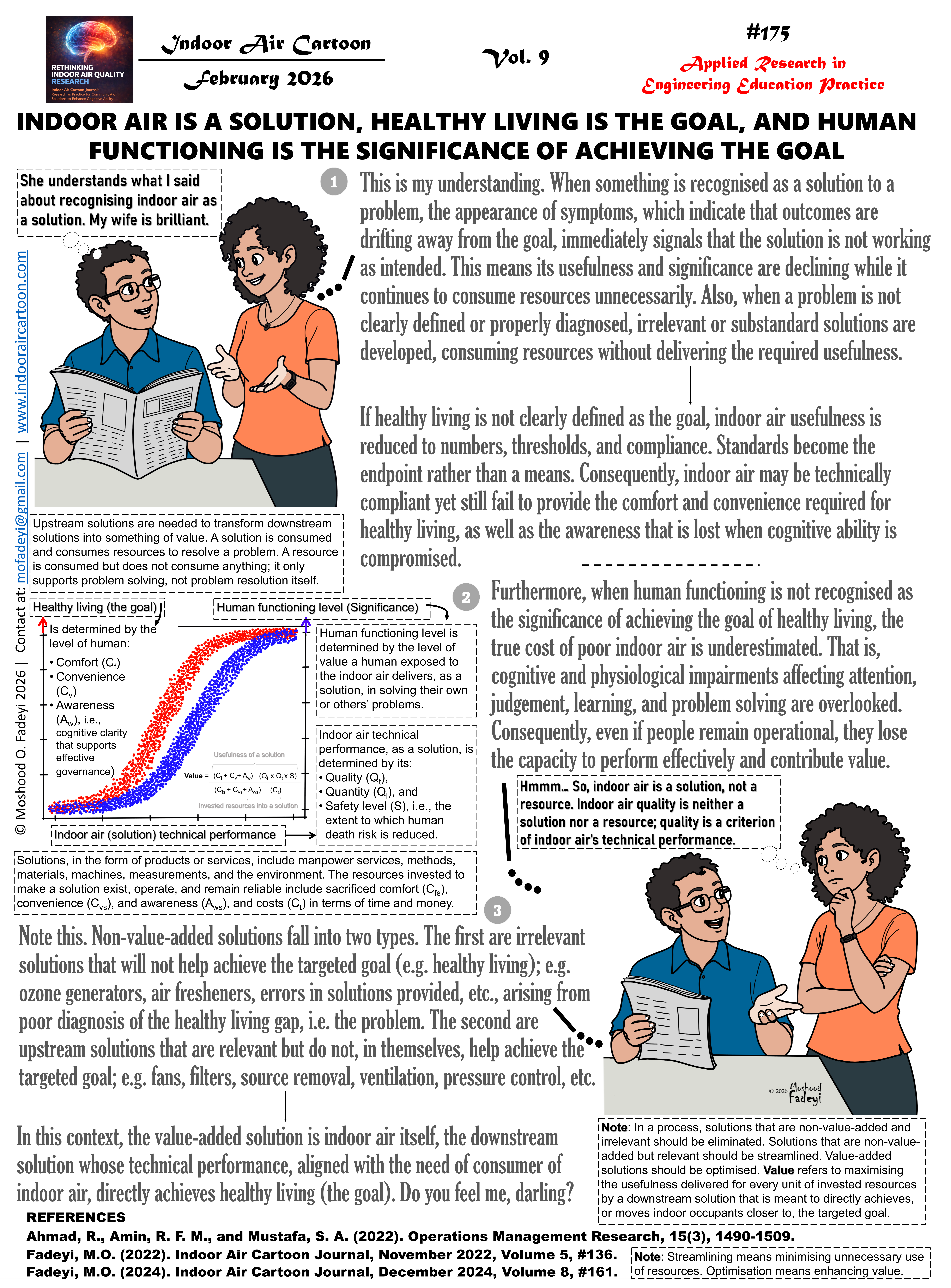


Leave a Reply